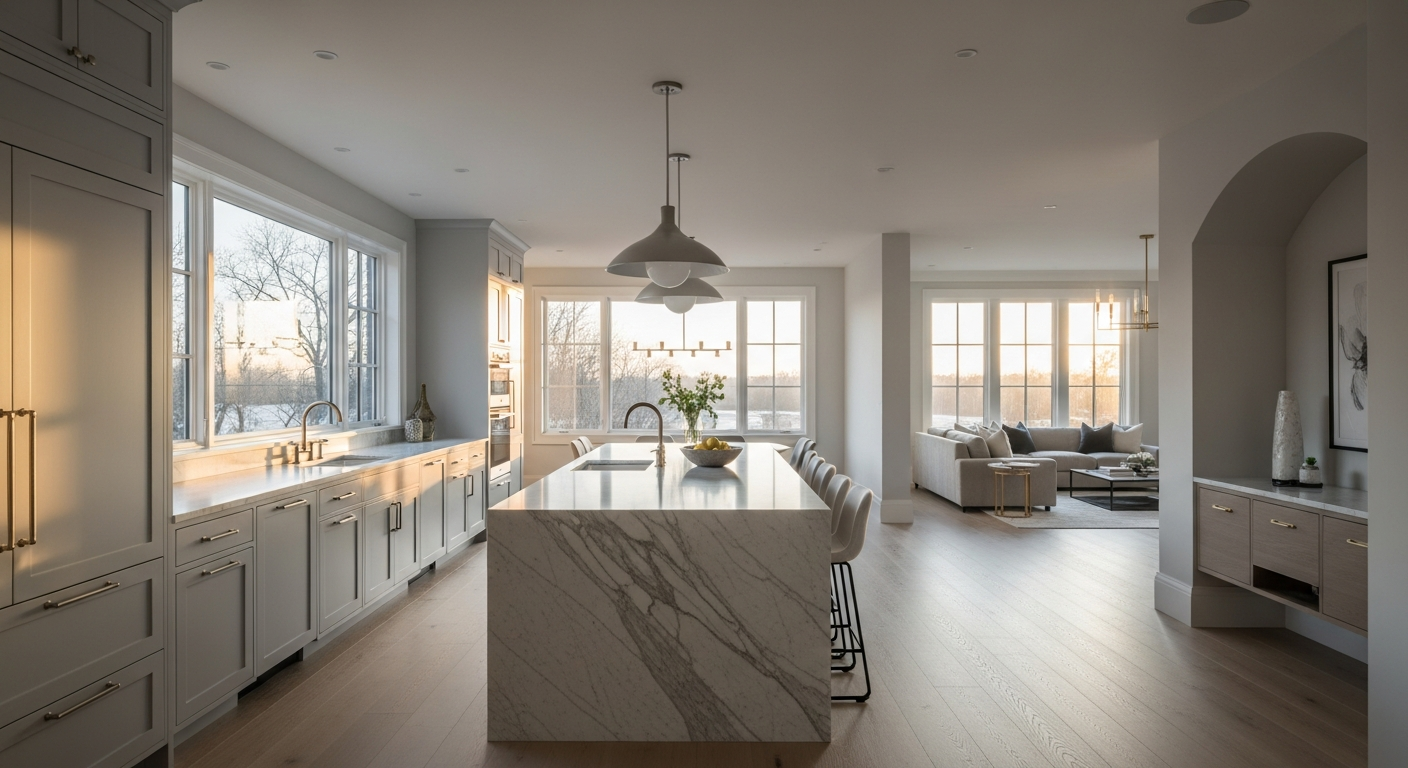
The home renovation fantasy is a powerful one. We picture tearing down walls, installing a dream kitchen, and creating the perfect backyard oasis. What we don't always picture is the final bill-and more importantly, how much of that investment we'll ever see again.
Here’s a hard truth for every homeowner: renovating for your own enjoyment and renovating for resale value are two very different things. While there’s immense personal satisfaction in creating a space you love, not every dollar you spend will translate into a higher sale price. In fact, some of the most expensive and desirable projects can have the worst return on investment (ROI).
Making smart decisions about where to put your money is the key to building equity and avoiding costly mistakes. It's about looking past the showroom floor and focusing on what truly adds value in the eyes of the market. Let's dig into the projects that consistently deliver the best returns, the ones that almost never do, and how to think strategically about improving your home.
- The Hard Numbers: Cost vs. Value Explained
- Refresh Over Rebuild: The Power of Cosmetic Upgrades
- Don't Forget the Outside: Curb Appeal Is King
- Thinking Like an Appraiser
- Projects That Rarely Pay for Themselves
- Making Smart Decisions for Your Situation
The Hard Numbers: Cost vs. Value Explained
If you want to talk numbers, there's one go-to source the pros have trusted for decades: Zonda Media's annual Cost vs. Value report, published in Remodeling magazine. It’s a comprehensive breakdown that compares the average cost of common remodeling projects with the value they retain at resale, as estimated by real estate professionals. The key metric is "cost recouped"-the percentage of the project's cost you can expect to get back when you sell.
While the exact numbers shift slightly each year and vary by region, the overall trends are remarkably consistent. Year after year, the projects with the highest ROI are not the massive, glamorous overhauls. They are often smaller, more practical improvements that enhance a home's function and first impression.
Here is a look at how some popular projects stack up, based on national averages from the 2023 report:
| Project Type | Average Cost | Resale Value | Cost Recouped |
|---|---|---|---|
| HVAC Conversion (to Electric) | $17,747 | $18,366 | 103.5% |
| Garage Door Replacement | $4,302 | $4,421 | 102.7% |
| Manufactured Stone Veneer | $11,287 | $11,529 | 102.2% |
| Entry Door Replacement (Steel) | $2,214 | $2,233 | 100.9% |
| Minor Kitchen Remodel | $28,279 | $24,249 | 85.7% |
| Siding Replacement (Vinyl) | $18,367 | $17,210 | 93.7% |
| Midrange Bathroom Remodel | $24,424 | $16,108 | 65.9% |
| Window Replacement (Vinyl) | $20,482 | $13,636 | 61.2% |
| Upscale Major Kitchen Remodel | $158,353 | $50,154 | 31.7% |
The data is pretty clear. Replacing a garage door can more than pay for itself. A minor kitchen refresh returns a respectable 86 cents on the dollar. But a full-blown luxury kitchen remodel? You’d be lucky to get back a third of what you spent.
Refresh Over Rebuild: The Power of Cosmetic Upgrades
What does all this data tell us? The message is clear: modest, cosmetic updates almost always outperform total gut renovations. Future buyers want a clean, functional, and well-maintained canvas they can personalize. They are often unwilling to pay a premium for someone else's very specific-and very expensive-taste.
The Kitchen: Your Home's Financial Engine
A kitchen can make or break a sale, but you don't need a six-figure budget to make an impact. The "minor kitchen remodel" that scores so well in the Cost vs. Value report is a perfect example of a strategic refresh.
What it typically includes:
- Cabinet Refacing or Repainting: Instead of tearing out perfectly good cabinet boxes, you can give them a modern look by professionally painting them or replacing just the doors and drawer fronts.
- New Countertops: Swapping dated laminate for an affordable quartz or granite makes a huge difference.
- Updated Hardware and Sink: New cabinet pulls, a modern faucet, and a clean undermount sink are small details that collectively elevate the entire space.
- Fresh Paint and Lighting: A new color on the walls and updated light fixtures can change the room's entire feel for a relatively small cost.
This approach keeps the existing layout and "bones" of the kitchen, which avoids the immense cost of moving walls, plumbing, and electrical lines. It focuses on the surfaces that buyers see and touch, delivering the most bang for your buck.
The Bathroom: Small Space, Big Impact
The same logic holds true for bathrooms. A full remodel, especially one involving intricate tile work and moving fixtures, gets expensive quickly and rarely offers a great return. A midrange refresh, however, can be a smart investment.
High-impact bathroom updates include:
- Replacing an old vanity with a modern, off-the-shelf unit.
- Updating the mirror and light fixtures.
- Installing a new, efficient toilet.
- Re-glazing an old bathtub instead of replacing it.
- Replacing dated faucets and showerheads.
Don't Forget the Outside: Curb Appeal Is King
Notice something about the top performers in the Cost vs. Value report? Many of them are exterior projects. A buyer's first impression is formed before they even step through the door, and that feeling has a massive impact on a home's perceived value.
Projects like a new garage door, a steel entry door, and stone veneer on the facade create an immediate sense of quality and care. They signal to a potential buyer that the home has been well-maintained. Because these projects are often less expensive than a major interior remodel, their cost is much easier to recoup.
Even simpler, lower-cost efforts can pay dividends:
- Landscaping: A well-kept lawn, trimmed shrubs, and fresh mulch can transform a home's exterior for a few hundred dollars.
- Exterior Painting: If the paint is peeling or the color is dated, a fresh coat is one of the best investments you can make.
- Pressure Washing: Cleaning dirt and grime off siding, walkways, and driveways can make a home look years younger.
- Details Matter: Replace a dated porch light, install new house numbers, and get a stylish new mailbox. These are weekend projects that make a home feel current and cared for. Painting the front door a bold, welcoming color is another pro tip.
These improvements matter because they affect the photos in the online listing and the feeling buyers get when they pull up to the curb. A great first impression sets a positive tone for the entire showing.
Thinking Like an Appraiser
To understand value, it helps to think like a professional appraiser. An appraiser's job is to determine a home's market value, and they do it by comparing your property to similar, recently sold homes in your area, often called "comps."
This process highlights a key concept: the principle of conformity. A home’s value is maximized when it conforms to the standards of the neighborhood. If you install a $150,000 kitchen in a neighborhood of $400,000 homes, you will have the nicest kitchen on the block, but you won't add $150,000 to your home's value. The house has become an outlier, and appraisers-and buyers-will not value those over-the-top improvements at their full cost.
Appraisers also focus on the fundamentals. They look for a solid roof, functional plumbing, and a modern electrical panel. They don't necessarily add dollar-for-dollar value for these systems being new, but they will absolutely subtract significant value if they are old or failing. This is why major maintenance projects are about protecting your equity, not necessarily growing it.
Projects That Rarely Pay for Themselves
Knowing what not to do is just as important as knowing what to do, especially if ROI is your main goal. Some projects, while personally rewarding, are notorious for their poor financial returns.
The Luxury Trap
It's easy to get carried away and over-improve a home for its neighborhood. Installing professional-grade, six-burner stoves and built-in espresso machines in a starter-home community is a classic example. Think imported Italian marble in a neighborhood of laminate countertops, or a high-tech smart home system when buyers in the area are primarily first-time homeowners on a budget. Most buyers in that market won't be willing or able to pay the premium for those features. The key is to match your finishes to comparable homes nearby. A good local real estate agent can tell you what buyers expect in your specific area.
Overly Personal Projects
These are the improvements that cater to a very specific hobby or lifestyle. Think of swimming pools, dedicated home theaters, elaborate wine cellars, or converting a garage into a recording studio. While you might love these features, they can actually narrow your pool of potential buyers. Many people see a pool not as an asset, but as an expensive, time-consuming liability. When you customize too much, you risk creating a home that only appeals to someone exactly like you.
Invisible Improvements
These are the big-ticket maintenance items like a new HVAC system, a new roof, or upgraded electrical panels. They are absolutely critical to the health and safety of a home, and you should not neglect them. However, you should not expect to get a dollar-for-dollar return on them. Buyers simply expect these systems to be in good working order. A new roof won't necessarily add $20,000 to your asking price, but a leaky old one could easily cause a buyer to subtract that amount or walk away entirely.
Making Smart Decisions for Your Situation
How you approach renovations should depend entirely on your goals and timeline.
Renovation for Resale vs. Renovation for Living
If you are planning to sell your home in the next one to three years, your focus should be squarely on the high-ROI projects we've discussed. Choose neutral colors, appeal to the broadest possible audience, and prioritize curb appeal and kitchen or bath refreshes.
If you plan to stay in your home for five, ten, or more years, the math changes. Your personal enjoyment and quality of life become a much bigger part of the equation. That dream kitchen or spa bathroom might not return 100% of its cost, but the decade of enjoyment you get from it has its own unique value. Even then, it’s wise to keep classic design principles in mind to avoid creating a space that will feel dated in a few years.
Making Decisions with Partners or Co-owners
For those who own a home with others, renovation decisions require alignment. This is where data becomes especially powerful. When all owners can review objective information like the Cost vs. Value report, it helps depersonalize the decision-making process. Instead of debating personal taste, the group can focus on making financially sound capital improvements that benefit everyone's equity stake. Sticking to high-ROI projects provides a clear, objective framework for moving forward together.
The smartest home renovation isn't about spending the most money; it's about spending money in the right places. Start by tackling essential maintenance-the boring stuff that protects your investment. From there, focus on high-impact cosmetic upgrades that make your home shine. This balanced approach allows you to create a space you love living in today, while ensuring it will appeal to the widest audience of buyers tomorrow.