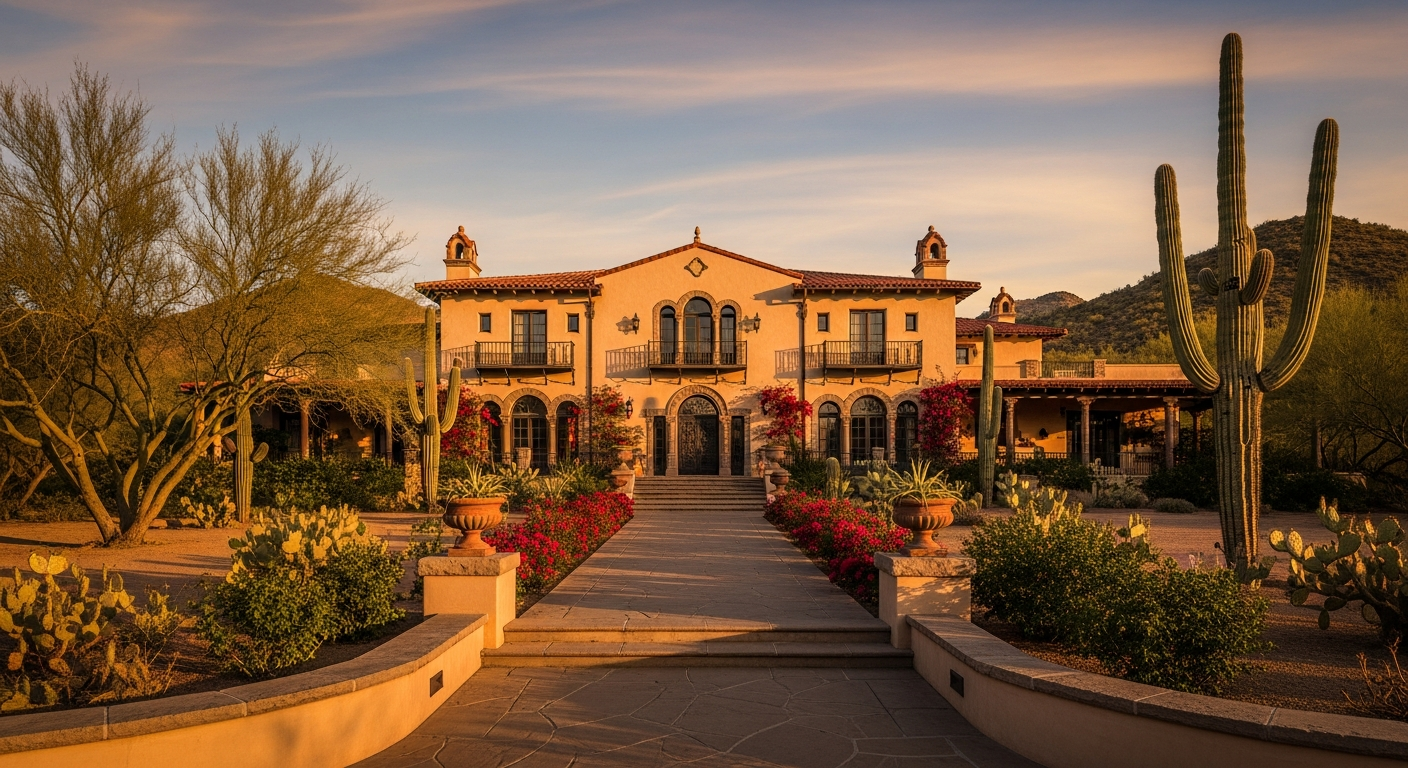
Most real estate deals are about numbers. But every so often, a sale tells a story about history, ambition, and the very definition of home. The recent sale of Arizona's largest private residence, the McCune Mansion in Paradise Valley, is one of those stories. The 52,000-square-foot estate, built in 1967 for Pennzoil heir George McCune and boasting features like a 16-car garage and an Olympic-sized swimming pool, was recently purchased for $9 million. But that’s just the opening chapter.
The new owner, a philanthropist focused on wildlife conservation, plans to invest an additional $40 million into renovating the property. This isn't a simple facelift; it's a monumental undertaking that brings the total investment to nearly $50 million. The sale offers a rare glimpse into the ultra-luxury market and serves as a powerful case study in what it truly means to be the custodian of a landmark property. It forces us to look past the sale price and consider the immense, ongoing costs that come with owning a piece of history, from the financial to the deeply personal.
A Landmark Changes Hands
For decades, the McCune Mansion has been an icon of Paradise Valley, a sprawling structure of stone and glass that represents a bygone era of American industry and architecture. Its recent history is just as compelling. Jamie Hormel, who bought the home in 1991 for $3.75 million with her late husband, Geordie, became its steward for three decades. Her reflection on the property speaks volumes. “Where others saw a mansion to be torn down for profit,” she noted, “I saw a legacy worth preserving.”
Her words capture a core dilemma in high-end real estate. When a property occupies a piece of land that is itself immensely valuable, the structure upon it is often at risk. Tearing down an old home to build a modern one is frequently the most profitable path. But Hormel chose preservation, a decision the new owner seems poised to continue on an even grander scale. This transition from one preservation-minded owner to another ensures the mansion's story will continue, but it also raises a critical question: what exactly does it take to keep such a legacy alive?
The True Price of a Palace: The Economics of a Mega-Mansion
The most startling figure in the McCune Mansion story is not the $9 million purchase price, but the $40 million renovation budget. It’s a stark reminder that for properties of this scale, the acquisition cost is merely the entry fee. The true cost of ownership is a far larger, more complex equation.
The Purchase Price is Just the Start
A renovation budget more than four times the sale price is almost unheard of in the conventional real estate market. It signifies that the new owner is not just buying a house but is commissioning a work of art, restoring a historical artifact, and building a private resort all at once. This level of investment is necessary to modernize a 52,000-square-foot structure's systems (like HVAC, electrical, and plumbing) while preserving its unique architectural character. The expense shows that homes of this magnitude operate less like typical houses and more like public museums or corporate headquarters in their operational complexity.
A $40 million renovation on a 1960s structure is less about cosmetic upgrades and more about architectural resurrection. This budget will likely cover a complete overhaul of the building's core systems, potential structural reinforcements, and the painstaking process of sourcing period-appropriate materials or commissioning artisans to replicate original details. It also involves bringing the estate up to modern standards of luxury and security, from advanced smart-home integration to landscape architecture that could involve reshaping acres of land. Every decision is magnified by the home's sheer scale, turning a simple window replacement into a six-figure project.
Calculating the Carrying Costs
Beyond the one-time costs of purchase and renovation, the annual carrying costs of a mega-mansion are staggering. These are not optional expenses; they are the baseline requirements to keep the property functional, secure, and insured. Let's break down the likely annual expenses for a property valued at nearly $50 million post-renovation.
- Property Taxes: Paradise Valley, Arizona, has a relatively low property tax rate, around 0.52%. However, when applied to a $50 million assessment, the annual tax bill would be approximately $260,000. That’s more than half the median home price in many American cities, paid every single year.
- Insurance: Insuring a unique, sprawling estate against risks like fire, flood, and liability requires specialized policies. Standard insurance will not cover it. High-value home insurance for a property like this could easily run between $50,000 to $100,000 per year, if not more, depending on features like art collections and security systems.
- Utilities and Staffing: The costs to heat, cool, and power a space larger than a city block are immense. Monthly utility bills can climb into the tens of thousands of dollars. Furthermore, a property of this size cannot be managed by the owner alone. It requires a full-time staff: an estate manager to oversee operations, a grounds crew for the acreage, housekeepers, security personnel, and specialized technicians for its unique systems, like the theater or pool. The annual payroll for such a team can easily exceed $200,000 to $500,000, functioning essentially as a small company's HR department.
To put this in perspective, consider how these costs compare to a more typical American home.
| Expense Category | Typical Home (2,000 sq ft) | Mega-Mansion (52,000 sq ft) |
|---|---|---|
| Purchase Price | ~$407,600 (US Median) | $9,000,000+ |
| Renovation Budget | $50,000 - $100,000 | $1,000,000 - $40,000,000+ |
| Annual Property Tax | ~$5,000 - $10,000 | $260,000+ |
| Annual Insurance | ~$1,500 - $3,000 | $50,000 - $100,000+ |
| Monthly Utilities | ~$300 - $500 | $10,000 - $25,000+ |
| Annual Staffing | $0 | $200,000 - $500,000+ |
Note: Figures are estimates based on public data. The median home price is from the National Association of Realtors, April 2024.
This makes it clear that owning such a property is a commitment on the level of running a medium-sized business. The financial resources required extend far beyond the initial wealth needed to buy it.
Preservation vs. Profit: The Teardown Dilemma
The McCune Mansion represents a choice every owner of a significant historic property faces: preserve or profit. The land it sits on is some of the most desirable in the country. A developer could have purchased the property, demolished the 1967 structure, and built one or several new, modern estates that might appeal to a broader range of today's luxury buyers.
The case for the teardown is purely financial. It removes the constraints of an old floor plan and the high costs of renovating aging infrastructure. It maximizes the value of the land. In countless affluent neighborhoods from Los Angeles to the Hamptons, this is the prevailing logic.
However, the argument for preservation is about a different kind of value. It's about maintaining architectural integrity, honoring a piece of local history, and owning something truly unique: a property with a story that cannot be replicated. The new owner's background as a philanthropist suggests they are motivated by more than just financial return. They are likely drawn to the challenge and reward of stewardship. This path requires more capital, more patience, and a vision that extends beyond immediate market trends. This choice often involves navigating local historical societies and community expectations, adding another layer of complexity to the owner's responsibilities.
Inside the Trophy Home Market
The sale of the McCune Mansion offers a glimpse into the trophy home market, a segment that operates by its own set of rules. These are not just houses; they are assets defined by their provenance, rarity, and iconic status.
Who Are the Buyers?
The buyers of these properties are a small, global group of ultra-high-net-worth individuals. Their motivations for buying are often as unique as the homes themselves. For some, it is about privacy and security. For others, it's about having the space to house a world-class art collection or entertain on a grand scale. According to Knight Frank's 2024 Wealth Report, residential real estate remains a core component of UHNW investment portfolios, but trophy homes are a category unto themselves, often held for generations.
Furthermore, these sales frequently happen off-market, handled through trusted private networks rather than public listings to protect the privacy of both buyer and seller. The motivation is rarely about 'flipping' the property for a quick profit. Instead, it’s about acquiring a personal kingdom, a legacy asset to be held for generations, or a private gallery for showcasing other passions, like art or classic cars.
What Defines a "Trophy"?
Size is a factor, but it is not the only one. A true trophy property is defined by a combination of irreplaceable attributes:
- Location: Prime location in a world-class city or exclusive enclave, like Paradise Valley.
- Architecture: A design by a renowned architect or a style that is a perfect representation of its era.
- History: A story connected to a significant family or historical figure.
- Rarity: Features that simply cannot be built today, whether due to zoning laws, available land, or craftsmanship.
The McCune Mansion checks every box. It is this combination of factors that elevates a property from being merely expensive to being a genuine trophy.
The Unseen Value in the Walls
Perhaps the most telling comment about the mansion came from its former owner, Jamie Hormel. “The house has good vibes from having a loving family live there for 10 years,” she said. “I think all the fun times and happiness soaked into the walls.”
This sentiment gets at a universal truth about homeownership, no matter the price or size. A home is more than an asset on a balance sheet; it is a vessel for life and memory. It's where identity is formed and legacies are built. The emotional equity invested in a home is often its most significant, yet least quantifiable, attribute.
While the scale of the McCune Mansion is beyond the reach of nearly everyone, the core desire for a place with “good vibes” is not. For most people, the goal of ownership is not about acquiring a palace but about securing a personal sanctuary, a foothold in a community, and a stable foundation for the future. It’s about creating a space where their own happiness can soak into the walls.
This drive for a sense of place is universal. It's why new approaches to ownership, like the co-ownership models Rhome helps facilitate, are gaining traction. They focus on making that tangible feeling of home more attainable, recognizing that a property's value is ultimately measured not just in dollars, but in the life lived within its walls. The story of the McCune Mansion, for all its grandiosity, is a powerful reminder that every home, regardless of size, is a legacy in the making.