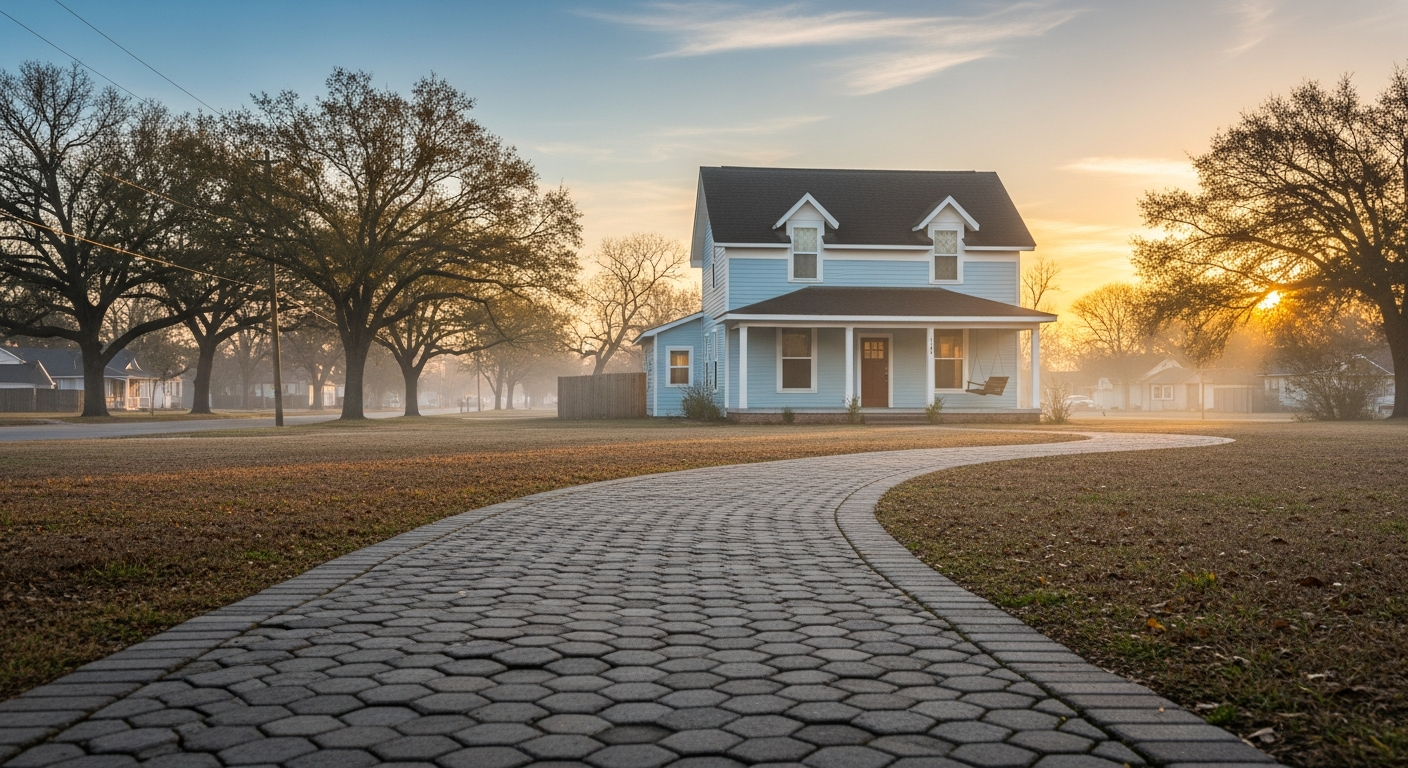
For decades, the path to building a life had a clear, accessible first step: the starter home. It was never meant to be the dream house. It was small, maybe a bit dated, and located in a perfectly fine but not spectacular neighborhood. It was the foothold. The place where you started building equity, learned how to fix a leaky faucet, and began your adult life. Today, for millions of Americans, that first step has become a giant, unbridgeable leap.
The very concept of the starter home is fading into memory. In many parts of the country, the bottom rung of the housing ladder has been pulled so high that it is simply out of reach. What was once the affordable entry point is now priced like a second or third home, creating a bottleneck that delays life decisions and reshapes the economic future of an entire generation.
This isn't a story about avocado toast or a failure to save. It's a story about fundamental shifts in the housing market. It's a story of supply, demand, and dollars that no longer add up for the average person. To understand the frustration of today's first-time buyers, we have to look at what happened to the humble starter home.
- What Exactly Was a Starter Home?
- How Did the Starter Home Vanish?
- A Tale of Two Markets: The Geographic Divide
- The Ripple Effects of a Missing First Step
- Finding a Foothold in a New Housing Landscape
What Exactly Was a Starter Home?
Historically, a starter home was defined by its modesty and its price. Typically, it was a property with two or three bedrooms, often under 1,500 square feet. It was the smallest, least expensive housing stock in a given market, providing a crucial entry point for young families and first-time buyers. The idea was simple: buy what you could afford now, live in it for five to seven years while building equity, and then sell it to trade up to a larger home.
This model worked because prices and incomes maintained a relatively stable relationship. According to the U.S. Census Bureau, in 1980 the median home value was $47,200, while the median household income was about $17,710. The price-to-income ratio was a manageable 2.6-to-1. By 2022, the median home value had ballooned to over $430,000 while median household income sat around $75,000, pushing the ratio to a daunting 5.7-to-1.
This shift means that today's entry-level homes are in a completely different financial league. The National Association of Realtors reported that in late 2023, the median sales price of a typical starter home exceeded $300,000. In many competitive markets, that number is closer to $400,000 or even $500,000. That price tag fundamentally breaks the starter home model.
How Did the Starter Home Vanish?
The starter home didn't disappear overnight. Its decline is the result of powerful economic forces that have been building for more than a decade, creating a perfect storm for prospective buyers.
A Decade of Underbuilding
The biggest culprit is a simple lack of supply. Following the 2008 financial crisis, home construction ground to a halt. When it eventually recovered, builders shifted their focus away from small, entry-level houses and toward larger, more profitable high-end homes. Builders aren't just being greedy; they're responding to economic realities. They face the same expensive hurdles for a small home as a large one, such as land acquisition, permits, and labor costs, but with a much smaller profit margin. Restrictive local zoning laws often make it difficult or illegal to build small, dense, and affordable housing. When you add in soaring costs for lumber, concrete, and skilled labor, the financial incentive points squarely toward building a 4,000-square-foot luxury home instead of three 1,200-square-foot townhomes.
A 2023 report from Realtor.com estimated a housing supply gap of over 7.2 million single-family homes. This scarcity is most acute at the lower end of the market. There are simply not enough new, small homes being built to replace the ones that are aging out or being renovated into more expensive properties.
The Math of Affordability: Prices vs. Paychecks
While home prices have skyrocketed, wages for the typical American worker have not kept pace. Data from the Federal Reserve Bank of St. Louis shows a dramatic divergence between home price indices and median household income. This growing gap means that a larger and larger portion of a person's income is required to cover a mortgage.
On top of that, many would-be buyers are saddled with unprecedented levels of student loan debt. For millions of millennials and Gen Zers, a significant portion of their income that might have gone toward a down payment is instead diverted to loan servicers. It's a one-two punch: wages aren't keeping up with home prices, and a large chunk of those wages is already spoken for.
This affordability crisis is compounded by the recent surge in interest rates. Consider the difference:
- A $350,000 home at 3% interest: The principal and interest payment is approximately $1,476 per month.
- A $350,000 home at 7% interest: The principal and interest payment jumps to approximately $2,328 per month.
That's an extra $852 every month. That's over $10,000 a year for the exact same house. For a first-time buyer on a median income, that increase is often the difference between qualifying for a loan and being permanently priced out.
A Crowded Market
First-time buyers aren't just competing with each other. They are now up against several other powerful buyer groups with deep pockets.
- Investors: Institutional investors and individual landlords often target smaller, more affordable homes because they make attractive rental properties. They can often pay in cash, giving them a significant advantage over buyers who rely on financing.
- Downsizers: Baby Boomers who are selling their large, paid-off family homes are entering the market for smaller properties. They often have hundreds of thousands of dollars in cash from their home sale, allowing them to easily outbid younger buyers.
- Repeat Buyers: Even existing homeowners looking to move are often competing for the same limited inventory, using the equity they've built to make strong offers.
In popular tourist destinations and even many quiet neighborhoods, the rise of short-term rental platforms has siphoned off even more entry-level housing stock. A small home that could have been a family's first step is often more profitable as a full-time vacation rental, further shrinking the available inventory for actual residents.
A Tale of Two Markets: The Geographic Divide
The crisis isn't happening everywhere at once. It has created a stark geographic divide. In states like California, Washington, Colorado, Utah, Massachusetts, and New York, the idea of a sub-$350,000 starter home in any desirable metro area is largely a fantasy.
| State | Median List Price (April 2024) | Notes on Starter Home Affordability |
|---|---|---|
| California | $792,000 | Entry-level homes in major cities regularly exceed $700,000. |
| Massachusetts | $650,000 | Competition is fierce in the Boston metro area and surrounding towns. |
| Colorado | $600,000 | High demand in Denver and Boulder has pushed prices up across the state. |
| Idaho | $535,000 | Once an affordable haven, cities like Boise have seen explosive growth. |
| Ohio | $240,000 | More accessible, with starter homes available in the sub-$200k range. |
| Arkansas | $239,000 | One of the more affordable states for first-time buyers. |
Source: Median list price data is illustrative and aggregated from various public real estate market reports.
This geographic split creates a difficult choice. Do you stay in a high-cost, high-opportunity area where you have a job and community but little hope of owning a home? Or do you move to a more affordable region, potentially sacrificing career opportunities and leaving your support network behind? The rise of remote work has made the second option more viable, but it has also contributed to rising prices in once-affordable cities.
The Ripple Effects of a Missing First Step
When an entire generation struggles to buy their first home, the consequences are felt far beyond the housing market. Homeownership has long been the primary vehicle for wealth creation for the American middle class.
Widening Wealth Inequality
The inability to buy a home prevents millions from building equity. This widens the wealth gap between renters and owners, and also between generations. While older homeowners have seen their net worth soar due to home appreciation, younger people are left paying ever-increasing rents that build zero equity.
Delayed Life Milestones
Housing instability delays other major life decisions. People put off getting married, having children, and starting businesses because they lack the stable foundation a home provides.
Weakened Communities
Beyond personal finances, the lack of accessible homeownership frays the fabric of communities. Homeowners tend to put down roots. They are more likely to vote in local elections, volunteer for neighborhood projects, and invest in local schools and businesses. When a neighborhood is dominated by transient renters and absentee landlords, this civic engagement can wither, leading to less stable and connected communities.
Finding a Foothold in a New Housing Landscape
While the traditional starter home may be gone, the dream of ownership is not. But achieving it requires new strategies and a willingness to rethink old assumptions.
- Expand the Search: Buyers may need to look at neighborhoods or even entire cities they hadn't previously considered. This could mean a longer commute or moving to a different region entirely.
- Re-evaluate the “Must-Haves”: A smaller condo or a townhome can be a great way to start building equity, even if it’s not the single-family house with a yard you once pictured. The key is to get into the market.
- Explore Financial Assistance: Look into state and local down payment assistance programs, as well as low-down-payment mortgages like FHA loans. These programs are designed specifically to help first-time buyers overcome the initial financial hurdles.
- Consider Co-Ownership: For many, the only way to bridge the affordability gap is to team up. Co-buying a home with friends or family is becoming an increasingly practical strategy. By pooling financial resources, buyers can afford a better property than they ever could alone. To do this successfully, it's vital to have a comprehensive legal co-ownership agreement drafted by a lawyer. This document should act as a business plan for your home, outlining everything from mortgage payment responsibilities and maintenance duties to a clear exit strategy for when one partner wants to sell.
- Embrace "House Hacking": A growing number of buyers are using their first home as an income source. This strategy involves buying a multi-family property like a duplex, living in one unit, and renting out the others. The rental income can offset or even cover the entire mortgage payment. It requires being a landlord, but it can make ownership possible in markets that would otherwise be out of reach.
The new era of housing demands a new playbook. The dream of a white picket fence is being replaced by the practical reality of a shared mortgage, a smaller footprint, or a home in a new town. The starter home as we knew it may be a thing of the past, but the drive to own a piece of the world is as strong as ever. It just requires a different map to get there.