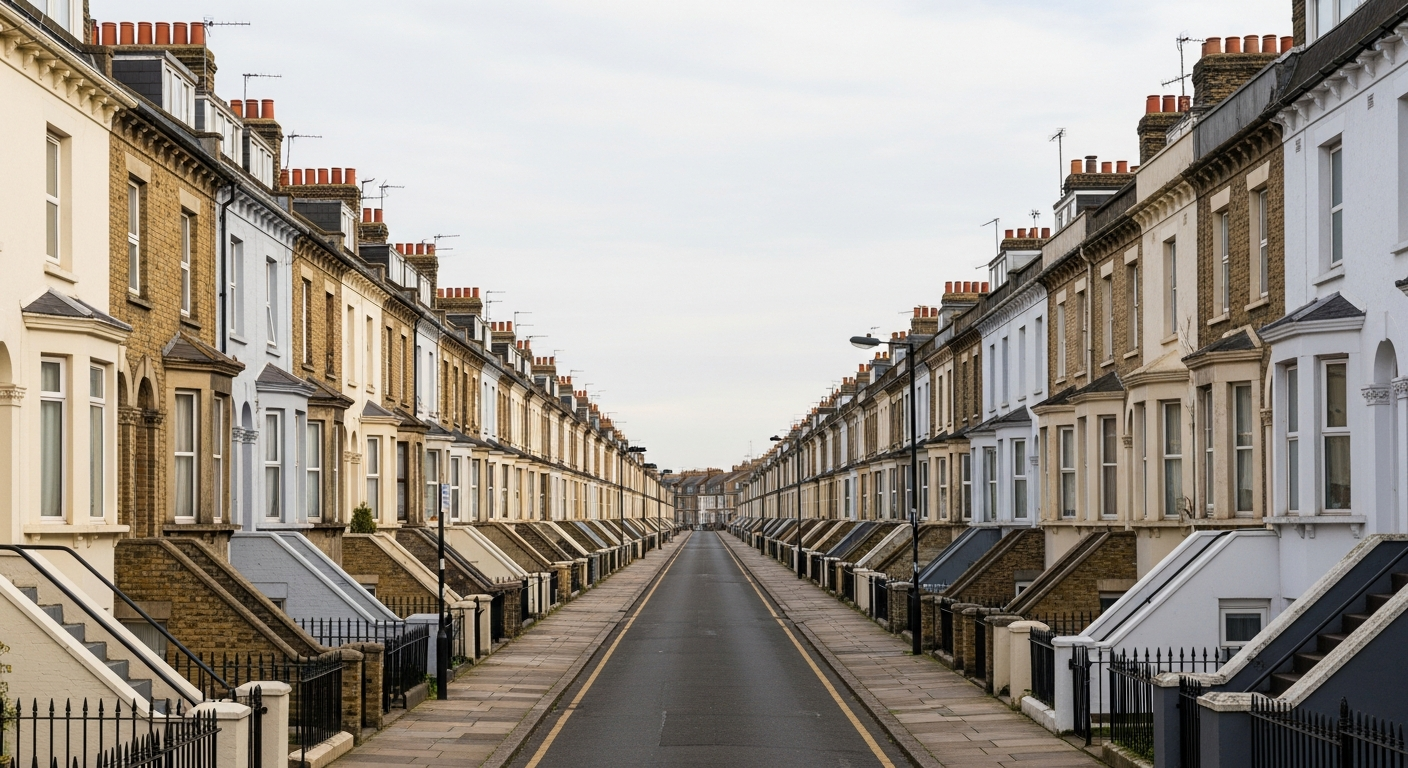
For decades, the path was clear. You get a job, you save diligently, and you buy a small starter home. From that first rung, you climb the property ladder. Each move, whether a result of a promotion, a growing family, or simply building equity, takes you to a bigger, better home. This wasn't just a financial strategy; it was a cultural promise, a tangible sign of progress.
But for millions today, especially millennials and Gen Z in the UK and other developed nations, that promise feels like a story from a different era. The property ladder isn't just harder to get on. For many, it's broken. The first rung, once a stepping stone, has become a sticky floor, trapping would-be homeowners in properties they can neither afford to keep comfortably nor afford to leave.
This isn’t about avocado toast or a lack of financial discipline. It’s a systemic problem driven by deep economic shifts, outdated housing systems, and a fundamental mismatch between incomes and asset prices. The dream of climbing the ladder is being replaced by the exhausting reality of just trying to hang on.
- The Math No Longer Adds Up
- When the Starter Home Becomes a Trap
- Is the Property Ladder an Outdated Idea?
- Forging New Paths to Ownership
The Math No Longer Adds Up
The most significant barrier to homeownership is the simplest one: the price. The connection between what people earn and what homes cost has been severed. This isn't a feeling; it's a statistical fact.
House Prices vs. Incomes: A Widening Chasm
In the United Kingdom, the core issue boils down to the house price-to-earnings ratio. According to the Office for National Statistics (ONS), the median house price in England was around 8.5 times the median full-time annual earnings in 2023. To put that in perspective, in 1997, that ratio was just 3.5. This means that, relative to income, the average home is more than twice as expensive as it was a generation ago.
This trend isn't isolated to the UK. Major cities across the globe face similar or even more extreme pressures. The Demographia International Housing Affordability survey consistently ranks cities like Hong Kong, Sydney, and Vancouver as “severely unaffordable,” with median house prices exceeding nine times the median household income. Simply put, the fundamental bargain of trading a good salary for a decent home has broken down.
The Deposit Hurdle
Higher house prices naturally mean much larger deposits. Before a buyer even thinks about monthly payments, they face the monumental task of saving a down payment. A 15 percent deposit on the median UK home requires a saver to produce nearly £45,000. For someone earning the median salary of around £35,000, that represents nearly 18 months of their gross income before taxes, rent, and the basic cost of living are even factored in. It's an almost impossible sum for an individual or couple to save without significant family help, and this reliance on family help widens the wealth gap between those with property-owning parents and those without.
The Stagnation Squeeze: Flat Wages and Rising Debt
It’s not just that houses have gotten more expensive; it’s that paychecks haven't kept up. For nearly two decades, real wage growth- pay adjusted for inflation- has been stubbornly slow in many Western economies. The income that could comfortably support a mortgage in the 1990s now barely covers rent and rising living costs. Compounding this problem is the explosion in student debt. Generations are now starting their careers with tens of thousands of pounds or dollars in loans, a financial deadweight that dramatically delays their ability to even begin saving for a deposit. This one-two punch of stagnant wages and high debt means the starting line for homeownership has been pushed back by a decade or more for many.
The New Reality of Interest Rates
For the past decade, rock-bottom interest rates masked some of this affordability crisis. But that era is over. Central banks, including the Bank of England, have raised rates aggressively to combat inflation. While the base rate was just 0.1 percent at the end of 2021, it climbed to over 5 percent by mid-2023. This has a direct and painful impact on buyers. A typical 25-year mortgage of £250,000 would have cost around £940 per month at a 2 percent interest rate. At 5.5 percent, that same mortgage costs over £1,500 per month. That increase of more than £550 every month has pushed countless potential buyers out of the market and put a severe strain on existing homeowners coming to the end of their fixed-rate deals.
When the Starter Home Becomes a Trap
For those who do manage to overcome the financial hurdles and buy their first home, a new set of problems awaits. This is especially true in the UK, where the very structure of property ownership can turn a dream asset into a long-term liability. The issue often comes down to one word: leasehold.
Understanding the UK's Leasehold System
Many apartments, and even some new-build houses in England and Wales, are sold as leasehold properties. This means the buyer owns the right to live in the property for a fixed, long-term period- often 99, 125, or even 999 years- but they do not own the land it sits on. The land and the building's structure are owned by a freeholder.
Think of a leaseholder as a long-term tenant who made a massive down payment. You must pay the freeholder annual ground rent and a share of the costs for maintaining the building, known as service charges. This system is a relic of feudal land ownership and is almost unique to England and Wales.
The Scandal of Soaring Service Charges
While reasonable service charges for maintenance are expected, the system is ripe for abuse. As highlighted in reporting by Bloomberg and others, many leaseholders are trapped by opaque and rapidly escalating fees. These can cover everything from building insurance and cleaning to major works like roof repairs. Freeholders or their appointed management companies often have little incentive to find cost-effective solutions, and leaseholders are left with enormous bills they have little power to contest. Stories abound of service charges doubling or tripling in just a few years, adding hundreds or even thousands of pounds to annual household expenses. This financial drain makes it impossible to save. They have the status of a homeowner but the powerlessness of a tenant.
"Unmortgageable" and "Unsellable" Properties
These problems come to a head when it’s time to sell and move up the ladder. A property with a short remaining lease (typically under 80 years) can become difficult or impossible to get a mortgage on, which drastically narrows the field of potential buyers, often to just cash investors. Extending a lease can cost tens of thousands of pounds.
The post-Grenfell cladding crisis laid this trap bare in the most tragic way possible. Thousands of homeowners in modern apartment blocks discovered their buildings were covered in flammable materials. They were handed bills for remediation work running into the tens of thousands of pounds, while their properties became literally worthless overnight. They couldn't sell, they couldn't remortgage, and they lived in constant fear. It's a stark example of how a 'starter home' can become a financial and emotional prison, with owners bearing all the risk for failures in regulation and construction. The equity the owner thought they were building evaporates, and their first step on the ladder becomes the last. They are stuck.
Is the Property Ladder an Outdated Idea?
The whole idea of a 'property ladder' rests on one key assumption: upward mobility powered by appreciating home values. It requires a functioning market where people can confidently buy, build equity, and sell in a predictable cycle. When that cycle breaks down, the ladder itself becomes a flawed metaphor.
For a generation stuck in expensive rentals or trapped in leasehold flats, the ladder is not an aspirational path but a constant reminder of a goal that feels increasingly out of reach. It has shifted from a symbol of progress to an anchor, holding people in financial and geographical limbo. The rigidity of the old model no longer fits the reality of modern economic life.
This broken system has a profound psychological cost. The constant pressure to save an impossible sum, the endless scrolling through unaffordable listings, and the feeling of being left behind by previous generations breeds anxiety and hopelessness. Major life decisions- getting married, having children, changing careers- are put on hold indefinitely, tethered to the unattainable goal of securing a home. It creates a generation that feels perpetually in a state of 'pre-adulthood,' unable to lay down the roots that homeownership traditionally represents.
Forging New Paths to Ownership
With the traditional route blocked, a new generation of buyers is finding creative ways to achieve security and build wealth. The definition of homeownership is starting to change, moving from a solo pursuit to a more collaborative one.
The Rise of Co-Buying
Increasingly, groups of friends, siblings, or even unmarried couples are pooling their resources to get on the market. By combining deposits and incomes, they can access larger mortgages and afford better properties in more desirable locations. It's a practical response to a hostile market, but doing it informally can be incredibly risky. Without a robust legal agreement in place, disagreements over selling, maintenance costs, or what happens if one person wants to move out can destroy both finances and friendships.
A More Formal Approach: Structured Co-Ownership
This is where a more structured, professional approach to co-ownership comes in. It involves creating a solid legal and financial framework before the purchase, treating the property as a shared asset with clear rules from day one. While co-buying is gaining traction, it's part of a broader shift toward alternative housing models. Government-backed schemes and shared ownership programs aim to lower the entry barrier, though they often come with complex restrictions. In some communities, nonprofit land trusts are working to create permanently affordable housing stock by separating the cost of the building from the land itself.
Companies like Rhome are professionalizing the co-buying process. They provide the legal operating agreement, help co-buyers secure a mortgage, and manage the shared ownership through a dedicated platform. This approach defines everything upfront: how costs are split, how decisions are made, and what the exit options are for each owner. It transforms a high-risk informal arrangement into a clear, strategic investment. By pooling equity within a formal structure, buyers can often bypass the starter home trap entirely, affording a property that suits their long-term needs from the outset.
The future of ownership may not be a solitary climb. For many, it will be a shared expedition. The challenges are significant, but the drive to own a piece of the world remains. The task ahead is to build new ladders: stronger, more accessible, and designed for the world we live in now, not the one we inherited.