Smart home technology has become a normal part of how people live. Thermostats that learn your schedule, locks you can control from your phone, cameras that send alerts when someone walks up the driveway. When you live alone or with a partner who agrees on everything, these devices are mostly frictionless.
In a co-owned home, they are not frictionless by default. You have two, three, or four adults, each with a legitimate ownership stake, each with a right to comfort and privacy in their own primary residence. A thermostat that one owner sets to 68 degrees and another keeps bumping to 72 is an annoyance. A security camera pointed at a shared hallway without a conversation first is something more serious.
The good news is that none of this is hard to figure out, as long as you do it before the devices go up on the wall.
Smart Locks: Access Is a Shared Decision
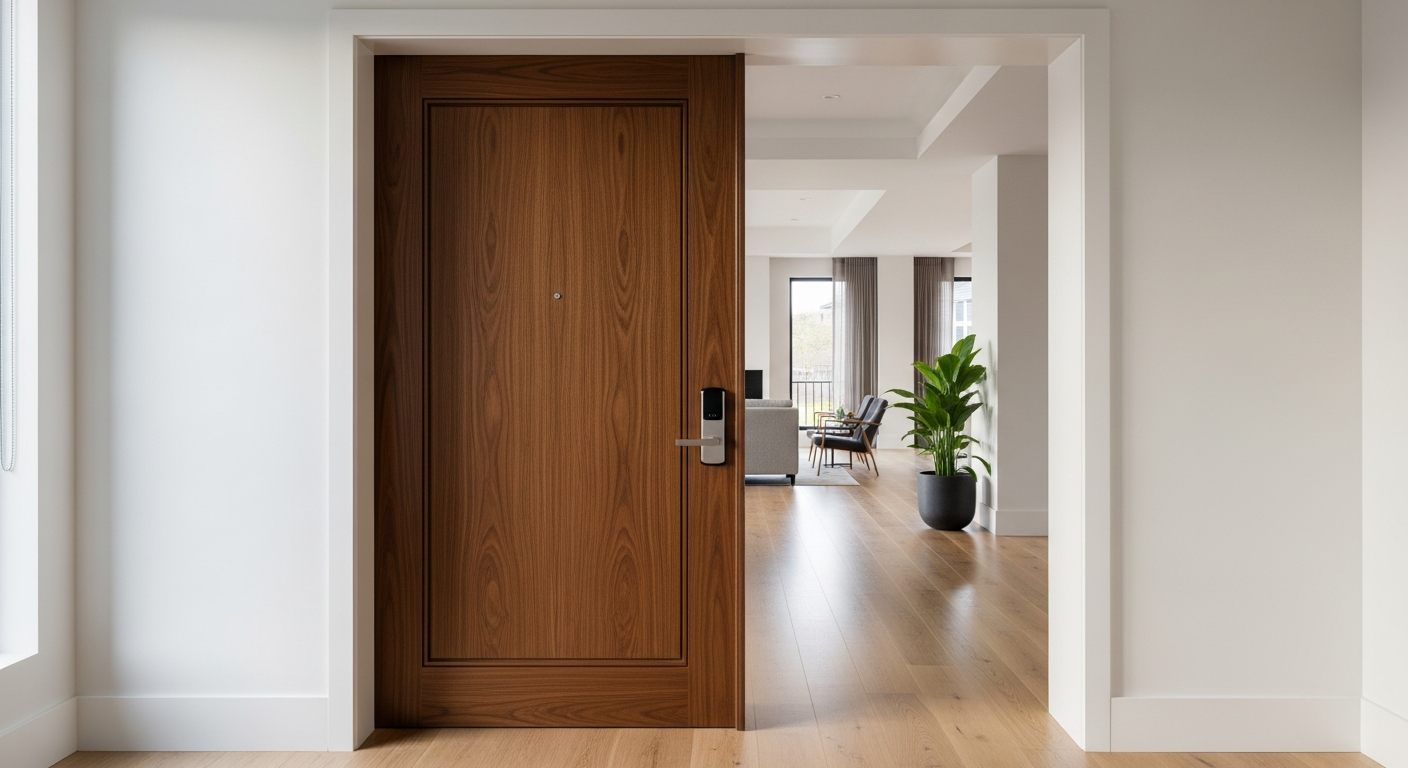
Smart locks are probably the most popular smart home upgrade, and they are also the one that most directly affects everyone in a co-owned home. When a lock is connected to an app, whoever controls the app controls who can enter the house.
Before you install a smart lock on a co-owned property, work through these questions together:
Who administers the lock? Most smart lock systems have an admin account that controls who else gets access. In a co-owned home, the fairest approach is either a shared admin account or a rotating administrator role. One owner having sole control over who can enter the home creates an obvious power imbalance.
Who gets access codes? Each owner should have their own unique code or credential, not a shared one. Unique credentials mean you can see who entered and when, which matters if something goes wrong. Beyond the owners, agree in advance on a list of people who can have codes: regular housecleaners, a trusted neighbor for emergencies, a contractor during a renovation.
What about guests? Short-term guest access is easy to grant and revoke on most systems. Agree on a protocol. Can one owner give a guest a temporary code without telling the others? Probably yes, for a weekend visit. Should they notify co-owners if a guest will be staying for two weeks? Almost certainly yes. Write this into your house rules so there is no ambiguity later.
What happens when someone moves out? This matters a lot. Your co-ownership agreement should require that all credentials tied to a departing owner are revoked before or at the time of their ownership transfer. This is not a hostile requirement; it is basic security hygiene.
Smart Thermostats: Comfort Is Personal
A smart thermostat is appealing because it saves energy and learns patterns. It is also a small daily source of conflict in any shared home if nobody has agreed on how it works.
The most practical approach is to agree on a temperature range, not a fixed setting. Something like: cooling will not go below 70, heating will not go above 72. This gives everyone some flexibility while preventing the extreme swings that happen when one person sets the thermostat for themselves without thinking about the others.
If your home has multiple zones, the question is easier: each owner controls their own zone and you agree on a setting for shared spaces. If it is a single-zone home, a shared thermostat schedule becomes part of your house rules.
Most smart thermostats also have app controls that let anyone with access override the schedule from their phone. Decide together whether all owners get app control, or whether you prefer to work off the physical thermostat and a shared schedule. There is no right answer, but picking one approach and writing it down prevents the passive-aggressive thermostat adjustments that quietly erode relationships.
Security Cameras: Privacy Comes First
No other smart home device requires more careful conversation than a security camera. The reason is simple: a camera records people who have not consented to being recorded. In a co-owned home, that can mean recording your co-owners, their guests, and potentially portions of your neighbors' property.
The clearest line to draw is between exterior and interior cameras.
Exterior cameras are broadly accepted and legally unambiguous in most jurisdictions when they face public areas or your own property. Front door cameras, driveway cameras, and cameras covering entry points are standard and usually unobjectionable. Still, tell your co-owners before you install them. Share access to the footage so that everyone can view it when something happens.
Interior cameras are a different matter entirely. Placing a camera inside a co-owned home, in a common area like a living room or hallway, is a significant privacy decision that requires unanimous agreement from all co-owners. Nobody should install an indoor camera without the explicit consent of everyone who lives there. Period.
Also think about where footage is stored and who can access it. Cloud storage means the device manufacturer holds your data. Local storage gives you more control. Agree on a retention window (most people find 7 to 14 days sufficient) and make sure all owners know how to access the footage if they ever need it.
Shared Speakers and Displays
Smart speakers and displays are less fraught than cameras, but they still deserve a conversation. These devices are always listening for a wake word, and they often hold connected accounts with access to music services, calendars, shopping lists, and home controls.
Shared devices vs. personal devices. A smart speaker in the living room is naturally communal. A smart speaker in a private bedroom is personal. Decide which devices are truly shared and which belong to individual owners, and set up the accounts accordingly.
What accounts are connected? A shared kitchen display connected to one owner's primary email and calendar is going to expose that person's personal information every time someone walks by. Use a shared home account for shared devices, or limit the integrations to things everyone has agreed to, like music and timers.
Voice purchasing. Many smart speakers allow purchases by voice. In a home where multiple people will use a shared device, it is worth disabling this feature or requiring a voice PIN. An accidental or unauthorized purchase is a minor headache. A pattern of them causes real friction.
Smart Appliances and the Cost Question
Smart appliances, refrigerators with screens, dishwashers with app controls, washers that send you a notification when the cycle ends, are increasingly common in new and renovated homes. They are also expensive, and they create a question that every co-owned home has to answer: who pays for this?
The cleanest approach is to categorize smart home devices the same way you categorize any home improvement:
Pre-purchase, built-in equipment (a smart thermostat that came with the house, an appliance included in the sale) is owned by the ownership entity and maintained as a shared expense.
Devices added after purchase should go through your standard decision-making process. If all owners agree to add a device, the cost is shared per your co-ownership agreement. If one owner wants a device the others do not care about, that owner can typically pay for it, but the device should be treated as shared property of the ownership entity if it is affixed to the home.
Before you buy anything, agree on a dollar threshold below which one owner can make a purchase without a full group vote, and above which everyone needs to weigh in. Many co-ownership agreements set this at $500 or $1,000. Applying the same rule to smart home devices keeps things consistent and prevents resentment.
Documenting Smart Home Choices in Your House Rules
Your co-ownership agreement handles the big legal questions: ownership percentages, buyout procedures, what happens if someone wants to sell. Your house rules handle the day-to-day decisions, and smart home technology belongs there.
A simple smart home section in your house rules should cover:
- Which devices are installed and who holds admin access
- The process for adding or removing a device
- The temperature range for shared spaces
- Who is authorized to receive smart lock access, and the process for granting or revoking it
- The policy on indoor cameras (including an explicit prohibition if you all agree to that)
- How outdoor camera footage is accessed and retained
- The spending threshold for adding new devices
This does not need to be a lengthy document. A few clear sentences on each topic is enough. The goal is to make implicit agreements explicit, so that no one is surprised and no one feels their privacy or autonomy has been disregarded.
Making Decisions Together Before You Move In
The best time to work through smart home technology is before you close on the home, or at least before anyone installs anything. It is much easier to agree on policies when no one has a sunk cost in a particular device or setup.
Walk through the home together, virtually or in person, and think about each category: entry points and locks, temperature control, cameras, common area devices, appliances. For each one, answer two questions: what are we going to do, and who is responsible for managing it?
If you are buying a home that already has smart technology installed, make understanding those systems part of your due diligence. Find out what devices are present, who controls them, what accounts they are connected to, and whether you can reset them cleanly before you take ownership. You do not want to move in and discover that the previous owner still has app access to the front door lock.
Smart home technology in a co-owned home is not inherently complicated. It requires the same thing that successful co-ownership always requires: honest conversation, written agreements, and a shared commitment to treating the home as a place where everyone genuinely belongs.
Learn how Rhome structures co-ownership to make these conversations easier from the start.