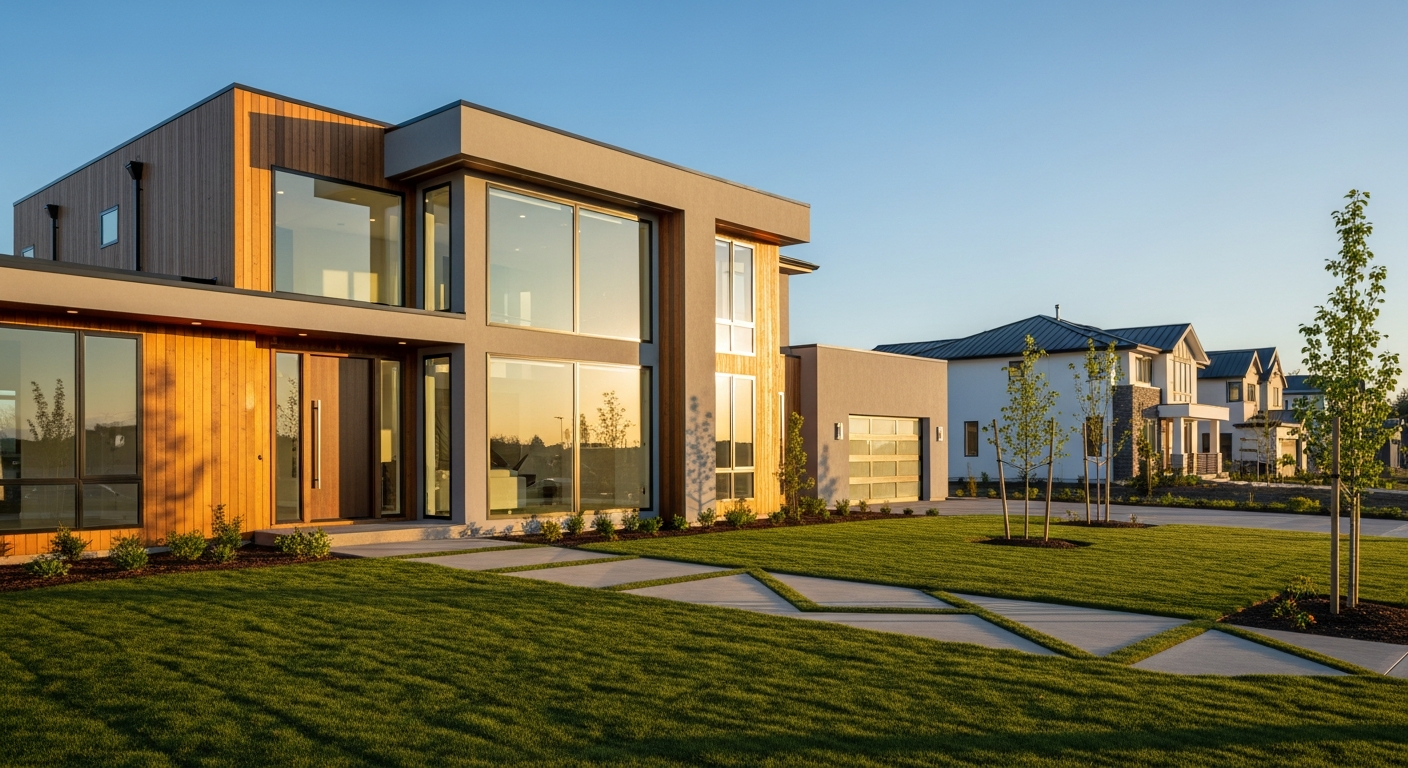
Yes, Co-Buyers Can Purchase a New Build
New construction is often overlooked by co-buyer groups, partly because the process feels unfamiliar and partly because people assume builders prefer individual buyers. Neither assumption holds up in practice. Builders sell to whoever brings a qualified contract, and a group of co-buyers with solid credit and a combined income that easily clears the debt-to-income threshold can be exactly the kind of reliable buyer a builder wants.
The mechanics of co-buying a new build are slightly different from purchasing an existing home. The timeline is longer, the contract terms favor the builder, and you will spend months in a holding pattern while construction progresses. But the product you receive at the end is a clean, warranty-backed home with no deferred maintenance, modern energy systems, and a layout built for how people actually live today. For the right group, those tradeoffs are worth understanding carefully.
How the Process Differs from Buying an Existing Home
With an existing home, the process moves quickly. You make an offer, negotiate, go under contract, complete inspections, and close in 30 to 60 days. New construction works differently at nearly every stage.
Builder contracts are non-standard. Unlike the offer-and-counteroffer model used in resale transactions, new construction purchases use builder-drafted purchase agreements. These contracts are written to protect the builder, not the buyer. They typically limit your ability to back out, restrict what you can negotiate, and include clauses around construction timelines, change orders, and materials substitutions. Read the contract carefully, and consider having a real estate attorney review it before you sign.
Timelines are measured in months, not weeks. Depending on where the builder is in the construction cycle when you purchase, your closing could be 6 months to 18 months away. Production builders working on larger communities often have homes at various stages, so you might close in 3 to 4 months on a spec home that is nearly complete. Custom or semi-custom builds take longer. Your group needs to plan around this timeline, including coordinating lease expirations and managing the pre-closing period as a team.
Customization options vary by build stage. If you buy early enough in the process, you may be able to choose finishes, fixtures, cabinet styles, flooring, and countertop materials. Later in the build, choices narrow quickly. Some builders offer structured design center appointments where you select from a preset menu of options. Know what is included in the base price and what costs extra. Upgrade packages can add meaningfully to the purchase price.
There is typically no traditional inspection contingency. Builder contracts often do not include an inspection contingency in the same form as a resale contract. What they typically do include is a final walkthrough before closing where you identify items to be completed or corrected. You should still hire an independent inspector, ideally for a pre-drywall inspection and again at final walkthrough. This is not required by most builders, but it is worth doing.
FHA Financing for New Construction
FHA loans are a common financing tool for co-buyer groups because they allow lower down payments and are accessible to buyers who have not yet built substantial savings. Using FHA on a new build adds a layer of requirements that your group and your builder need to understand upfront.
The builder must be FHA-approved. To use FHA financing on a new construction home, the builder must be registered and in good standing with FHA. Most large national and regional production builders are already on the FHA-approved list. Smaller or local builders may not be, and adding them to the approved list takes time. Confirm FHA eligibility with your lender before falling in love with a particular community.
The property must meet FHA minimum property standards. New construction homes often satisfy these standards easily, but the property still needs to be appraised by an FHA-approved appraiser. FHA appraisals evaluate both value and condition, and the appraiser will flag any issues that need to be resolved before the loan can close.
FHA requires specific inspections for new construction. For new builds, FHA has a tiered inspection process. Depending on the loan type and the state, this may involve a 10-year warranty or a combination of FHA-compliance inspections at various stages of construction. Your lender will walk you through the exact requirements for your loan type and market.
Down payment is 3.5 percent with qualifying credit. For a group of co-buyers, this is split in proportion to ownership shares. Each co-buyer still needs to be individually underwritten, which means all co-buyers' incomes, debts, and credit scores are evaluated separately. The lender qualifies the loan based on the full group, not just one person.
Seller concessions are capped at 6 percent. FHA limits how much a seller (in this case the builder) can contribute toward closing costs. Builders frequently offer concession packages, especially when sales are slower, so this limit is worth knowing before you negotiate.
How to Negotiate with Builders as a Co-Buyer Group
Builders negotiate differently from individual home sellers. They are running a business with margin targets, and they manage the narrative around pricing carefully. A price reduction on one lot affects the perceived value of every other lot in the community. Because of this, builders are often more willing to give value through incentives than through outright price cuts.
As a co-buyer group, your strongest negotiation points are:
Financing strength. A group with strong combined income and solid credit represents a reliable closing. Pre-approvals from a reputable lender, submitted with your purchase agreement, signal to the builder that you are serious and can perform.
Speed and decisiveness. Builders want buyers who commit and close on schedule. If your group can make decisions quickly and has your financing in order, that is valuable. Dragging out negotiations or changing your minds on upgrades creates friction. Come in prepared.
Upgrade packages instead of price concessions. If the builder will not move on the base price, ask about upgrades. Appliance packages, flooring upgrades, lighting packages, smart home systems, and landscaping allowances are all areas where builders often have flexibility. These add real value to the home without publicly reducing the list price.
Builder incentives tied to their preferred lender. Many builders offer significant rate buydowns, closing cost credits, or upgrade packages if you use their affiliated lender. Evaluate this carefully. The affiliated lender may offer attractive terms, or they may be less competitive than outside financing. Run the numbers on both options before deciding. If you use your own lender and forgo the incentive, make sure the difference in loan terms is worth it.
Builder Incentives and How to Use Them
In communities where inventory is sitting or a builder is trying to close out a phase, incentive packages can be substantial. Common builder incentives include:
- Interest rate buydowns (temporarily or permanently reducing the loan rate)
- Closing cost contributions
- Free upgrade packages at the design center
- Appliance packages or smart home technology included in the base price
- Landscaping or fence allowances
- Extended or enhanced warranty coverage
For a co-buyer group, rate buydowns deserve particular attention. A permanent rate buydown reduces your mortgage rate for the life of the loan, which lowers the monthly payment for all co-buyers and improves affordability. Even a half-point reduction compounds into meaningful savings over time.
When evaluating incentives, convert them to dollar value and compare. A $15,000 design center credit may sound impressive, but if the items available in the design center carry a 200 percent markup over retail, the real-world value is smaller. Ask the builder for the upgrade allowance in cash equivalent if possible, or get specific line items on what is included before signing.
New Construction Ownership-Entity Considerations
When co-buyers purchase through a Rhome ownership-entity structure, there is a specific aspect of new construction worth understanding: title does not transfer until closing. During the construction period, you hold your purchase agreement rights, not the property itself. The entity is typically formed and in place before closing, so that when the deed is issued, it goes directly to the entity.
This means your group should have the entity established and the governance agreement in place well before your closing date. For a new construction timeline of 6 to 12 months, that gives you ample runway. Work with Rhome early in the process so the legal structure is ready when the builder hands over keys.
One thing to confirm with your builder and their title company: some builders have preferred title companies and closing processes. Confirm that they will accommodate the entity taking title at closing. This is a routine request for experienced title companies, but it is worth confirming early so there are no surprises in the final days before closing.
Risks Specific to New Construction
New construction carries risks that do not exist in a resale purchase. Being clear-eyed about these helps your group make a genuinely informed decision.
Timeline delays are common. Labor shortages, material supply issues, permit delays, and weather can all push a closing date back. Builders typically include contract language that gives them flexibility on completion timelines. If your group has hard move-out dates from current leases, build in a buffer, or have a plan for a gap period.
Builder insolvency is a real risk, especially with smaller builders. If a builder goes out of business during construction, you may be stuck in a complicated situation with a partially built home, deposits at risk, and a legal process that takes time to resolve. Larger, publicly traded national builders carry less of this risk. For smaller or newer builders, ask about their track record, the source of their construction financing, and whether they carry a construction completion bond.
Contract terms limit your flexibility. Builder contracts often have strict earnest money deposit structures. The deposit is frequently non-refundable after certain milestones, meaning that if your group's circumstances change, you may not be able to exit without losing your deposit. Read the cancellation terms very carefully before signing.
Change orders add up. Mid-construction changes requested by the buyer typically cost more than the same change made at the design center phase. Decide on your finishes and specifications before you sign or early in the design center process, and resist the temptation to change course once construction is underway.
Benefits of Co-Buying a New Build
With the risks understood, the case for new construction as a co-buyer group is genuinely strong in many situations.
Structural warranty coverage. New homes come with builder warranties that typically cover workmanship defects for one year, systems (plumbing, electrical, HVAC) for two years, and structural defects for ten years. This matters for a co-buyer group because it reduces near-term repair exposure and gives the group a clear path for addressing defects without funding disputes.
No deferred maintenance. One of the complications of buying an existing home is that the inspection always surfaces deferred maintenance items. With a new build, everything is new. You are not inheriting someone else's 15-year-old HVAC system or a roof that has five years of life remaining. That is real value for a repair reserve strategy.
Modern layouts for shared living. New construction homes are often designed with multiple primary suite configurations, open floor plans, and flexible spaces that work well for co-buyers sharing a home. Older homes were built for a single nuclear family, and the room configurations sometimes make co-living less comfortable. New builds are worth filtering specifically for floor plans that support how your group plans to use the space.
Energy efficiency. New builds meet current energy codes, which means better insulation, more efficient HVAC systems, and windows that perform well. For a group splitting utility costs, lower monthly energy bills are a real shared benefit.
Customization. If you are buying early enough in the construction cycle, you can configure the home around how your group actually lives, rather than accepting whatever choices the previous owner made.
The Bottom Line
New construction is a viable path for co-buyer groups, and in some ways a cleaner one. The builder contract requires careful review, FHA financing adds specific requirements, and the timeline demands planning. But the product at the other end of that process is a home with no hidden deferred maintenance, a warranty that covers structural defects for a decade, and systems your group did not inherit from someone else's decisions.
Approach the builder with financing ready, decisions made, and your legal structure in place. The groups that do best in new construction purchases are the ones who treat it as a professional transaction from day one.

