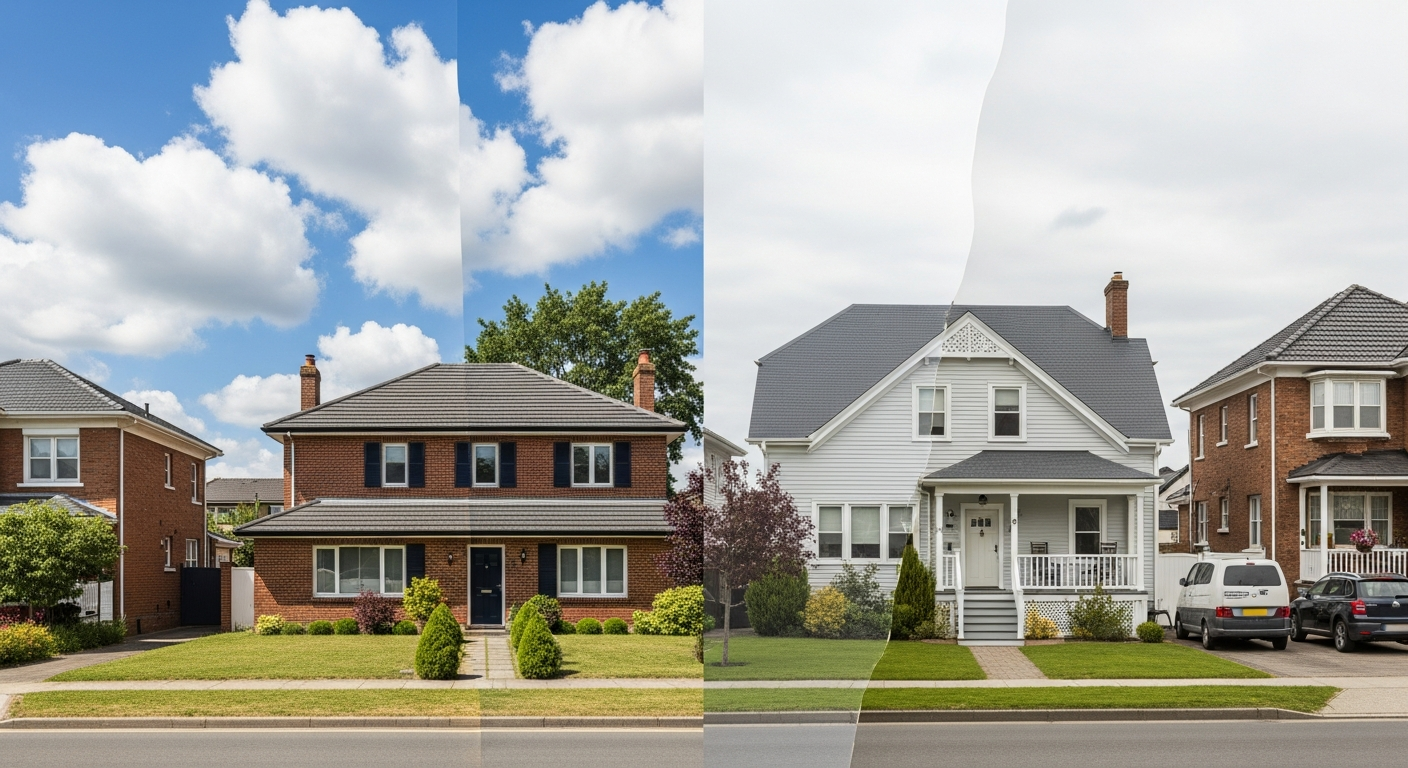
One of the most common misconceptions about co-buying is that it works the same way everywhere. People read about the model, get excited, and assume the same playbook applies whether they are trying to buy in Austin, rural Ohio, or the suburbs of Seattle. It does not.
Local market conditions shape almost every decision a group of co-buyers makes: how quickly they need to move, how much they can negotiate, what price range is actually realistic, and whether co-buying even unlocks meaningful access to the market they are targeting. Understanding those conditions before you start looking at homes is not optional. It is the foundation of a coherent strategy.
Why Local Market Conditions Matter More for Co-Buyers Than Solo Buyers
Solo buyers are generally reacting to market conditions the way every other buyer does. They compete or they wait. They stretch their budget or they settle for less.
Co-buyers have more levers to pull, but they also have more variables to manage. A group of two, three, or four people each bringing income, savings, and credit into a single purchase creates real strategic flexibility. The question is how to deploy that flexibility given what is actually happening in your target market.
In a competitive market, the pooled down payment and combined income can make the difference between qualifying for a home and being priced out entirely. In a slow market, the same pooled resources give a group the patience and negotiating position to wait for the right property at the right price. Neither dynamic is inherently better. They just require different tactics.
Co-buyers also have more organizational complexity than solo buyers. Getting two or three people aligned on an offer, agreeing on a price ceiling, and moving quickly when needed requires coordination. Understanding the pace and rhythm of your local market helps the group prepare for what that process will actually feel like.
What to Look for in Your Specific Market
Before developing any strategy, a co-buying group needs a clear picture of what is actually happening in their target area. These are the four metrics that matter most.
Days on Market
Days on market, often abbreviated DOM, measures how long a typical home sits before going under contract. In a hot market, that number might be three to seven days. In a slow market, it might be sixty to ninety days or more.
For co-buyers, DOM tells you how much time you have. If homes are going under contract in under a week, your group needs to be pre-approved, aligned on your criteria, and ready to submit an offer the day you tour a property. If homes sit for two months, you have time to do deeper diligence, negotiate, and move at a more measured pace.
Inventory Levels
Inventory is measured in months of supply, which estimates how long it would take to sell all active listings at the current rate of sales. Below three months is generally considered a seller's market. Above six months shifts toward a buyer's market.
Low inventory often means fewer choices, which is particularly relevant for co-buyers who may have specific space requirements. A group of three adults buying together likely needs at least three bedrooms, and probably wants enough common space to make the arrangement livable. In a low-inventory market, that specific type of property may be genuinely scarce.
Price Trends and Appreciation History
Looking at recent price trends tells you whether values are rising, falling, or flat. Looking at longer-term appreciation history tells you whether a given market has tended to build equity over time.
For co-buyers who are purchasing as a primary residence under an LLC structure, the home is not primarily an investment vehicle. But appreciation still matters because it affects refinancing options, exit flexibility, and the long-term financial position of the owners when one person eventually wants to sell their share or the group decides to sell together.
A market with a strong history of steady appreciation gives the group more confidence that the asset will hold its value. A market with recent price declines warrants extra conservatism on the purchase price and a longer planning horizon.
List-to-Sale Price Ratio
This ratio compares what homes are listed for versus what they actually sell for. In competitive markets, homes routinely sell above asking. In slower markets, sellers commonly accept offers at or below list price.
For co-buyers building a budget, this ratio is important because it affects how much the group actually needs to have ready. If homes in your target area sell at one hundred three percent of list price on average, you need to build that premium into your expectations from the start.
Hot Markets: How Co-Buying Helps
In a competitive, fast-moving market, the most common problem for buyers is access. Homes in the price range that fits a single income are scarce, sell in days, and attract multiple offers. A lot of buyers are simply priced out before they even start.
Co-buying addresses this directly. When two, three, or four people combine their incomes and savings, the qualifying purchase price rises substantially. That opens the door to a different segment of the market where there may be less competition, more space, and better long-term value.
The pooled down payment is particularly powerful under an FHA loan structure, where the total required down payment is 3.5 percent of the purchase price. Split two ways, that becomes a much more manageable individual contribution. Split three ways, it is genuinely accessible for people who have reasonable savings but have not been able to accumulate enough to compete solo.
In hot markets, offer strength also matters. A group of buyers who are fully pre-approved, have a larger combined down payment, and can demonstrate financial stability presents well to sellers. The offer may still need to be at or above asking price, but the underlying financials of the buyer group are often more compelling than a solo buyer operating at their limit.
The coordination challenge in a hot market is real. The group needs to be decisive. That means having honest conversations before touring starts about what everyone's actual ceiling is, what the non-negotiables are, and what can be compromised. A co-buying group that cannot get aligned on price within a few hours is going to lose competitive homes.
Slow Markets: How Co-Buying Helps
In a buyer's market, the calculus shifts. Homes sit longer, sellers are more willing to negotiate, and buyers have time. The co-buying advantage here is different but equally meaningful.
First, a group can afford to be selective. In a market with healthy inventory and extended DOM, there is no urgency pressure. The group can tour multiple properties, compare carefully, and make a deliberate choice. This actually suits the collaborative decision-making dynamic of co-buying well. The extra time to align as a group is not a liability when the market gives you room to use it.
Second, negotiating position is stronger. A co-buying group coming in with combined income and a solid pre-approval can negotiate on price, request seller concessions, or ask for closing cost assistance. In a slow market, sellers are often willing to accommodate buyers who are qualified and serious.
Third, inspection contingencies and due diligence periods are more available. In a hot market, buyers often waive inspections to compete. In a slow market, the group can do thorough property inspections, review HOA documents carefully, and take the time to understand exactly what they are buying into. For a group of people entering a long-term shared ownership arrangement, that diligence is worth a great deal.
Slow markets also allow more time for the group to get their LLC structure set up properly before closing. The legal and logistical groundwork of co-buying takes some time, and a market that moves at a measured pace is a better fit for groups who are still working through that process.
Rural, Urban, and Suburban Considerations for Co-Buyers
Beyond the hot-or-slow dimension, the type of geography matters independently.
Urban Markets
Dense urban markets are typically the most competitive and the most expensive per square foot. They are also where co-buying tends to create the most dramatic shift in access. In a city where a two-bedroom condo costs eight hundred thousand dollars, solo buyers on a single income have very few options. A group of two buyers suddenly has access to the full market.
Urban markets also tend to have more condos and attached homes in the inventory mix. Co-buyers should check HOA rules carefully in these cases, as some HOAs restrict LLC ownership or have rules about primary residency requirements that overlap with co-buying terms.
Suburban Markets
Suburban markets offer a middle ground. Prices are generally lower than comparable urban properties, inventory tends to be higher, and the home sizes available more naturally accommodate a group of adults living together. A four-bedroom house in the suburbs can feel genuinely comfortable for two or three adults who each want their own space.
Suburban markets also tend to have more predictable appreciation curves and a larger pool of comparable sales, which makes it easier to determine whether a given asking price is fair.
Rural Markets
Rural markets present different dynamics. Prices are often dramatically lower, which changes the math on what co-buying unlocks. In a market where a three-bedroom home costs two hundred fifty thousand dollars, co-buying is less about access and more about affordability per person or the ability to buy something larger or better than any individual could alone.
The tradeoff is liquidity. Rural properties can be harder to sell, take longer to find buyers, and may not appreciate as reliably as urban or suburban properties. For a co-buying group that expects to sell together or transition ownership within five to seven years, slower liquidity is worth factoring into the planning conversation.
Rural markets also tend to have fewer comparable sales, which makes appraisals trickier. If the appraised value comes in below the purchase price, the group either needs to renegotiate or cover the gap out of pocket. This is a known risk in thin markets.
How to Research Your Local Market
You do not need to become a real estate analyst to get a useful read on local conditions. A few practical steps will give you what you need.
Start by reviewing recently sold homes in your target zip codes or neighborhoods. Most public real estate portals show sold prices alongside active listings, and you can see how long properties sat before going under contract. Look at the last three to six months, not longer, since market conditions can shift quickly.
Talk to a local real estate agent who works primarily with buyers in that area. Ask specific questions: What is the typical DOM right now? Are offers going over asking? How often are sellers accepting contingencies? A good agent will give you straight answers. If they are evasive or overly promotional, find someone else.
Check local housing market reports. Many metro areas have regular market reports published by local associations, title companies, or real estate brokerages. These often include the metrics discussed above in a digestible format.
Finally, pay attention to the type and age of inventory. Lots of older homes that need updating in the active listings tells you something different about a market than a mix of new construction and well-maintained resales. A co-buying group should think about renovation appetite, since the time, cost, and coordination of a major renovation is amplified when multiple owners need to align on decisions.
Frequently Asked Questions
These FAQ items are structured separately and appear in the faqItems field below.
