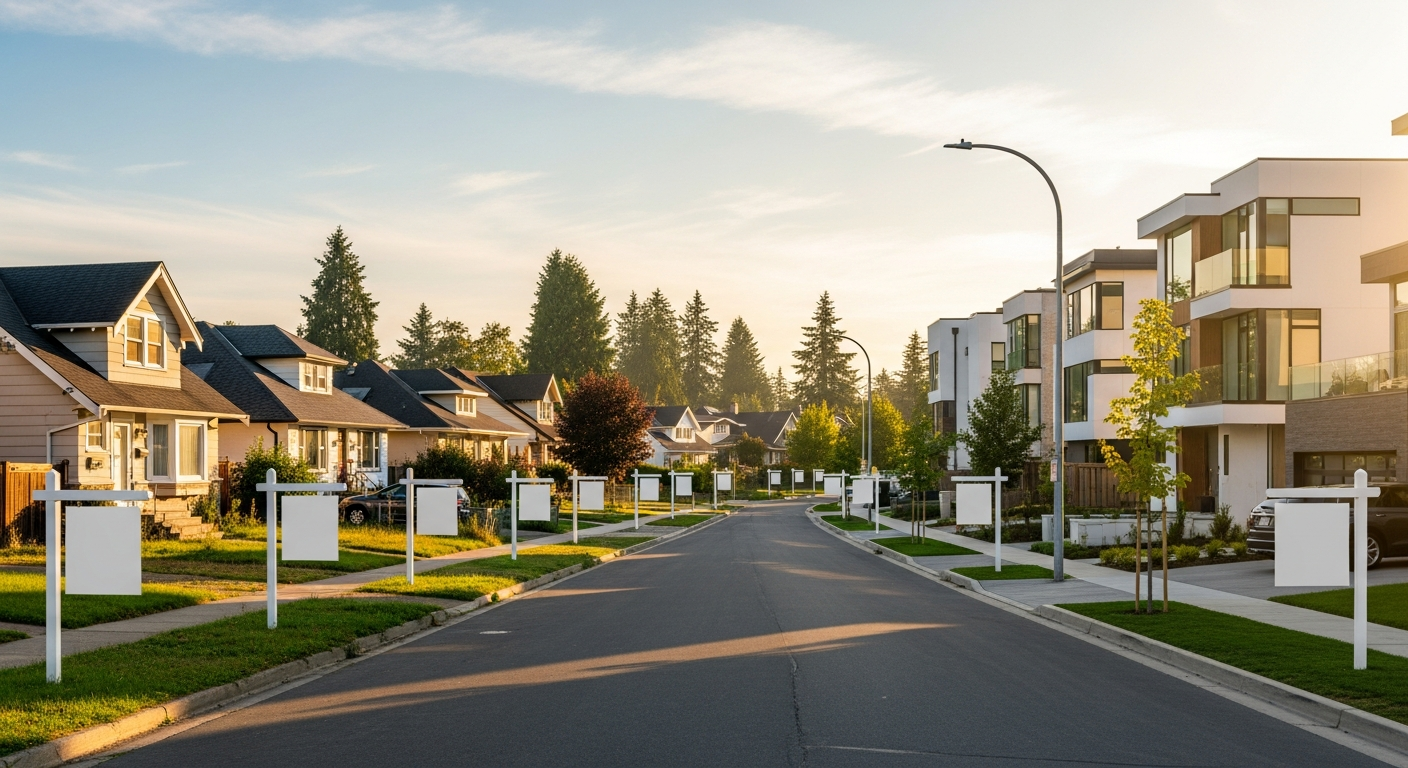
One national headline declares that home prices are hitting new highs. The next suggests the market is tipping in favor of buyers. Both can be true at the same time, and that’s the reality of American real estate today. The single, nationwide housing narrative is a myth. In its place are dozens of intensely local markets, each behaving according to its own distinct logic.
Recent reports, like one highlighted by CNN, point to major metropolitan areas in Texas becoming buyer's markets. An influx of new construction in cities like Austin and San Antonio has pushed inventory levels to a point where builders are offering significant discounts and negotiating power has shifted away from sellers. Yet, for much of the rest of the country, the story is one of persistent gridlock, high prices, and fierce competition for a scarcity of homes.
Understanding this great divergence is the most important first step for anyone trying to buy or sell a home right now. The national data provides the climate, but your zip code determines the weather.
- The National Headline vs. Your Local Reality
- Case Study: The Sun Belt's Supply Surge
- The Great Lock-In: Why Other Markets Remain Frozen
- What a Buyer's Market Actually Feels Like
- How to Navigate a Divided Market
The National Headline vs. Your Local Reality
At the highest level, the Federal Reserve sets the tone for every market. By raising the federal funds rate to combat inflation, it directly influences mortgage rates. A 30-year fixed mortgage rate jumping from 3% to over 6% or 7% is a national event that impacts affordability for every single buyer, from Miami to Seattle. This is the common pressure point. According to the National Association of Realtors, this has pushed the Housing Affordability Index to near its lowest levels in decades.
But that's where the shared story ends. How that pressure affects a specific market depends entirely on a simple, fundamental economic principle: supply and demand.
Think of it this way: High interest rates act like a massive weight placed on the market. In a city with a growing supply of homes, that weight pushes prices and seller leverage down. In a city with a chronic shortage of homes, the weight just freezes everything in place, creating a tense standoff between would-be buyers who can't afford the monthly payments and would-be sellers who have no incentive to move.
This is why you can see home prices declining month-over-month in Austin, Texas, while simultaneously seeing modest price growth in Hartford, Connecticut. Two different worlds, one country.
Case Study: The Sun Belt's Supply Surge
The most dramatic examples of markets cooling are found across the Sun Belt, particularly in Texas and Florida. The story here is one of supply finally catching up with - and in some cases, overtaking - the massive wave of demand that defined the pandemic years.
For over a year, cities like Austin, Dallas, Houston, and San Antonio have seen their housing inventory climb steadily. The primary driver is a boom in new construction, especially on the suburban fringes. Unlike geographically constrained cities in the Northeast or on the West Coast, these areas have ample land for development. Builders, responding to the frenzied pandemic-era demand, launched ambitious projects. Those homes are now complete and flooding the market.
Data from real estate brokerage Redfin shows that in May 2024, inventory in Austin was up nearly 20% year-over-year. A market is generally considered balanced with about six months of supply. Some of these Sun Belt cities are approaching or have surpassed that threshold, officially entering buyer's market territory. What does this look like on the ground?
- Builder Incentives: New home builders are aggressively competing for buyers. This includes offering mortgage rate buydowns (temporarily or permanently lowering the buyer's interest rate), paying for closing costs, or including premium upgrades at no extra charge.
- Price Reductions: Sellers are having to face reality, and price cuts on listings that have been on the market for more than a few weeks are now the norm.
- Increased Negotiating Power: Buyers can make offers below the asking price and have a real chance of acceptance.
This new reality is a direct result of supply finally outpacing demand. High mortgage rates have tempered the number of buyers, and the flood of new homes has given those remaining buyers something they haven't had in years: choices.
The Great Lock-In: Why Other Markets Remain Frozen
Now, contrast the situation in Austin with that of a city like Boston or San Diego. In these markets, the story is not about excess supply but a severe lack of it. The primary cause is the mortgage rate "lock-in effect."
According to the Federal Housing Finance Agency (FHFA), a vast majority of American homeowners with a mortgage - some estimates put it over 80% - have an interest rate below 5%, with many enjoying rates closer to 3%. For these homeowners, selling their current home would mean giving up a historically low mortgage rate only to take on a new one at a rate that is double or more. This creates a powerful financial disincentive to move.
The math is simple and stark. A homeowner with a $400,000 mortgage at 3.5% has a principal and interest payment of about $1,796. To buy a similarly priced home today with a 7% mortgage, their payment would jump to $2,661, an increase of nearly $900 per month for the same house. This isn't just a financial calculation; it's a psychological barrier. Homeowners feel trapped in their current homes by what many call 'golden handcuffs.' The prospect of giving up a comfortable, predictable payment for a much higher one feels like a massive step backward, even if they need more space or want to move for a new job. This keeps potential sellers on the sidelines, which in turn starves the market of existing home inventory.
This dynamic leads to a completely different market feel:
- Persistently Low Inventory: Well-priced homes still receive multiple offers.
- Price Stability or Slow Growth: Prices aren't crashing because there's so little to buy. Instead, they remain stubbornly high.
- Buyer Frustration: Buyers face a double bind of high prices and high monthly payments, with very few options to choose from.
In these locked-in markets, the defining characteristic is not a shift in power but a dramatic slowdown in activity. The number of transactions is low, but the competition for what does come up for sale remains high.
What a Buyer's Market Actually Feels Like
For those who have only known the frenetic seller's markets of the past decade, the return of buyer-friendly conditions can feel like a different world. The change is less about deep price cuts and more about the return of normalcy and leverage to the buying process. The balance of power shifts, giving buyers time, options, and a voice in the transaction.
Here’s a direct comparison of what to expect in each market type:
| Feature | In a Seller's Market | In a Buyer's Market |
|---|---|---|
| Pacing | Frantic. Homes sell in days, sometimes hours. | Deliberate. You have time to see homes and think. |
| Offers | Expect bidding wars. Offers often go above asking. | Offers at or below asking price are common. |
| Contingencies | Often waived to make an offer more competitive. | Standard contingencies are back on the table. |
| Inspections | May be done for "informational purposes only." | You can request repairs based on inspection results. |
| Negotiation | Sellers hold most of the power. | Buyers have room to negotiate on price and terms. |
| Seller Concessions | Extremely rare. | Can ask seller to contribute to closing costs. |
In a buyer’s market, due diligence returns. You can include an inspection contingency that allows you to back out or renegotiate if major issues are found. You can include a financing contingency that protects you if your loan falls through. These were standard practice for decades before becoming casualties of the recent market frenzy.
How to Navigate a Divided Market
Given this fractured landscape, a one-size-fits-all approach to home buying or selling is destined to fail. Success requires a hyper-local strategy.
For Buyers
Your first job is to correctly diagnose your specific market. Ignore the national news and find an agent who can speak with authority on your neighborhood's data. Ask for the average days on market, the list-to-sale price ratio, and the months of supply for the type of home you want. This data will tell you whether you're in a negotiating position or if you need to prepare for a fight. In a tight market, don't just look at the newest listings. Pay attention to homes that have been on the market for 30 days or more. These 'stale' listings often represent sellers who were too optimistic with their initial price and may now be far more willing to negotiate.
In persistently high-cost, locked-in areas, affordability remains the single biggest hurdle. This has led to a rise in creative solutions, like pooling resources with friends or family to increase purchasing power. Formalized co-ownership agreements are becoming a more accessible path for buyers who might otherwise be priced out of the market entirely.
For Sellers
If you're in a market that is shifting, pricing your home correctly from day one is everything. The days of 'testing the market' with an aspirational price are over. Overpriced homes will sit, accumulate a stigma, and ultimately sell for less than if they had been priced properly from the start. In a world where buyers have choices, your home's condition and presentation also move from 'nice-to-have' to 'must-have.' Think professional staging to define spaces, a pre-listing inspection to uncover potential deal-breakers, and high-quality photography that tells a compelling story online. These are no longer optional expenses; they are critical investments.
The only certainty is that the market will continue to evolve. Factors like the ending of foreclosure mitigation programs could add more distressed properties to the supply mix, while any future drop in interest rates could bring a new wave of buyers back into the fold. The key is to ground your decisions not in national speculation, but in the hard data of the streets you want to live on.