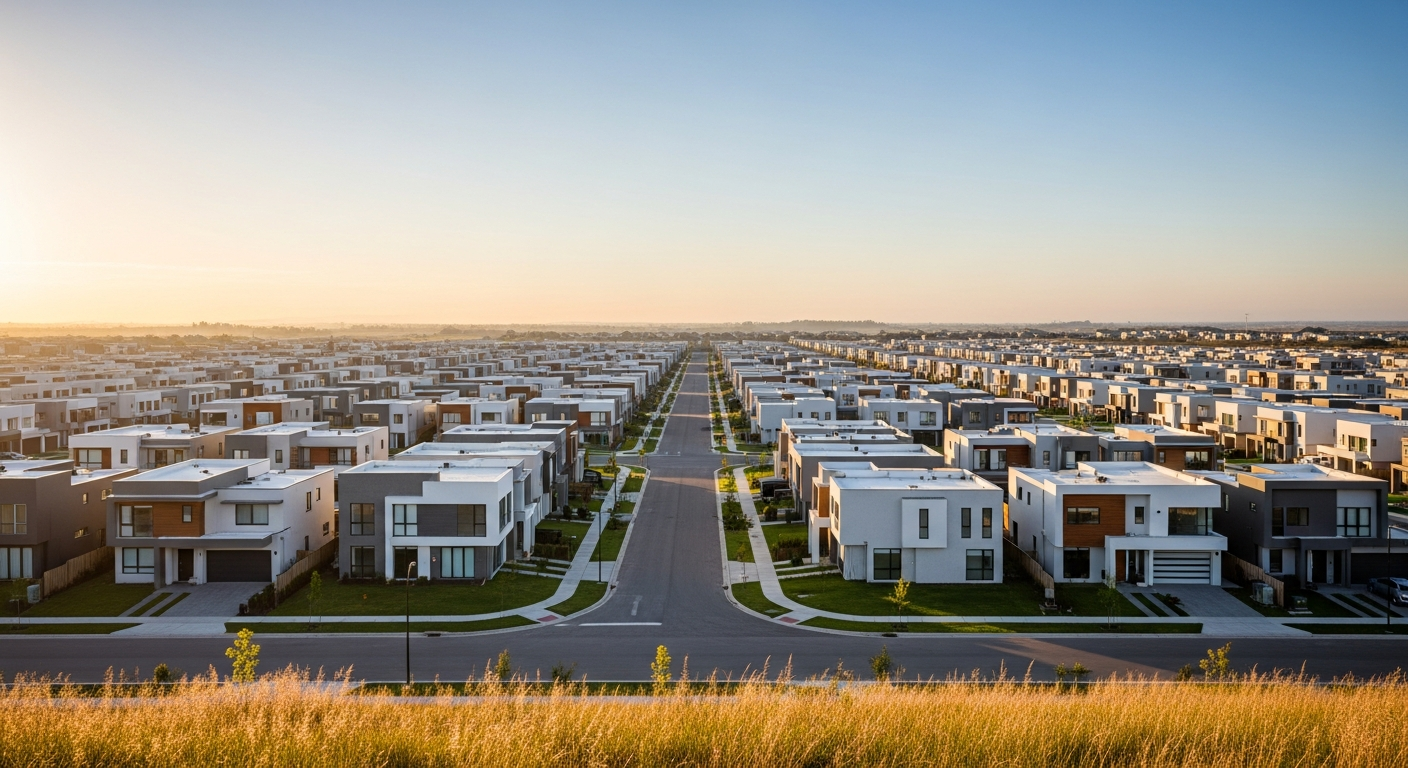
Homebuyers have been holding their breath for one thing: more listings. The theory was simple: more homes for sale would mean less competition, softer prices, and a real chance for people who've been sidelined. Well, the listings are here. But for millions of Americans, that opportunity is still a mirage.
A new report from Realtor.com and the National Association of Realtors (NAR) quantifies this frustration. Even with more homes on the market, a staggering 77% of them are unaffordable for middle-income households. The housing market is recovering, but only for the wealthy.
This disconnect isn't a temporary blip; it's a structural crisis. To make sense of it, we need to dig deeper than the raw number of 'for sale' signs and look at what kind of homes are available, the economic pressures squeezing buyers, and the creative tactics they’re using just to get in the game.
Table of Contents
- The Numbers Behind the Frustration
- Why More Supply Isn't the Answer (Yet)
- A Nation Divided by Affordability
- The New Realities for Aspiring Homeowners
The Numbers Behind the Frustration
The Realtor.com analysis hinges on a powerful new metric: the Listing-Income Alignment Score. It's a simple idea that cuts through the noise by measuring how well the inventory in a local market matches the purchasing power of that area's households. A higher score means a better match; a lower score signals a significant affordability gap.
In March 2024, the national score was 74.9%. That’s up from 66.7% a year ago, but it’s a far cry from the pre-pandemic baseline of 84.4%. The takeaway is clear: despite more listings, finding an affordable home is dramatically harder today than it was before 2020.
The $75,000 Litmus Test
The data gets even clearer when you look at a specific income level. Take a household earning $75,000 per year, a solid middle-class income in many parts of the country. Today, this household can afford just 23% of the active listings on the market. In a balanced market, that same household would be able to afford around 44% of available homes. That gap isn't just a statistic; it's a closed door on nearly half the market.
This shortage of affordable options isn't a small statistical quirk. The analysis found a national shortage of roughly 311,000 listings priced for middle-income buyers. Simply adding more homes for sale doesn't solve the problem if none of them are at the right price point. The market is recovering at the top end but hollowing out in the middle.
Why More Supply Isn't the Answer (Yet)
So if inventory is up, why is affordability down? Three powerful forces are working together to keep lower-priced homes off the market. It turns out that not all supply is created equal.
The Golden Handcuffs of Low Mortgages
One of the biggest factors limiting the supply of affordable, existing homes is the "lock-in effect." Millions of current homeowners refinanced or purchased homes when mortgage rates were at historic lows, often below 3%. With current rates hovering in the 6-7% range, according to Freddie Mac, these homeowners have a powerful financial disincentive to sell. To move would mean trading a low monthly payment for a much higher one, even for a similarly priced home.
This effect keeps a huge portion of the nation's housing stock off the market, especially the traditional starter and mid-market homes. Because these are the very homes middle-income buyers target, their absence creates a void that new construction is struggling to fill.
The High Cost of Building New
You might think home builders would rush to fill this gap, but they're dealing with their own financial pressures. The National Association of Home Builders (NAHB) reports that the costs for land, labor, and materials are still sky-high. To stay profitable, builders are focusing on what sells for more: larger, higher-end homes.
Building smaller, more affordable starter homes is less profitable and often more difficult due to local zoning regulations that can favor larger single-family lots. The result is that new inventory entering the market is disproportionately expensive, further skewing the affordability metrics and doing little to help the median buyer.
When Paychecks Can't Keep Pace
The third major factor is simple but brutal: paychecks haven't kept up. While wages have grown, according to the Bureau of Labor Statistics, that growth has been dwarfed by the explosion in housing costs. Home prices shot up over 40% in just a few years, and the spike in interest rates that followed nearly doubled the monthly mortgage payment on a typical home.
This triple-whammy has hammered purchasing power. Even with a higher salary, the average American can afford significantly less home than they could in 2019. The market is not just expensive in absolute terms; it is historically expensive relative to incomes.
A Nation Divided by Affordability
While this is a national crisis, your personal experience of it depends entirely on your zip code. The Realtor.com report highlights a stark geographic divide between the relatively affordable Midwest and the chronically expensive coastal markets.
Where Middle Incomes Still Work: The Midwest Model
Markets like Toledo, Ohio; St. Louis, Missouri; and Akron, Ohio, stand out as the most balanced markets in the country. In these areas, home prices have not appreciated as dramatically, and the local wage-to-home-price ratio is more favorable. A middle-class income can still buy a home without wrecking their budget.
These areas benefit from a more stable economic base, less speculative investment, and a housing stock that includes a greater number of modest, attainable homes.
The Coastal Squeeze
On the other end of the spectrum are cities like Los Angeles and San Diego in California, along with Providence, Rhode Island. In these markets, the alignment score is painfully low. Decades of under-building, intense demand, and high local incomes have pushed median home prices to levels that are completely disconnected from what a middle-income family can afford.
The contrast is stark:
| Metric | Toledo, OH (High Alignment) | San Diego, CA (Low Alignment) |
|---|---|---|
| Median Listing Price | ~$200,000 | ~$1,000,000 |
| Median Household Income | ~$60,000 | ~$98,000 |
| Affordable Listings for Median Income | High Percentage | Very Low Percentage |
| Key Factor | Stable prices, ample starter home stock | Severe inventory shortage, high demand |
The table gets to the heart of the problem. While income is higher in San Diego, it is nowhere near high enough to compensate for a 5x difference in home prices. The result is a market where homeownership is becoming an exclusive club, reserved only for the highest earners.
The New Realities for Aspiring Homeowners
Buyers aren't just waiting on the sidelines; they're getting creative. The old playbook for homeownership is being tossed out, replaced by new, collaborative strategies.
The very concept of a "starter home" is changing. For many, it's no longer a small, detached single-family house. It might be a condo, a townhouse, or a property in a more distant suburb that requires a longer commute. Buyers are forced to make compromises on location, size, and amenities that previous generations did not.
Beyond these compromises, we are seeing the rise of more structured homebuying strategies. People are actively pooling resources to enter the market. Buying a home with friends, siblings, or unmarried partners is no longer a niche idea; for many, it's the most logical path forward.
This strategy, known as co-ownership, allows groups of people to combine their financial power to qualify for a mortgage. It’s a direct answer to the affordability crisis. While buying a home with friends or family isn't a new concept, today's market is pushing it from an informal arrangement to a structured financial plan. This new wave of co-buying involves detailed legal agreements that cover everything from equity splits and maintenance responsibilities to a clear exit strategy for when one owner wants to sell their share. It's essential to have a robust co-ownership agreement drafted by a lawyer to prevent future disputes over finances or the property's use. Platforms and specialized real estate agents are now emerging to facilitate these complex deals, helping buyers navigate the legal and financial hurdles.
This isn't just a workaround; it's a fundamental shift in perspective. A home becomes less of a private sanctuary and more of a shared financial asset-a tool for building equity in a market that has locked out individuals.
Long-term solutions depend on big, slow-moving changes. Will cities aggressively reform zoning laws to encourage the construction of 'missing middle' housing like duplexes, triplexes, and townhomes that naturally offer lower price points? Will interest rates ever fall enough to break the 'golden handcuffs' and unlock existing inventory? These are the foundational questions with no easy answers.
For now, the market is split in two. High-income earners and those with existing home equity can still navigate it. For everyone else, the dream of ownership is fading. The promised increase in housing supply has turned out to be a mirage, reflecting a reality they simply cannot afford. In response, they are rewriting the rules by pooling their resources and buying homes together. This rise in co-ownership isn't just a temporary trend; it may be the defining feature of this real estate era.