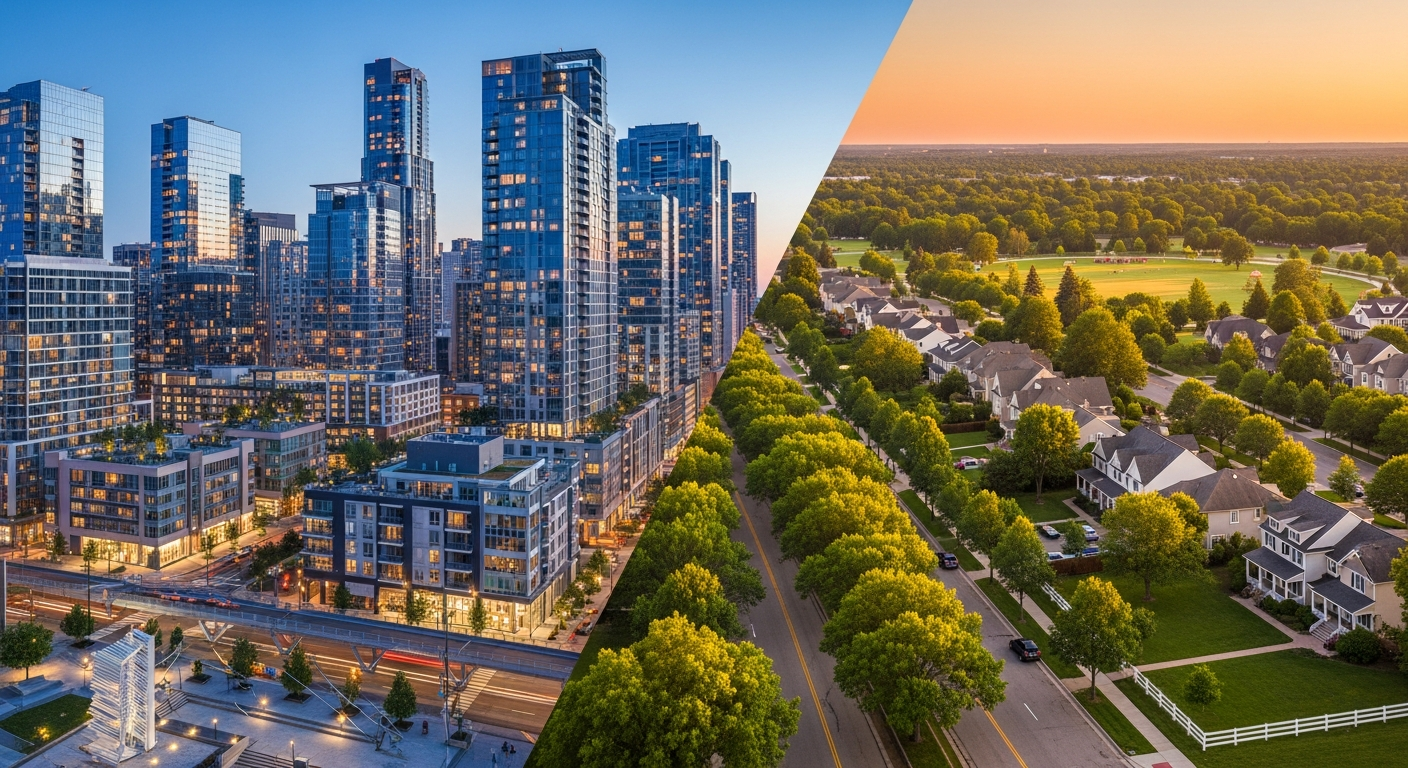
America's well-documented political polarization is now being mirrored by a physical one. A great sorting is underway, not by party, but by generation. Look at any map of domestic migration, and a striking pattern emerges: two distinct versions of the country are taking shape, driven by the profoundly different priorities of its youngest and oldest adults.
Younger Americans, particularly Gen Z, are moving to a specific set of growing cities, while Baby Boomers are heading for completely different destinations. The result is two separate maps of America, each driven by a unique definition of home, community, and the future.
Look at any analysis of recent moving trends, and the divergence is clear. While Gen Z gravitates towards cities like Austin, Denver, and Charlotte, Boomers are overwhelmingly choosing places like Sarasota, Henderson, and The Villages. This isn't random. It's a calculated response to the economic realities, career pressures, and lifestyle goals that define each generation right now.
This great relocation is reshaping local economies, straining housing markets, and creating new cultural hubs from scratch. It is one of the most significant domestic migration shifts in decades, and understanding the forces behind it is crucial for anyone trying to predict the future of American real estate.
- The New Urban Magnets for Gen Z
- The Boomer Exodus to the Sun Belt
- A Tale of Two Housing Markets
- Redefining the American Dream
The New Urban Magnets for Gen Z
The cities drawing the youngest generation of adults share a common DNA. They are mid-sized, economically dynamic, and culturally vibrant. They offer the jobs, energy, and social fabric that Gen Z, now entering its prime career-building years, seeks.
Top Destinations for Gen Z
- Austin, TX: Despite its rising cost of living, Austin's gravitational pull remains immense. Its booming tech sector, legendary music scene, and energetic atmosphere make it a primary target for young professionals.
- Denver, CO: Combining outdoor recreation with a strong job market, Denver offers a lifestyle that appeals to a generation that values work-life balance.
- Charlotte, NC: As a major banking and financial hub, Charlotte provides high-paying jobs with a more accessible cost of living than coastal megacities.
- Atlanta, GA: A cultural and economic powerhouse in the South, Atlanta draws a diverse young population with its opportunities in film, tech, and logistics.
- Nashville, TN: Known for music, Nashville has diversified its economy to become a healthcare and tech center, attracting young talent while maintaining its unique cultural identity.
What's Driving the Move?
The motivations for Gen Z are clear: opportunity and experience. According to a 2023 report from the National Association of Realtors, younger buyers prioritize job stability and commuting costs when choosing a location. These cities are economic powerhouses, creating the professional jobs that let a recent graduate build a career.
Beyond the resume, these locations offer the dense, walkable, and amenity-rich environments that Gen Z prefers. They want to be near restaurants, concert venues, and public spaces. This is a generation that often prioritizes access over square footage, choosing a smaller apartment in a lively neighborhood over a larger house in a quiet suburb. These aren't just happy accidents; many of these cities have spent years investing in public transit, green spaces, and vibrant downtown cores to attract precisely this demographic. They understand that for today's young professionals, quality of life is not a perk-it's a core requirement.
The rise of remote and hybrid work has been a huge catalyst. It has untethered young workers from traditional hubs like New York City and San Francisco, allowing them to seek out cities with a better quality of life and a lower-but still substantial-cost of living. They are, in effect, rebuilding the American middle-tier city in their own image.
The Perils of Popularity
Of course, this mass influx comes with its own set of problems. The very popularity of these cities is creating an affordability crisis. Rents and home prices are skyrocketing, often pricing out not just newcomers but also long-term residents. Gentrification is rapidly altering neighborhood characters, and infrastructure-from highways to water systems-is struggling to keep up with the explosive growth. For Gen Z, the challenge is getting a foothold in the very places that promise the most opportunity.
The Boomer Exodus to the Sun Belt
While Gen Z is chasing career ladders, Baby Boomers are cashing in their equity and seeking a different kind of life. Their destination map is dominated by the Sun Belt and established retirement communities, where the focus shifts from work to lifestyle.
Top Destinations for Baby Boomers
- Sarasota, FL: A classic Florida retirement destination, offering warm weather, beaches, and a thriving arts scene.
- Henderson, NV: Located just outside Las Vegas, Henderson offers resort-style living, golf courses, and Nevada's favorable tax climate.
- The Villages, FL: This famous master-planned retirement community is a city unto itself, designed entirely around the social and recreational needs of its active adult residents.
- Boise, ID: A bit of an outlier, Boise has become a popular relocation spot for its lower cost of living, outdoor access, and less crowded feel compared to other Western cities.
- Myrtle Beach, SC: A coastal favorite that combines affordable living with endless golf and beachfront activities.
Cashing In on a Lifetime of Equity
The financial power behind this move is immense. Baby Boomers control over half of the nation's wealth, with a huge portion tied up in real estate. Selling a paid-off home in a high-cost area like the Northeast or West Coast can generate a windfall of hundreds of thousands, or even millions, of dollars. This single transaction often allows them to buy a new, often larger, home in a Sun Belt state with cash and still have a substantial sum left over to bolster their retirement funds.
Financial considerations are top of mind. States with no income tax, like Florida and Nevada, are particularly attractive. Lower property taxes and a generally lower cost of living stretch retirement savings further.
Community and Comfort are Key
But it's not all about the balance sheet. After decades of building careers and raising families, Boomers are seeking a lifestyle built around ease and connection. They are drawn to master-planned communities that offer a turnkey social life, with built-in clubs, activities, and neighbors at the exact same life stage. They are trading snow shovels for golf clubs and long commutes for pickleball tournaments.
Another powerful, though less-discussed, driver is family. A significant number of Boomers are relocating not just for the weather, but to be closer to their adult children and grandchildren, re-establishing multi-generational family hubs in new parts of the country.
A Tale of Two Housing Markets
This generational divergence is creating intense pressure points in local real estate markets across the country.
In Gen Z's target cities, the influx of young, high-earning professionals is driving up housing costs for everyone. The median sale price in Austin, for instance, has increased dramatically over the past decade, making it incredibly difficult for a young person to buy a home there. This affordability crunch is a central paradox of the Gen Z migration: they are moving to these cities for opportunity, only to find the dream of homeownership pushed further out of reach.
This reality is forcing a new generation of buyers to get creative. Co-buying with friends or family is no longer a niche strategy but a mainstream necessity. Buyers are forming LLCs or using Tenancy in Common (TIC) agreements to pool their financial resources, turning a daunting down payment into a manageable group effort. These arrangements allow them to enter competitive markets and start building equity years before they could have done so alone. It's a pragmatic adaptation to a market that no longer caters to the individual, entry-level buyer.
| Attribute | Gen Z Destination (e.g., Austin, Denver) | Boomer Destination (e.g., Sarasota, Henderson) |
|---|---|---|
| Primary Driver | Career Opportunity & Lifestyle | Retirement & Financial Benefits |
| Key Attraction | Jobs, nightlife, culture | Low taxes, warm climate, amenities |
| Housing Demand | Rental apartments, starter homes | Single-family homes, condos in 55+ communities |
| Market Impact | Rising rents, intense competition | Stable demand, new construction of retirement homes |
| Economic Focus | Tech, finance, creative industries | Healthcare, leisure, hospitality |
Meanwhile, in Boomer destinations, the housing market operates on a different logic. The demand is steady and fueled by cash buyers, which can insulate these markets from the interest rate volatility that affects first-time buyers. The challenge here is not a lack of affordability for the new arrivals, but a potential strain on local infrastructure like healthcare services, which must scale to meet the needs of an older population.
The Other Side of the Coin: The Markets Left Behind
This great sorting also creates a vacuum. What happens to the suburban communities in Illinois, Ohio, or New York that Boomers are leaving? In some cases, it creates an opportunity for younger families to find more affordable housing stock. In others, it can lead to a shrinking tax base and challenges for local governments. These areas face the difficult task of reinventing themselves to attract a new generation of residents who may have very different priorities than the ones who just left. The ripple effects of migration are felt just as strongly in the places of origin as in the destinations.
Redefining the American Dream
The split in migration patterns is more than a demographic curiosity. It signals a deeper fragmentation of the American experience. For decades, the ideal of the American Dream was relatively uniform: a single-family home in a good school district, a stable job, and a quiet retirement. Today, that ideal is being rewritten.
For Gen Z, the dream is often more about mobility, experience, and building a career in a place that reflects their values. Homeownership is still a goal, but the path to achieving it looks different. It may involve living in a city for a decade, building a career, and exploring alternative ownership structures before buying a traditional home.
For Boomers, the dream is the reward for a lifetime of work. It is about converting the equity built over decades into a comfortable and active retirement. They have already run the race and are now choosing a place to enjoy the rewards.
These two paths are not in conflict, but they are running in parallel on two very different tracks. The cities that cater to one group are often ill-suited for the other. The long-term consequences of this divergence are profound. As Americans sort themselves into demographically and economically homogenous regions, it could deepen the country's political and cultural fissures. We may see an America of bustling, expensive, and youthful tech hubs on one hand, and comfortable, slower-paced, and older retirement zones on the other, with less and less interaction between them. The question for the next decade will be whether these parallel tracks can coexist or if this great relocation will permanently redraw the nation's economic and social map.