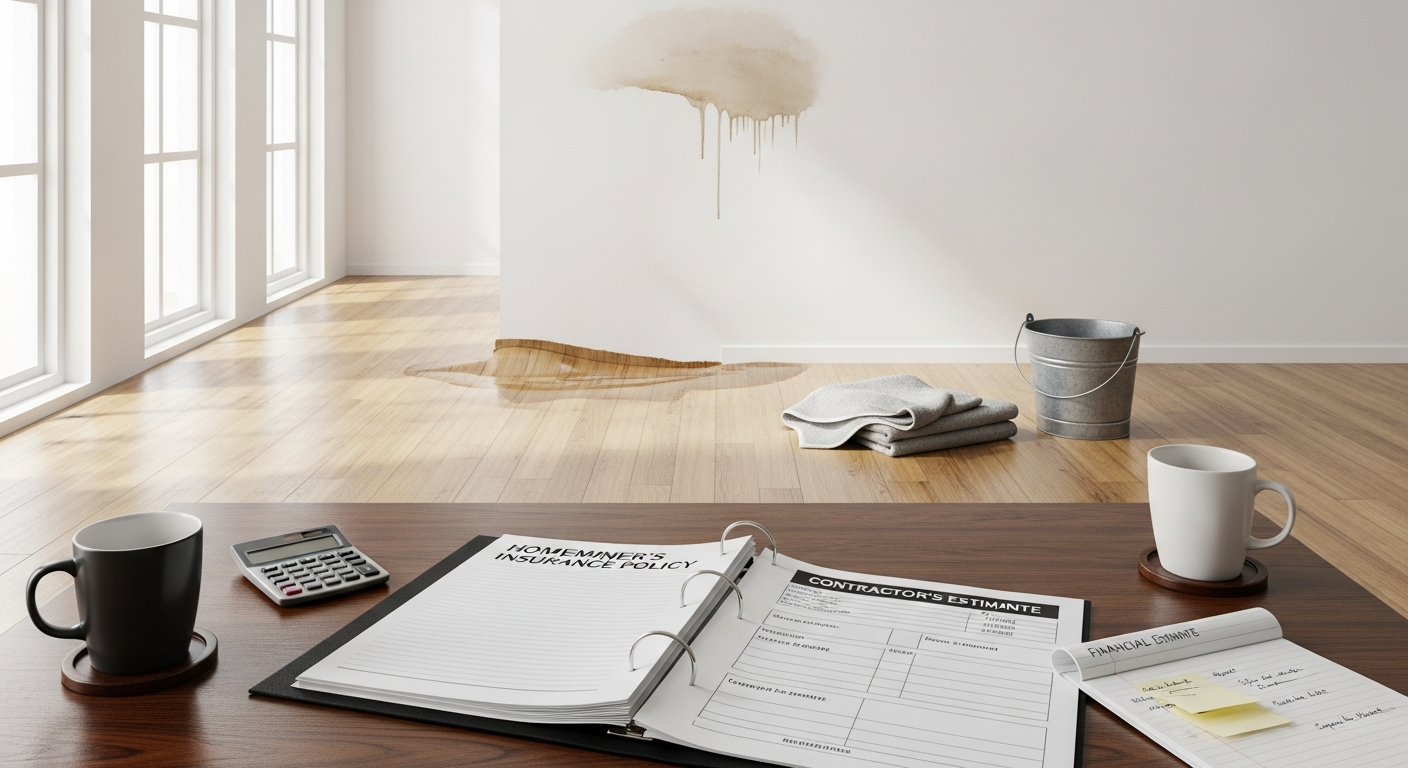
Damage to a home is stressful under any circumstances. When you co-own that
home with others through a shared ownership structure, there are a few additional moving pieces:
the policy is held by the ownership entity, your co-owners need to be in the loop, and
decisions about whether to file at all have real financial consequences that
affect everyone.
This guide covers the full process, from deciding whether to file in the
first place to what happens after repairs are complete.
When to File vs. Pay Out of Pocket
Not every incident worth reporting is worth filing a claim over. This is one
of the most consequential decisions you will face as a homeowner, and
co-owners should think through it together.
The key question is how the repair cost compares to your deductible. If your
policy carries a $5,000 deductible and a burst pipe caused $6,200 in damage,
the insurer would pay only $1,200 after you cover the deductible. That is a
modest recovery in exchange for a claims event that stays on the policy
record for three to five years and can push your premium up at renewal.
As a general rule, claims history is worth protecting for significant
losses. For smaller repairs, paying out of pocket is often the smarter
financial choice. A few scenarios where filing usually makes sense:
- Major structural damage from a covered peril (fire, wind, certain
water events)
- Losses well above the deductible, where the insurer's payout is
substantial
- Liability claims where a third party was injured on the property
For anything in the gray zone, run the math on the expected surcharge before
you file. Your insurance agent can give you a sense of how a claim at your
coverage level typically affects renewal pricing.
How Claims Work When the Ownership Entity Holds the Property
In a Rhome co-ownership arrangement, the ownership entity is the named insured on the
dwelling policy. This changes the mechanics of a claim in a few important
ways.
First, the claim is filed by or on behalf of the ownership entity, not by any individual
co-owner. The insurer's contact and the adjuster's paperwork will reference
the entity as the policyholder. The check, if issued, is made out to the entity.
Second, all co-owners are affected by the outcome. A surcharge following a
claim raises premiums for everyone. A payout is an asset of the ownership entity and
should be used for the intended purpose, which is repairing the property.
Third, decisions that affect the policy, including whether to file and how
to authorize repairs, should be made by the co-owners together, consistent
with whatever decision-making process your governance agreement establishes.
If your governance agreement requires a majority vote for financial decisions above
a certain threshold, a significant claim may fall within that requirement.
This is worth reviewing in your governance agreement before an incident
happens, not after.
Step-by-Step: The Claim Process
1. Document the Damage Immediately
Before anything else, photograph and video every affected area. Do this
before cleanup or temporary repairs. Capture wide shots for context and
close-ups for detail. Note the date and time. If there was a storm or
external event, save any weather records or news reports that document
conditions on that date.
Good documentation protects you if the adjuster's estimate comes in lower
than expected. It is much harder to make your case after the fact.
2. Prevent Further Damage
Most policies require you to take reasonable steps to prevent additional
loss after a covered event. If a roof section is compromised, cover it with
a tarp. If pipes burst, shut off the water supply. Keep receipts for any
materials or emergency labor you use. These costs are typically reimbursable
under your policy.
Do not begin permanent repairs before the adjuster visits, unless it is
genuinely necessary for safety. Starting repairs prematurely can complicate
the adjustment process.
3. Contact Your Insurer Promptly
Most policies require you to notify the insurer within a reasonable time
after a loss. Call the claims line or file online. Have the policy
number ready, along with your documentation. The insurer will assign a claim
number and schedule an adjuster.
4. File the Claim
When you officially file, the insurer will ask for a description of what
happened, when it occurred, and the nature of the damage. Be accurate and
thorough. Reference the ownership entity as the named insured. If you have a public
adjuster or attorney involved, introduce them at this stage.
5. Schedule the Adjuster Visit
The insurance company's adjuster will inspect the property and produce an
estimate of covered losses. Be present for this visit if possible. Walk
through the damage with them and make sure nothing is missed. Have your own
documentation on hand to reference.
6. Review the Estimate
Once you receive the adjuster's written estimate, compare it against your
own documentation and any contractor estimates you have gathered. Look for
line items that appear undervalued or omitted. If the estimate feels low,
you have the right to push back.
7. Negotiate If Needed
Insurance adjusters are not the final word. You can request a re-inspection,
provide contractor estimates that support a higher figure, or hire a public
adjuster who works on your behalf (typically for a percentage of the
settlement). For large claims, this step can recover meaningful money.
8. Authorize Repairs
Once you and the insurer agree on a settlement figure, authorize the
repairs. Use licensed contractors. Keep all invoices. The ownership entity should retain
records of how the insurance proceeds were spent in case of any future
dispute or audit.
Coordinating Among Co-Owners During a Claim
One of the most practical things a co-ownership group can do before any
incident is designate one person as the point of contact for insurance
matters. This does not mean that person makes decisions alone. It means they
are the one who calls the insurer, stays on hold, tracks the claim number,
and keeps everyone else informed.
Without a designated contact, things fall through the cracks. The insurer
calls one owner who assumes another owner handled it. The adjuster visit
gets rescheduled twice. Deadlines get missed.
Beyond the logistics, communication among co-owners should be consistent and
documented during a claim. Use your group chat or a shared thread to keep
everyone updated on each step: when the claim was filed, what the adjuster
found, what the settlement offer is, and what repairs are being authorized.
Major decisions, like whether to accept a settlement offer or hire a public
adjuster, should involve all co-owners.
If your governance agreement establishes voting thresholds for expenditures,
apply them here. A well-run claim is an opportunity to demonstrate that your
co-ownership structure handles adversity as designed.
The Repair Reserve and Insurance Working Together
Rhome co-owners typically maintain a shared repair reserve, a pool of funds
contributed by all owners specifically for maintenance and unexpected costs.
When a claim arises, the deductible comes out of this reserve, or is split
proportionally among co-owners if the reserve is insufficient.
After the deductible is covered and repairs are completed, the reserve
should be replenished over time through regular contributions. Think of the
reserve and your insurance policy as complementary tools: insurance handles
large, unexpected losses while the reserve absorbs smaller costs and covers
the gap at the deductible.
If the reserve runs low after a major event, co-owners can agree on a
replenishment schedule, either through increased monthly contributions or a
one-time capital call, depending on what your governance agreement allows.
The coordination between reserve and insurance is something to plan in
advance. Knowing where the deductible money comes from before you need it
removes one stressful variable from an already stressful situation.
How Claims History Affects Future Premiums
Homeowners insurance claims typically stay on your record for three to five
years. During that window, your insurer may apply a surcharge at renewal,
and if you shop for a new policy, other carriers will see your claims
history through the CLUE (Comprehensive Loss Underwriting Exchange) report.
For an entity-held policy, the claims history follows the ownership entity and the property.
If you file two claims in two years, you may find renewal options limited
and pricing elevated. Some insurers may non-renew a policy after multiple
claims, which would require finding new coverage on shorter notice.
This is why the decision to file vs. pay out of pocket is so important.
Protecting your claims history is not just about the current premium. It is
about maintaining access to favorable coverage for years ahead. Every
co-owner benefits from treating that history as a shared asset worth
protecting.


