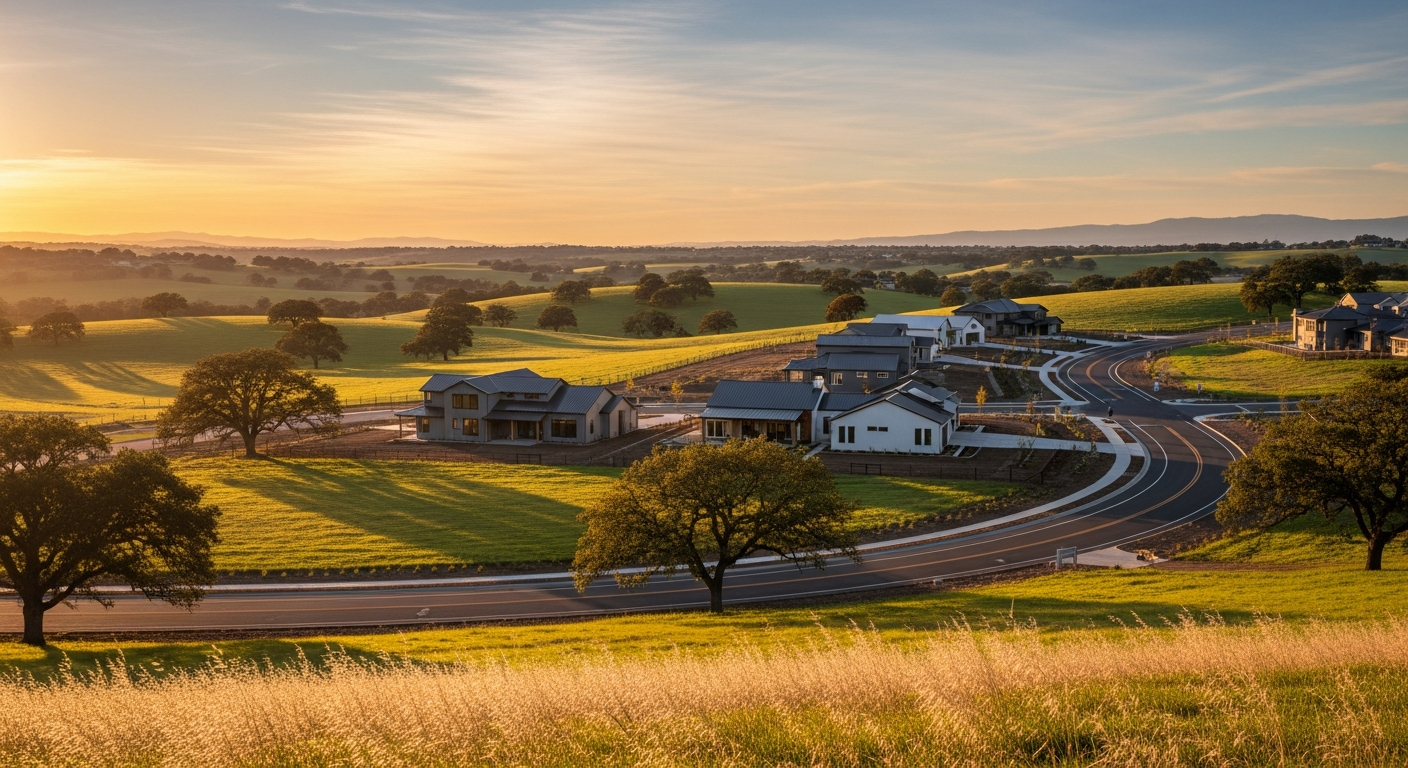
The New Epicenter of American Growth
For decades, the story of American growth was a tale of two places: the bustling urban core and the sprawling, leafy suburb. But a new chapter is being written, and it’s happening on the far edges of the metropolitan map. The latest data from the U.S. Census Bureau shows that the fastest-growing communities in the nation are not the familiar names we might expect. Instead, they are exurbs: communities that lie beyond the traditional suburbs, offering a unique blend of space, affordability, and a re-imagined American dream.
Places like Celina and Fulshear in Texas, Queen Creek in Arizona, and Eagle Mountain in Utah are experiencing population growth at a staggering rate. Fulshear, located about 35 miles west of Houston, is a prime example. Its population is projected to explode from around 17,000 in 2020 to nearly 65,000 by mid-2025. This isn’t just a statistical curiosity; it's a signal of a fundamental shift in where and how Americans want to live.
What’s fueling this migration to the fringe? It's a potent mix of economic pressures, technological freedom, and a collective desire for a different way of life. We'll dig into the rise of the exurb, the drivers behind its explosive growth, and what it all means for today's homebuyer.
- What Exactly is an Exurb?
- America's New Boomtowns: A Look at the Data
- The Three Forces Driving the Exurban Migration
- Growing Pains: The Challenges of Hyper-Growth
- What This Trend Means for Homebuyers
What Exactly is an Exurb?
First, let's get clear on what we're talking about. An exurb is not just a distant suburb. While suburbs are typically defined by their direct connection to a major city and their history as "bedroom communities," exurbs occupy a different space, both geographically and culturally.
Exurbs are communities on the outermost edge of a metropolitan area. They maintain a connection to the city's economy but are physically separate enough to have their own distinct identity. Here are the key characteristics that set them apart:
- Lower Population Density: Exurbs are defined by more space. Lots are larger, homes are more spread out, and there's often a feeling of being closer to a rural environment.
- Economic Connection: While they have their own local economies, exurbs are fundamentally tied to a major nearby city. Many residents commute - even if just a few times a week - or work remotely for companies based in the urban core.
- A Blend of Lifestyles: Exurban living attempts to merge the best of both worlds: the space and perceived safety of rural life with the amenities and economic opportunities of the suburbs.
- Newer Housing Stock: Many of the fastest-growing exurbs are dominated by new construction, often within large master-planned communities.
Think of it this way: If the post-war automobile boom created the classic suburb, the digital revolution created the exurb. The first separated home from the downtown office; the second untethered work from any specific location at all. This creates a different kind of resident, one who is often consciously choosing a community's character and future potential over its historical legacy or proximity to an established urban center.
America's New Boomtowns: A Look at the Data
You don't have to look far to see the proof. The latest U.S. Census Bureau estimates confirm this trend in stark numbers. The Sun Belt, particularly Texas, is the undisputed epicenter of exurban growth. Of the 15 fastest-growing large cities in the country, eight are in Texas.
Let’s look at some of the standouts mentioned in recent reports:
| City, State | Major Metro Area | Key Growth Driver |
|---|---|---|
| Celina, TX | Dallas-Fort Worth | Master-planned communities, corporate relocations to DFW |
| Fulshear, TX | Houston | Affluent demographics, highly-rated schools, new construction |
| Georgetown, TX | Austin | Popular retirement destination, proximity to Austin's tech hub |
| Queen Creek, AZ | Phoenix | Relative affordability, strong job growth in the Phoenix area |
| Eagle Mountain, UT | Salt Lake City | Young family demographics, growth of Utah's "Silicon Slopes" |
These are not isolated instances. From Kyle and Leander outside of Austin to Saratoga Springs near Salt Lake City, the pattern repeats itself. The common thread is their location on the fringe of economically dynamic, job-rich metropolitan areas where housing costs in the city and inner suburbs have become prohibitive for many.
The Three Forces Driving the Exurban Migration
This massive population shift isn't a random event. It’s the result of three powerful, overlapping trends that are reshaping the American landscape.
1. The Long Tail of Remote and Hybrid Work
The widespread adoption of remote work was an accelerant, not the sole cause, of the exurban trend. It gave millions of workers the freedom to prioritize lifestyle and living space over commute times. While some companies have mandated a return to the office, hybrid work has become a permanent fixture of the modern economy. A commute that is unbearable five days a week becomes manageable one or two days a week. This simple calculation has radically expanded the geographic circle where people are willing to live, pushing the boundaries of metropolitan areas outward. People's "commute budget" has shifted from being measured in minutes per day to miles per week.
2. The Unrelenting Quest for Housing Affordability
Home prices in major cities and their immediate suburbs have climbed to historic highs, pushing homeownership out of reach for a huge segment of the population. Exurbs present a practical solution. Buyers often find they can purchase a spacious, brand-new 3,000-square-foot home in an exurb for the price of a small 1,200-square-foot condo or an older fixer-upper closer to the city. This isn't just about finding a cheaper house. It's about securing the right kind of house: one with a dedicated home office, a yard for the kids and pets, and room to breathe. This affordability calculus is the single most powerful driver pulling people toward the urban fringe.
3. The Allure of the Master-Planned Community
Many of today's fastest-growing exurbs are not collections of disjointed subdivisions. Instead, their growth is anchored by massive master-planned communities (MPCs). These are essentially new towns built from scratch, complete with resort-style pools, state-of-the-art fitness centers, parks, trail networks, event lawns, and sometimes even their own retail and dining districts. MPCs offer a curated, amenity-rich lifestyle that is highly appealing, especially to young families. Developers are selling not just a house but a complete living experience with a built-in sense of community, and buyers are responding enthusiastically.
Growing Pains: The Challenges of Hyper-Growth
While the growth of exurbs brings opportunity, it also creates significant challenges. Communities that double their population in just a few years often struggle to keep up. Residents of these boomtowns frequently face a new set of problems.
First, infrastructure strain is almost immediate. Two-lane country roads designed for a small town become parking lots during rush hour. Schools become overcrowded, forcing the rapid construction of new facilities funded by bonds that can raise property taxes. Water, sewer, and even reliable high-speed internet can be stretched to their limits, a particularly acute issue in the drought-prone West.
Second, the affordability that attracted people can be fleeting. As an exurb becomes a known hotspot, homebuilders raise prices. Property taxes also tend to rise to pay for the new schools, roads, and services the growing population demands. The initial financial advantage can erode over time, creating a new affordability crunch on the fringe.
Finally, there's the cultural challenge of losing the town's character. The very open space and small-town feel that attracted people in the first place can disappear under waves of new development. This often leads to political tension between long-time residents who want to preserve the town's character and newcomers who want more services and amenities. Managing this hyper-growth without paving over the town's soul is the central challenge for every exurban leader.
What This Trend Means for Homebuyers
For anyone considering a move, understanding the exurban boom is vital. These markets present a distinct set of opportunities and risks.
The upsides are clear: access to newer, larger homes at a lower price point, modern community amenities, and the potential for strong long-term appreciation as the area continues to develop. If you work remotely or have a flexible hybrid schedule, an exurban location can offer an incredible quality of life.
However, the downsides require careful consideration. Your commute, even if infrequent, will be long. You are making a bet on the continued growth and thoughtful development of a new community. Before you buy, do your due diligence by asking critical questions:
- Development Plans: What is the 5- and 10-year master plan for this area? Are more retail, commercial, and green spaces planned, or is it just more housing?
- Infrastructure: How are the schools funded and are new ones scheduled to be built? What is the current internet infrastructure, and are there plans for fiber optic upgrades? Talk to locals about what the traffic is really like.
- Taxes: What is the current property tax rate, and what is the history of tax increases? Are there any major bonds coming up for a vote that could impact future taxes?
Even with the relative affordability, the price tag on a new home in a desirable exurban community can be daunting. This financial reality is pushing buyers to get creative, exploring new paths to ownership like pooling resources with family or using co-ownership platforms that help structure the purchase and make it more manageable.
Ultimately, the rise of the exurbs represents a new chapter in the American story of home and community. It's a direct response to the economic and technological realities of the 21st century. For homebuyers, these burgeoning cities on the fringe offer a compelling, if complex, path to owning a piece of the future.