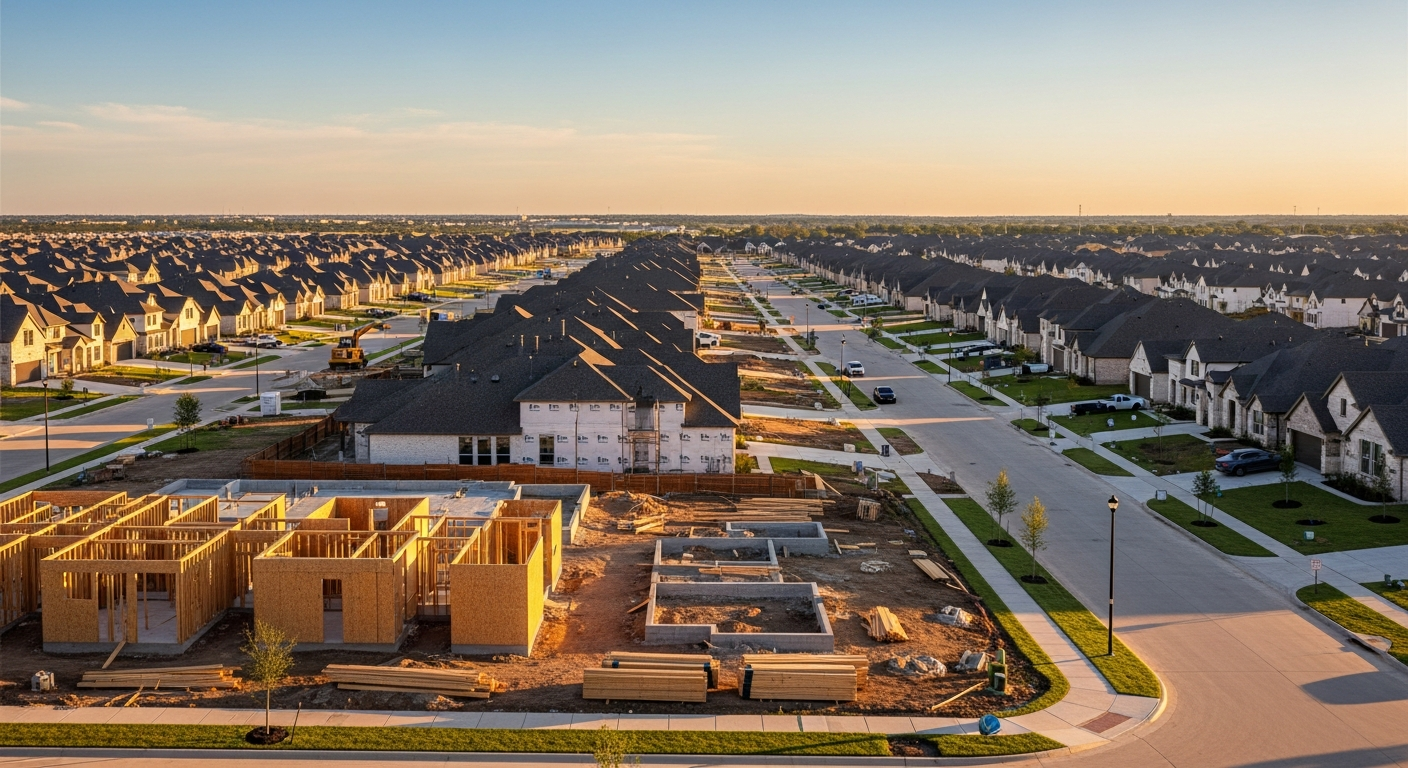
It's a staggering headline that's become almost routine: Dallas-Fort Worth is building more new homes than any other metropolitan area in the United States. Again. While this isn't news to those tracking America's economic and demographic shifts, the sheer scale of the construction boom in North Texas is actively redrawing the country's housing map.
According to a 2024 analysis of U.S. Census Bureau data by ConsumerAffairs, the Dallas-Fort Worth-Arlington metropolitan area is the most active construction market in the country, outpacing its perennial Texas rival, Houston. In 2023 alone, the DFW metro issued permits for over 89,000 new housing units. This isn't a flash in the pan. It's the continuation of a decade-long trend that has cemented the 'Texas Triangle'-the megaregion connecting DFW, Houston, and the Austin-San Antonio corridor-as the undisputed epicenter of American homebuilding.
So why is this happening? The boom is fueled by a powerful mix of corporate relocations, an unstoppable influx of new residents, and a famously development-friendly environment. But it's also a complex story about stubborn housing costs, market pressures, and what the American dream looks like in the 21st century.
- The Scale of the Boom: By the Numbers
- The Engines of Growth: Why Texas, Why Now?
- The Affordability Paradox in a High-Supply Market
- A Look at the New Inventory: What's Being Built?
- Looking Ahead: Can This Texas-Sized Boom Last?
The Scale of the Boom: By the Numbers
To understand the sheer scale of what's happening in North Texas, the numbers tell a powerful story. While many coastal markets struggle with housing shortages and sluggish construction, DFW is adding homes at a pace that dwarfs the rest of the country.
Here’s how the top U.S. metropolitan areas stacked up for total new housing unit permits issued in 2023, based on Census Bureau data:
| Metropolitan Area | Total New Housing Permits (2023) |
|---|---|
| 1. Dallas-Fort Worth-Arlington, TX | 89,013 |
| 2. Houston-The Woodlands-Sugar Land, TX | 86,881 |
| 3. Phoenix-Mesa-Scottsdale, AZ | 52,190 |
| 4. Atlanta-Sandy Springs-Roswell, GA | 49,949 |
| 5. New York-Newark-Jersey City, NY-NJ | 46,750 |
Source: U.S. Census Bureau, Building Permits Survey
The data is stark. The top two metros are both in Texas, and together they account for more new housing permits than Phoenix and Atlanta combined. This intense focus of activity highlights a massive shift in where Americans are choosing to live and the sheer volume of housing needed to support that migration.
This isn't just about single-family homes. While DFW leads in that category, it is also a top market for multi-family construction, reflecting the diverse housing needs of its rapidly growing population. From sprawling suburban master-planned communities in Collin and Denton counties to dense apartment complexes rising in Dallas's urban core, builders are firing on all cylinders.
The Engines of Growth: Why Texas, Why Now?
This construction frenzy isn't happening in a vacuum. It's the direct result of a perfect storm of economic and demographic forces that have made Texas, and DFW in particular, a magnet for people and businesses.
Corporate Relocations and Job Creation
The biggest driver is jobs. Plain and simple. North Texas has become a go-to destination for corporate headquarters and major company outposts. Companies are drawn by the state's business-friendly policies, including the absence of a state income tax, a deep pool of talent, and a central location. The list of companies that have moved or significantly expanded their presence in the DFW area is a who's who of American business: Charles Schwab, Toyota North America, McKesson, and AECOM. More recently, Goldman Sachs broke ground on a massive $500 million campus in Dallas, cementing the city's status as a booming financial hub. This isn't just about a few high-profile moves; it's a broad-based expansion across sectors. Beyond finance, the region has become a critical logistics and distribution center, attracting industrial development that creates thousands more jobs. The Dallas Regional Chamber reports that DFW has led the nation in job growth over the past year. Where the jobs go, people follow, and they all need a place to live.
A Tidal Wave of New Residents
For years, the U.S. has been experiencing a domestic migration trend away from high-cost coastal states like California, New York, and Illinois, and toward Sun Belt states. Texas is the primary beneficiary. The state has led the nation in population growth for over a decade, and the 'California-to-Texas' pipeline is stronger than ever. Many of these new residents are drawn by job opportunities and the promise of a lower cost of living, especially when it comes to housing.
While housing in Dallas is no longer cheap, the math still works for someone leaving San Jose or Brooklyn. The ability to afford a larger home with a yard remains a powerful lure, and builders are racing to meet that demand.
Land and a Pro-Development Stance
Unlike the geographically constrained cities of the coasts, North Texas has one thing in abundance: land. The sprawling prairie offers a canvas for developers to build entire new communities. Furthermore, the regulatory environment in many Texas municipalities is famously more permissive and faster-moving than in other parts of the country. This makes it easier, cheaper, and quicker to get projects approved and shovels in the ground, a critical advantage in meeting the crushing demand for housing.
The Affordability Paradox in a High-Supply Market
Logic suggests that building nearly 90,000 new homes in a year should push prices down. Yet, the Dallas housing market presents a stubborn paradox: even with record-breaking supply, affordability remains a serious and worsening problem.
Why? For one, the relentless flood of new residents, many arriving with high salaries from more expensive states, is enough to absorb almost everything being built. Secondly, the cost to build is also rising. Developers are paying more for land, materials, and skilled labor, and those costs are passed directly to buyers. Much of the new inventory is not entry-level housing but mid-to-upper-tier homes in desirable suburbs, which does little to help first-time buyers struggling to get into the market.
This reality forces many potential buyers, especially first-time buyers and those without equity from a previous home, to get creative. They are exploring different paths to homeownership. For those priced out of their dream neighborhoods or consistently outbid by cash offers, new ownership models are emerging as powerful tools. Platforms that enable co-ownership, like Rhome, offer a direct solution to this affordability crunch. By allowing groups of two or more buyers to pool their resources, these models help people gain a foothold in a competitive market, buying a home that would be out of reach individually. This approach shifts homeownership from a solo endeavor to a strategic financial partnership, a concept well-suited to the challenges of today's market.
A Look at the New Inventory: What's Being Built?
The construction boom isn't monolithic. The types of homes being built reflect the diverse needs and economic realities of the DFW market.
- Suburban Single-Family Homes: This remains the bread and butter of the DFW construction scene. Massive master-planned communities in cities like Frisco, McKinney, Celina, and Melissa offer a complete lifestyle package with schools, parks, and retail. These homes are the primary draw for families and relocating professionals.
- Build-to-Rent Communities: A significant and controversial trend is the rise of entire neighborhoods of single-family homes built specifically for the rental market. Large institutional investors, some based right in Dallas, are developing these communities at scale, offering a professionally managed, new-home experience for those who prefer renting or can't yet afford to buy. This trend also means individual homebuyers now find themselves competing directly with deep-pocketed investment funds for new housing stock.
- Multi-Family Development: To accommodate young professionals, empty-nesters, and those seeking a more urban lifestyle, multi-family construction is also booming. Dallas's Uptown, Deep Ellum, and the surrounding urban-ring neighborhoods are dotted with cranes erecting new mid-rise and high-rise apartment buildings with extensive amenities.
Looking Ahead: Can This Texas-Sized Boom Last?
The question on everyone's mind is whether this torrid pace of construction is sustainable. While the boom is built on solid economic foundations, there are potential headwinds.
- Higher Interest Rates: The biggest factor cooling the national housing market has been the Federal Reserve's interest rate hikes. While DFW has proven resilient, sustained high mortgage rates will continue to temper demand and challenge buyer affordability.
- Labor and Material Costs: The construction industry continues to face shortages of skilled labor and volatility in the cost of building materials. These supply-chain constraints can delay projects and increase final home prices.
- Infrastructure and Resource Strain: Rapid, sprawling growth puts immense pressure on local infrastructure. School districts are overflowing, road networks are perpetually under construction, and critically, the long-term availability of water is a growing concern for a region so dependent on man-made reservoirs. These strains create significant political and logistical hurdles for sustainable development.
Despite these challenges, the long-term outlook for the North Texas housing market remains strong. The fundamental drivers-job growth, population influx, and a pro-business climate-show no signs of reversing. For now, Dallas keeps building. The boom may eventually cool from a frantic sprint to a steady marathon, but for the foreseeable future, the race to house North Texas is far from over.