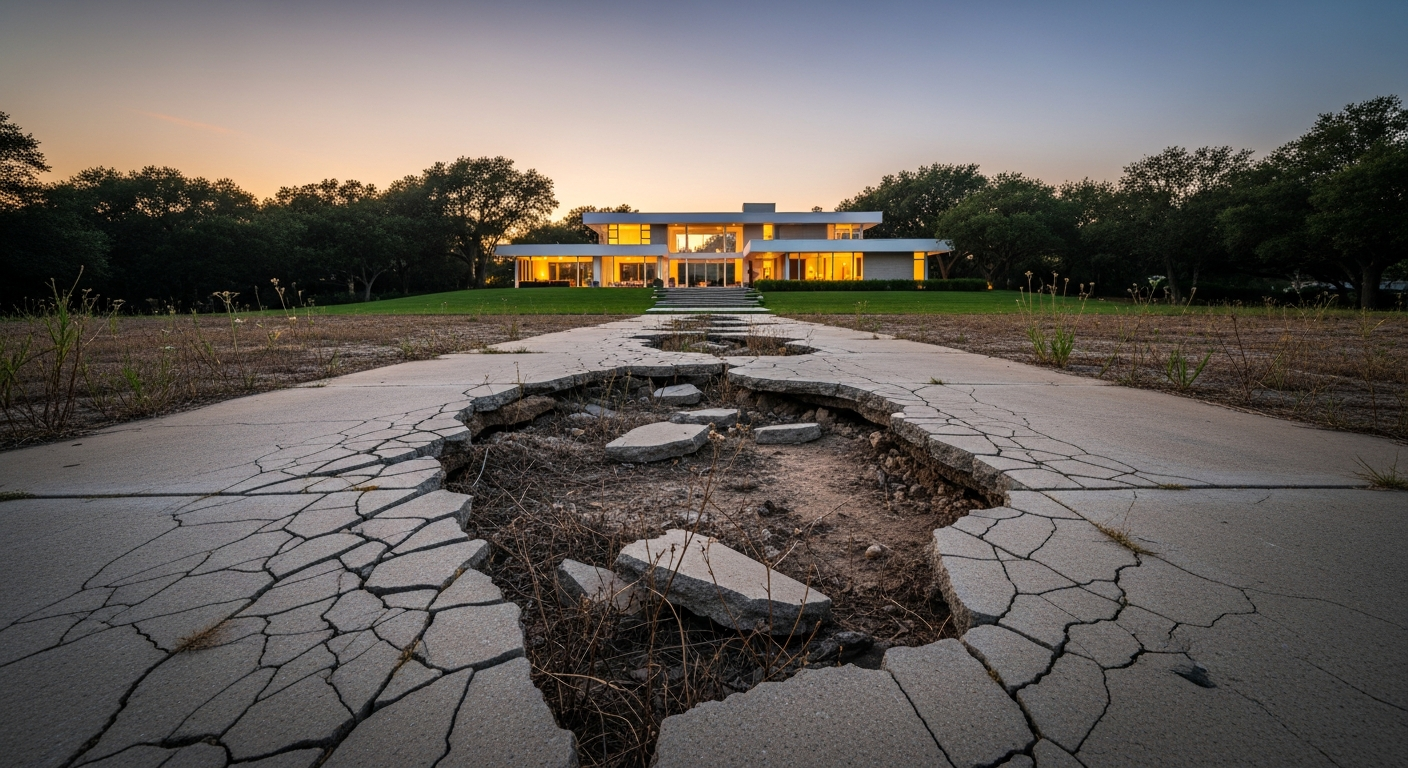
A new Gallup poll confirms what millions of young Americans already know in their bones: the dream of owning a home is dying. A decade ago, 57% of young adults who didn't own a home believed they would buy one within five years. Today, that figure has cratered to just 29%. Worse, the number of young people who believe they will never own a home has more than doubled, from 13% to a staggering 30%.
This isn't because Millennials and Gen Z have soured on the idea of a backyard and a picket fence. They want to own homes just as much as their parents did. The difference is that they've run the numbers and realized the game is rigged against them. The dream is still there, but the belief it's achievable has vanished. This collapse of confidence isn't just a statistic; it's a massive tear in the American social fabric, and to understand it, we have to look at the brutal math that has slammed the door on a generation.
- The Vanishing Homebuyer: A Decade of Decline
- The Affordability Equation: Deconstructing the Math
- Beyond the Numbers: The Human Cost of a Locked Door
- Economic Ripples and Future Consequences
- Is There a Way Forward? Rethinking the Path to Ownership
The Vanishing Homebuyer: A Decade of Decline
The data, which surveyed non-homeowners between the ages of 18 and 34, shows an unmistakable trend of evaporating hope. A side-by-side look at the numbers tells the whole story.
| Poll Period | % Planning to Buy in 5 Years | % Unlikely to Buy in Foreseeable Future |
|---|---|---|
| 2013-2015 | 57% | 13% |
| 2016-2018 | 53% | 20% |
| Today | 29% | 30% |
Source: Gallup
In less than a decade, the dominant sentiment has completely flipped. What was once a clear majority planning a near-term purchase is now a small minority. Meanwhile, the group with no clear path to ownership has ballooned from a fringe segment into a massive cohort, nearly equal in size to those who still cling to a five-year plan.
This collapse happened during a period of supposed economic recovery and growth. Millennials and the oldest members of Gen Z entered a job market that, on paper, looked strong. Yet the benefits of that growth never translated into access to the country's primary vehicle for wealth creation: home equity. The goalposts weren't just moved; they were relocated to an entirely different field.
The Affordability Equation: Deconstructing the Math
This despair isn't rooted in a cultural shift away from property ownership. It's a perfectly logical reaction to a brutal affordability crisis, a perfect storm of three colliding forces: runaway home prices, crushing interest rates, and a down payment that feels more like a king's ransom.
Home Prices vs. Income
The heart of the issue is that home prices have completely detached from the reality of American wages. According to the S&P CoreLogic Case-Shiller U.S. National Home Price Index, home prices have skyrocketed by over 100 percent since 2013. During that same period, median household income has only grown by about 50 percent. Homes are appreciating at double the rate of the incomes needed to buy them.
In 2013, the median sales price for a home in the U.S. was around $260,000. Today, it hovers near $420,000. For a young person or family to afford a home, their income would have needed to keep pace with that 60-plus percent increase, which for most, simply has not happened. This gap wasn't an accident. It was fueled by a decade of historically low housing inventory, restrictive zoning laws in major cities that prevent new construction, and a surge of institutional investors buying up single-family homes, further squeezing supply for regular buyers. For young people trying to get their foot in the door, they aren't just competing with each other; they're competing with global capital.
The Interest Rate Squeeze
For a brief moment during the pandemic, historically low interest rates offered a lifeline, partially offsetting the sting of rising prices. That lifeline is gone. The Federal Reserve's aggressive campaign to fight inflation sent mortgage rates from below three percent in 2021 to over seven percent at times in the past year.
The impact on a monthly payment is devastating. Let's do the math on that median-priced home, assuming a buyer somehow pulls together a 20 percent down payment.
- A $336,000 mortgage (80% of $420k) at 3.5%: The principal and interest payment is approximately $1,510 per month.
- A $336,000 mortgage at 7.0%: The principal and interest payment is approximately $2,235 per month.
That's an extra $725 every single month, or nearly $8,700 a year, for the exact same house. This one change single-handedly pushed millions of qualified buyers out of the market. Their income didn't go down, but their purchasing power was annihilated by the cost of borrowing money.
The Down Payment Hurdle
Even before a buyer can think about the monthly payment, they have to clear the monumental hurdle of the down payment. While 20 percent is the traditional goal to avoid private mortgage insurance (PMI), even the 3-5 percent required for many government-backed loans has become a massive challenge.
- 20% down on a $260,000 home in 2013: $52,000
- 20% down on a $420,000 home today: $84,000
This challenge is amplified by two other financial burdens crushing this generation. First, record levels of student loan debt eat into income that would otherwise go toward savings. The average federal student loan debt balance is over $37,000, according to the Education Data Initiative. Second, soaring rents make it nearly impossible to save. When half your take-home pay goes to a landlord, saving tens of thousands of dollars feels less like a goal and more like a fantasy.
Beyond the Numbers: The Human Cost of a Locked Door
These numbers tell a story of financial strain, but the human cost is measured in delayed lives and constant anxiety. When you're perpetually one rent hike away from a budget crisis, you live in a state of permanent instability. For generations, a home was the bedrock of adult life, the tangible proof that you were moving forward. Without it, many feel like they're treading water, left behind by an economy that no longer offers them a fair shot.
The consequences ripple through every major life decision. Couples postpone marriage and children, unable to imagine raising a family in a cramped apartment with no security. Young professionals feel chained to expensive cities for their careers, unable to build wealth or even consider moving somewhere more affordable. This isn't just about money; it's about the inability to put down roots, to invest in a community, and to build the kind of stable life their parents took for granted. The result is a deepening chasm between the property-haves and the have-nots, locking in wealth inequality for decades to come.
Economic Ripples and Future Consequences
The problem extends far beyond individual households, sending shockwaves through the entire economy. With home equity being the primary engine of wealth for American families, locking out an entire generation guarantees that wealth inequality will become even more entrenched. The financial gains from skyrocketing property values will flow exclusively to older generations and existing owners. At the same time, this army of would-be buyers is forced into an already strained rental market, pushing up rents for everyone. It's a vicious cycle: high rents make it impossible to save for a down payment, which keeps people renting longer, which drives rents even higher. This also means a fundamental shift in the economy. Homeowners drive huge sectors of consumer spending, from furniture and appliances to landscaping and renovations. A nation of long-term renters spends differently, a reality that will reshape the retail and construction industries for years to come.
Is There a Way Forward? Rethinking the Path to Ownership
The old script is broken. The idea that a young person can simply work hard, save diligently, and buy a home is a fantasy for a growing part of the population. The market has fundamentally changed, and waiting for a crash or a government bailout isn't a strategy. Survival in this new landscape requires a new playbook.
Aspiring owners are getting creative, moving past the outdated ideal of the single-family home bought by a single income or couple. The most powerful strategy emerging from this crisis is co-ownership. By teaming up with friends, family, or a buying partner, people can tackle the two biggest hurdles together. Pooling resources makes the down payment achievable, and combining incomes makes the monthly mortgage manageable.
In the past, these kinds of arrangements were risky, relying on handshake deals and trust. Now, the process is becoming more formalized, with legal frameworks and financial agreements that treat the home like a structured partnership, protecting everyone involved. This isn't the only option, of course. People are also pursuing "house hacking" by buying multi-unit properties and living in one unit while renting out the others. Others are exploring smaller condos and townhomes or simply relocating to more affordable regions of the country.
The core idea is the same across all these strategies: if the old rules don't work, you have to write your own. The challenges of this market are enormous, but they don't have to be a dead end. For the generation locked out of the old American Dream, the path forward might not be about chasing it alone, but about building a new one, together.