Washington, DC sits in a category of its own when it comes to housing costs.
The city is home to the federal government, a booming private sector
anchored by law, consulting, tech, and defense contracting, and some of the
most stable employment in the country. That stability comes at a price.
Median home values in DC hover around $600,000 to $650,000 depending on the
neighborhood, and many of the most desirable rowhouse blocks sit well above
that. For most buyers working alone, homeownership in the District is a
distant goal. For two to four buyers working together, it is achievable
today.
Co-ownership through Rhome means two to four people purchase a home
together, structured through an ownership structure, using an FHA loan that allows as little as
3.5% total down payment. Every co-owner occupies the home as their primary
residence. This is not a real estate investment scheme or a vacation
property arrangement. It is homeownership, shared, with all the stability
and equity-building that comes with it.
The DC Housing Market
Washington, DC has one of the most resilient housing markets in the United
States. Federal employment alone accounts for hundreds of thousands of jobs
in and around the District, and the surrounding ecosystem of contractors,
lobbyists, nonprofits, law firms, and international organizations creates
demand that does not track the same boom-and-bust cycles seen in other major
cities.
The flip side of that stability is persistent price pressure. DC's supply of
housing has not kept pace with demand for decades. The city's zoning rules,
its height limit on buildings (enforced by the Height of Buildings Act of
1910), and the pace of new construction have all contributed to a market
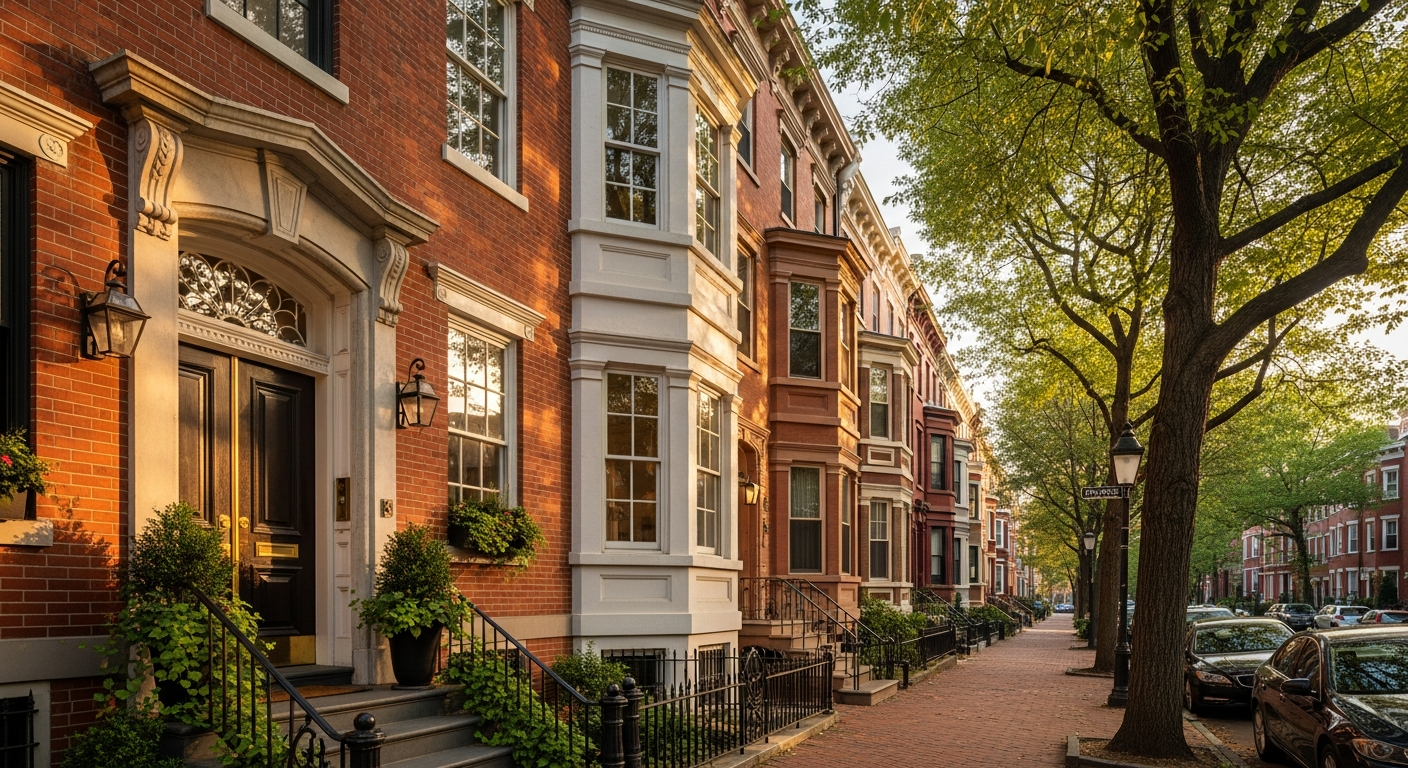
where prices have risen steadily over the long run. Single-family rowhouses,
the architectural backbone of neighborhoods like Capitol Hill, Columbia
Heights, and Petworth, routinely sell for $600,000 to over $1 million
depending on condition and location.
For a buyer earning $90,000 a year, purchasing a $650,000 home solo requires
a down payment of $22,750 under FHA guidelines, plus closing costs. That is
before the reality check: at current interest rates, the monthly payment on
such a mortgage can easily exceed $4,000. Most lenders want housing costs
below 31% of gross monthly income, and at $90,000 annually that ceiling is
roughly $2,325 per month. The math does not work alone. Split across two
buyers, it can.
DC Law: What Co-Buyers Should Know
DC is not a state. It is a federal district governed by its own laws, and
those laws differ meaningfully from neighboring Maryland and Virginia. A few
things every co-buyer should understand.
First, DC does not have a state income tax in the traditional sense. DC has
its own DC income tax: administered at the district level, separate from
Maryland and Virginia's state income taxes. Residents of Maryland and
Virginia who commute into DC pay taxes in their home states, not DC. This
matters for co-buyers who are cross-border: two friends, one a DC resident
and one a Virginia resident, will have different tax situations even if they
share the same home address in DC.
Second, DC has its own recording and transfer tax structure. When you
purchase property in DC, you pay both a recordation tax and a transfer tax,
which together can add up to a meaningful closing cost. DC does offer a
first-time homebuyer exemption from the recordation tax up to certain
purchase price thresholds, a benefit that co-buyers may be able to access if
they qualify individually.
Third, DC property is governed by DC superior court and district law, not
state law. This is largely simple in practice, but it does mean that the
ownership structure Rhome uses is formed under DC law and operates within the
District's regulatory framework.
Key Neighborhoods for Co-Buyers
Columbia Heights
Columbia Heights sits in the northwest quadrant and has been one of DC's
most dynamic neighborhoods for the past two decades. It is densely urban,
well connected by Metro, and home to a mix of longtime residents and
newcomers. Rowhouses here typically range from the mid-$500,000s to the low
$800,000s. For co-buyers, Columbia Heights offers solid value relative to
Georgetown or Dupont Circle, with genuine walkability and a strong rental
market for the future if co-owners ever choose to transition.
Petworth
Petworth is the neighbor to Columbia Heights's north, and it tends to offer
slightly more affordable entry points for buyers willing to do some work or
buy on blocks that are still transitioning. Detached and semi-detached homes
appear more frequently here than in denser neighborhoods, which can make
floor plan logistics easier for co-owners who want clear separation of
living spaces. Rowhouses in Petworth have sold in the $500,000 to $750,000
range, making it one of the more accessible parts of the city for co-buying
pairs.
Capitol Hill
Capitol Hill is one of DC's most iconic and expensive residential
neighborhoods. Its Victorian rowhouses, proximity to the Hill itself and
Eastern Market, and historically strong appreciation have made it a trophy
for buyers. That premium is real: homes routinely sell above $800,000, and
competition is fierce. For co-buyers using FHA financing, Capitol Hill
remains achievable when costs are split, but buyers should be prepared for
competitive offers.
Anacostia and Congress Heights
East of the Anacostia River, neighborhoods like Anacostia and Congress
Heights represent some of the strongest value opportunities left in the
District. Prices here are significantly lower than northwest or Capitol
Hill, and the area has seen increased investment from both the city and
private developers in recent years. For co-buyers who prioritize equity
upside and want to maximize their purchasing power, this part of DC deserves
serious consideration. Proximity to the St. Elizabeths redevelopment and
improved transit access have begun drawing attention from buyers who
previously looked past the river.
DCHFA Programs: What Co-Buyers Should Know
The DC Housing Finance Agency (DCHFA) administers several programs designed
to help District residents purchase homes. The most significant is the Home
Purchase Assistance Program, commonly called HPAP.
HPAP provides interest-free loans to eligible first-time homebuyers in DC to
help cover down payment and closing costs. The loan amount varies based on
income and household size, and repayment is deferred, meaning you do not
make payments until you sell the home, refinance, or no longer occupy it as
your primary residence. For low-to-moderate income buyers, HPAP can be a
significant bridge to homeownership.
DCHFA also operates the DC Open Doors program, which provides down payment
assistance to buyers who may not meet the income thresholds for HPAP. This
program is paired with conventional or government-backed mortgage products.
Co-buyers should investigate these programs early. Eligibility is typically
assessed per borrower, which means individual co-buyers may each qualify for
assistance depending on their income and first-time buyer status. Rhome's
team can help co-buyers understand how these programs layer with the FHA
structure used in a co-ownership transaction.
FHA Co-Buying Math in DC
DC is officially designated as a high-cost area by the Federal Housing
Finance Agency, which means FHA loan limits here are significantly higher
than in most of the country. The FHA loan limit for a single-family home in
Washington, DC is well above the national baseline, a meaningful advantage
for co-buyers who want to access FHA's low down payment requirements on
higher-priced homes.
Here is how the math works for two co-buyers on a $650,000 home.
FHA requires 3.5% down on the purchase price, which equals $22,750. Split
between two buyers, each contributes roughly $11,375 toward the down
payment. Closing costs in DC, including recordation and transfer taxes,
typically run 3% to 5% of the purchase price. On a $650,000 home, that is
$19,500 to $32,500. Split two ways, each buyer is looking at roughly $10,000
to $16,000 in closing costs.
All in, two co-buyers might each need $21,000 to $27,000 to close on a
$650,000 home. Compared to the $32,500 to $65,000 a solo buyer needs in the
same scenario, the difference is not just dollars. It is years.
For three or four co-buyers, the numbers become even more accessible, and
the qualifying income requirements distribute across more earners, making
approval more achievable for buyers at various income levels.
How Co-Ownership Makes DC Accessible
The core argument for co-ownership in Washington, DC is straightforward: the
city rewards people who own property there, and too many people are locked
out of that reward by the sheer size of the entry cost.
DC's long-run appreciation has been among the strongest of any American
city. Owning a home there builds wealth in a way that renting does not. For
professionals early in their careers, including analysts, attorneys,
nonprofit workers, federal employees, and teachers, the window between when
they can afford to rent in DC and when they can afford to buy solo can
stretch for years. Co-ownership closes that window.
Beyond the down payment, the monthly cost argument is just as powerful. A
$650,000 mortgage at current rates carries a principal and interest payment
that strains most individual budgets at DC income levels. Split across two
co-owners each with their own bedroom, the monthly housing cost drops to a
level that is genuinely competitive with, and often below, DC rental rates
for comparable space.
Co-owners also build equity together, starting from day one. When the home
appreciates over the years of co-ownership, each person's share of that
equity grows. When the group eventually sells, refinances, or one person
buys another out, that equity is real money.
How Rhome Works in DC
Rhome handles the structure and legal framework that makes co-ownership
clean and safe. When a group of co-buyers comes to Rhome, we help them set up
an ownership structure specifically for the purpose of holding the property. The governance
agreement spells out each person's ownership share,
what happens if someone wants to leave, how decisions are made, and how
costs are divided.
Every Rhome co-ownership involves FHA financing, which requires all
borrowers to occupy the home as their primary residence. This is not a
loophole or a technicality. It is the model. Co-owners live in the home
together, each maintaining a genuine primary residence, and each building
equity in a home they actually inhabit.
Rhome's platform connects co-buyers who are looking for partners, helps
existing friend groups or family members structure their purchase, and
provides the legal and financial scaffolding that makes the arrangement
durable. In DC, where the cost of getting this wrong is high and the
regulatory environment is specific to the District, that structure matters.
If you are exploring co-ownership in Washington, DC, the best first step is
to understand what you can qualify for individually and find out who else in
your network might be interested in buying together. Rhome can help from
there.
FAQ
See faqItems below.