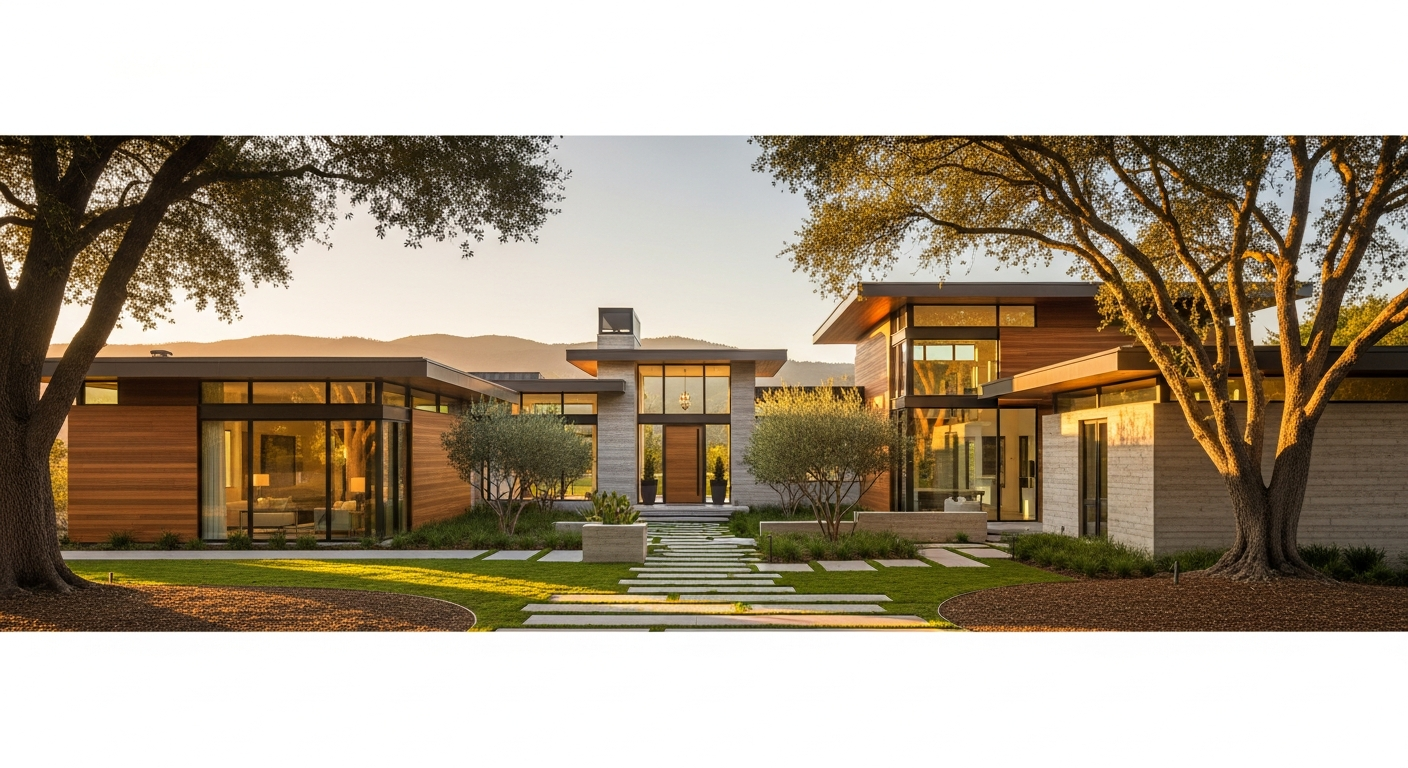
Co-Ownership in San Jose, CA
San Jose is a city where homeownership has become something close to a
paradox. The economy that surrounds it, the sprawling network of
semiconductor companies, enterprise software firms, venture-backed startups,
and research labs that define Silicon Valley, produces some of the highest
individual incomes in the United States. And yet a significant share of the
people who work in that economy cannot afford to buy a home in it on their
own.
The math is brutal. Median home prices in San Jose have crossed the $1
million mark and stayed there. Mortgage payments on a solo purchase at that
level require incomes that even many engineers and product managers cannot
sustain comfortably, especially when factoring in student loans, cost of
living, and the reality of saving for a down payment in an environment where
rent consumes a large portion of take-home pay.
Co-ownership is not a workaround or a compromise. It is the logical response
to a market that has priced out solo buyers at income levels that would make
homeownership easy in virtually any other American city. When two to four
people pool their resources, split the down payment, and buy a primary
residence together through a structured ownership entity, they can access the same
neighborhoods and the same caliber of home that none of them could reach
alone. That is the Rhome model, and in San Jose, it is one of the most
practically powerful things a buyer can do.
San Jose Market Overview: Silicon Valley at Extreme Scale
San Jose is the tenth-largest city in the United States by population and
the most populous city in the nine-county Bay Area. It sits in Santa Clara
County, which is the economic core of Silicon Valley. Companies like Apple,
Cisco, Adobe, eBay, and hundreds of smaller but highly capitalized
technology firms are headquartered within commuting distance. That
concentration of high-wage employment is the single largest driver of why
housing costs in San Jose have reached levels that feel almost detached from
the rest of the country.
Santa Clara County consistently ranks among the highest-cost housing markets
in the nation. As of early 2026, the median sale price for single-family
homes in San Jose hovers around $1.3 million to $1.4 million depending on
the neighborhood and month, with attached homes and condos offering somewhat
lower entry points but still well above $700,000 in most cases. The
California Association of Realtors has reported that Santa Clara County's
housing affordability index, which measures the share of households that can
afford the median-priced home, routinely falls below 20 percent. That means
more than eight in ten households in the county cannot qualify for a
median-priced home at prevailing mortgage rates.
Even for tech workers earning $150,000 or $180,000 a year, the numbers are
tight. A solo buyer at $160,000 in annual income, assuming a standard
debt-to-income ratio ceiling and today's rates, can typically qualify for a
mortgage on a home priced somewhere in the $600,000 to $750,000 range. That
is not enough to buy a median-priced single-family home in San Jose. It is
certainly not enough to buy in the neighborhoods closest to employment
centers. The gap is real, and it does not close simply by working harder or
earning a bit more.
Co-ownership does not change the market. It changes your position within it.
California Real Estate Law: A Brief Overview for Co-Buyers
California is a community property state. This is a detail that matters for
co-buyers, particularly those who are married or in registered domestic
partnerships, because California law generally treats assets and debts
acquired during a marriage as jointly owned by both spouses. If a married
person participates in a co-ownership group, their spouse's ownership
interest in the ownership entity and the underlying property needs to be clearly
addressed in the ownership documents.
For unmarried co-buyers, California law is straightforward: multiple
individuals can co-own real property and a single-family home can be held by
a multi-member ownership entity with no unusual legal obstacles. The more important
structural question is how the governance agreement is written. It needs
to define each co-owner's equity stake, how major decisions get made, how
monthly costs are divided, and what process governs a co-owner who wants to
exit. California courts are experienced with entity disputes, and a
well-drafted agreement is far better protection than any state law on its
own.
California also imposes a transfer tax when real property changes hands, and
there are Proposition 19 property tax implications worth understanding when
ownership structures shift. These are not barriers to co-ownership, but they
are reasons why working with a California-licensed real estate attorney
before closing is not optional. It is the foundation of a clean, durable
co-ownership arrangement.
Key Neighborhoods for Co-Buyers in San Jose
San Jose is a large, geographically diverse city. The right neighborhood for
a co-ownership group depends on income levels, priorities, and how close to
work each person needs to be. Here is a practical look at the areas that
tend to come up most.
Willow Glen
Willow Glen is the neighborhood San Jose residents tend to cite when they
talk about the city's character. Tree-lined streets, Craftsman bungalows, a
genuine walkable main street along Lincoln Avenue, and a community feel that
is rare in a city this size. Real estate here is priced accordingly.
Single-family homes in Willow Glen typically start in the $1.1 million to
$1.4 million range, with larger or fully updated homes pushing considerably
higher. For co-buyers who want the most quintessential San Jose residential
experience, Willow Glen is achievable as a group when it is out of reach for
a solo buyer. Splitting a $1.3 million purchase three ways is a
fundamentally different financial exercise than shouldering it alone.
Evergreen
Evergreen sits in the hills in the eastern part of San Jose, offering a
suburban feel with mountain views, newer construction, and a school system
that residents frequently point to as a strength. The area draws families
and buyers who want more space per dollar than close-in neighborhoods offer.
Home prices in Evergreen tend to run in the $1 million to $1.3 million range
for four-bedroom single-family homes, with some properties offering larger
lots than you would find in Willow Glen or Almaden Valley. Co-buyers who
want a quieter setting, good schools, and room to breathe without leaving
city limits often find Evergreen worth the longer commute to central
employment hubs.
Berryessa and North San Jose
Berryessa and the broader North San Jose corridor represent some of the best
value the city has to offer for buyers who want proximity to tech
employment. The BART extension to Berryessa has made this part of the city
significantly more accessible without a car, and the neighborhood has
attracted significant new development and interest as a result. Home prices
here, particularly for condos and townhomes, can be found in a range
starting around $700,000 to $900,000, making this one of the more accessible
entry points in the city for co-buyers targeting owned property rather than
the rental market. Single-family homes are higher, but the combination of
transit access and relative affordability makes North San Jose and Berryessa
a consistent top choice for co-ownership groups.
Milpitas
Technically its own city immediately north of San Jose, Milpitas functions
as a natural extension of the San Jose co-buyer market. It borders Santa
Clara County and benefits from the same BART access that serves Berryessa.
Home prices in Milpitas tend to be somewhat lower than comparable properties
in San Jose proper, with median prices for single-family homes running in
the $1 million to $1.2 million range and condos available for less. The city
has a strong employment base of its own, including a concentration of
technology and semiconductor companies. For co-buyers willing to look just
outside the San Jose city limits, Milpitas offers genuine value without
sacrificing commute quality.
CalHFA Programs: What Co-Buyers Should Know
The California Housing Finance Agency, known as CalHFA, operates a suite of
programs designed to help lower- and moderate-income buyers access
homeownership. These programs include down payment assistance, forgivable
second mortgages, and below-market-rate first mortgage products.
In a market like San Jose, CalHFA programs require careful evaluation. The
income limits and purchase price limits that CalHFA establishes are higher
in Santa Clara County than in most of the state, reflecting local costs, but
they still cap out well below the median sale price in many San Jose
neighborhoods. Buyers targeting the North San Jose or Berryessa corridor at
the lower end of the local price range may find CalHFA programs worth
exploring. Buyers targeting Willow Glen or Evergreen at typical price points
will likely find that CalHFA limits do not extend far enough.
For co-buyers specifically, the interaction between CalHFA programs and
entity-held properties requires advance planning. Not all CalHFA products are
available for properties held in ownership-entity structures, and the specifics depend on
the lender, the program, and how the co-ownership is organized. A Rhome
advisor can help you map out which financing approaches are compatible with
co-ownership before you invest time in any particular program.
The broader point is that CalHFA is one tool, and co-ownership is another.
For buyers at the lower end of the San Jose income spectrum, using both in
combination may be possible and worth pursuing. For buyers at middle and
upper-middle incomes, co-ownership through straightforward FHA financing is
often the more practical path.
FHA Co-Buying Math in San Jose
FHA loans require a minimum down payment of 3.5 percent for buyers with
qualifying credit. When two to four buyers purchase together, that 3.5
percent is split among the group, making co-ownership one of the lowest down
payment paths available in a market where saving for a conventional 20
percent down payment can take a decade or more on even a solid income.
Here is how the math looks at price points realistic for San Jose co-buyers.
Note that FHA loan limits in Santa Clara County are set at the highest tier
available, reflecting the county's designation as a high-cost area. As of
2025, the FHA conforming loan limit for high-cost areas is approximately
$1.2 million for a single-unit property, which opens the FHA option to
buyers targeting entry-level San Jose properties.
On a $900,000 home, the total FHA down payment is $31,500. Split between two
buyers, that is $15,750 each. Split among three, it comes to $10,500 per
person. The monthly principal and interest payment at a 7 percent rate would
be approximately $5,706. Divided three ways, that is $1,902 per co-owner
before taxes and insurance. Property taxes in Santa Clara County run roughly
1.25 percent of assessed value annually, adding approximately $938 per month
on a $900,000 home, or about $313 per co-owner in a three-person group.
On a $1.1 million home, the total down payment is $38,500. Two ways: $19,250
each. Three ways: roughly $12,833 per person. Monthly principal and interest
at 7 percent is approximately $6,970, or $2,323 per co-owner in a
three-buyer group.
These figures are illustrative. Actual rates, credit profiles, insurance
costs, and HOA fees where applicable will shift the final numbers. But the
core point holds: in a market where renting a two-bedroom apartment in a
decent part of San Jose can cost $3,000 to $4,000 per month, co-ownership at
$2,000 to $2,500 per person per month including taxes is not just
competitive. It is often the better financial outcome, with the added
dimension of building equity in one of the country's most durable
appreciation markets.
Why Co-Ownership Is Essentially the Only Path for Many San Jose Buyers
That is not hyperbole. It is arithmetic.
A single buyer earning $150,000 per year, with no significant existing
wealth, is realistically looking at a purchase ceiling somewhere in the
$650,000 to $750,000 range under standard underwriting. That ceiling puts
most of the San Jose single-family home market out of reach. Condos and
townhomes are more accessible but often come with HOA fees that erode
monthly affordability and resale markets that behave differently from
detached properties.
Two buyers each earning $120,000, a not-unusual salary in the Bay Area for
people outside the highest-paid engineering roles, have a combined
qualifying income of $240,000. That combined income can support a mortgage
on a property in the $1.1 million to $1.2 million range, which opens up
the full San Jose market, including Willow Glen, Evergreen, and quality
neighborhoods in the North San Jose corridor. The difference between those
two scenarios is not about one person working harder. It is about
structuring the purchase correctly from the start.
Co-ownership through Rhome is designed to be a real, permanent homeownership
arrangement, not a temporary fix. Every co-owner must occupy the home as
their primary residence. This is not a rental situation, and it is not an
investment scheme. It is ownership, shared from the beginning, with a legal
structure that protects every person involved and a clear framework for how
the arrangement evolves as life changes.
How Rhome Works in San Jose
Rhome manages the co-ownership process from the first conversation to
closing and beyond. In the San Jose market, here is what that looks like in
practice.
You and your co-buyers connect with a Rhome advisor who understands Santa
Clara County real estate. Together you clarify your target neighborhood,
budget, income picture, and how costs will be split. Rhome helps you
understand your combined buying power and which price ranges are realistic
given your group's financial profile.
Before you start making offers, Rhome prepares a co-ownership agreement
specific to your group. This document covers equity splits, monthly
cost-sharing, how major decisions about the property will be made, and the
process for handling a co-owner who wants to sell their share or leave the
arrangement. In California, this document is reviewed by a licensed real
estate attorney. No one signs anything without understanding exactly what
they are agreeing to.
From there, your group shops with the support of Rhome's affiliated agents,
who know the San Jose neighborhoods you are targeting. You make offers,
negotiate, go under contract, and close into the ownership entity. The purchase looks and
feels like any other residential real estate transaction from the outside.
The difference is the structure underneath it.
Once you are living in the home, Rhome's tools help you manage shared
expenses, track each owner's equity stake over time, and handle the
financial logistics of co-ownership without friction. When a co-owner's life
eventually changes and they want to exit, Rhome facilitates that process.
The co-ownership agreement you put in place at the beginning provides the
roadmap.
For buyers in San Jose, a city where the gap between what you earn and what
the market demands can feel insurmountable, Rhome offers something concrete:
a structured, legal, and financially sound way to get into the market with
people you trust, on a timeline that does not require waiting another decade
to save enough to do it alone.
Frequently Asked Questions
See the FAQ section below for answers to the most common questions about
co-ownership in San Jose.