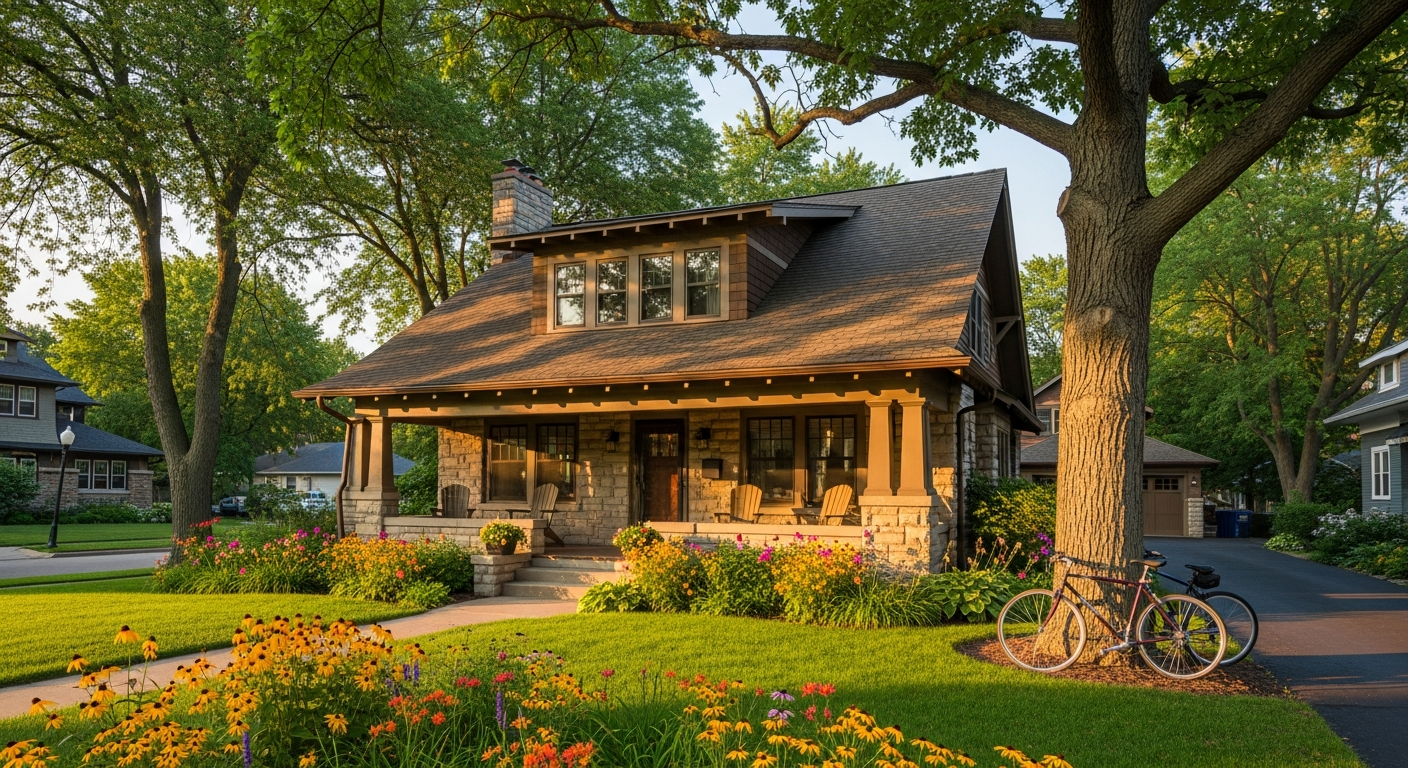
Michigan is one of the most buyer-friendly states in the country, and that fact becomes even more meaningful when you are buying with a co-owner. Median home prices in Detroit, Grand Rapids, Lansing, and many surrounding communities remain well below the national median, which means the upfront math works in your favor from day one. Add in the state's relatively straightforward LLC formation process and the assistance programs offered through the Michigan State Housing Development Authority, and you have a state where co-ownership is not just viable, it is genuinely compelling.
This guide covers the legal landscape, the financial realities, and the mechanics of buying a home together in Michigan.
Michigan Real Estate Law and Co-Buyers
Michigan recognizes several forms of concurrent property ownership, but the two most common are tenancy in common and joint tenancy. Under Michigan law, a deed that conveys property to two or more people without specifying the form of ownership defaults to tenancy in common. Joint tenancy, which includes the right of survivorship, must be expressly stated in the deed.
For Rhome co-buyers, neither form is used on its own. Instead, the property is held by an ownership structure, and the co-buyers hold membership interests in that structure. This shifts the ownership question from real property law to business entity law, which gives you much more flexibility to customize how decisions are made, how expenses are split, and what happens if one co-owner wants to sell their interest down the road.
Michigan does not have a state transfer tax exemption for entity-to-individual transfers that applies universally, so it is worth understanding the tax implications before you restructure ownership later. The Michigan Real Estate Transfer Tax applies when property changes hands, though there are exemptions for certain related-party transfers. Your closing attorney and a Michigan-licensed real estate attorney can walk through the specifics for your situation.
One thing worth knowing about Michigan real estate transactions: the state uses attorneys for closings less universally than some other states, with many closings handled by title companies. Either way, make sure the professional handling your closing understands the ownership structure you are using.
Forming an LLC in Michigan
Michigan makes it straightforward to form a limited liability company. You file Articles of Organization with the Michigan Department of Licensing and Regulatory Affairs (LARA), pay a filing fee, and appoint a registered agent with a physical Michigan address. The state also requires an annual statement filing to keep the LLC in good standing.
For a co-ownership ownership structure, the real work is in the governance agreement. This is the document that governs how the entity functions, and it is where you spell out:
- Each member's ownership percentage
- How monthly housing costs are divided
- Decision-making authority for repairs, improvements, and refinancing
- What happens if one member wants to exit (the buyout process)
- The primary residence requirement for all members
- How a future sale is triggered and managed
Michigan law gives LLC members wide latitude to structure these terms however they choose, as long as the agreement is not in conflict with the Michigan Limited Liability Company Act. That flexibility is one of the reasons co-ownership works well in the state.
You should have a Michigan-licensed attorney draft or review your governance agreement before you close. The document is doing significant legal work, and the cost of having it done right is small compared to the cost of a dispute later.
Key Michigan Markets for Co-Buyers
Detroit Metro
The Detroit metropolitan area, which includes communities like Royal Oak, Ferndale, Hamtramck, Dearborn, and Warren, offers a wide range of price points that make co-ownership particularly practical. Neighborhoods in Detroit proper have seen meaningful price appreciation over the past decade, but purchase prices in many areas remain accessible compared to coastal markets.
For co-buyers, this creates an interesting opportunity. You can enter a market that still has significant upside, split the carrying costs, and establish primary residence in a city with a genuinely diverse housing stock, from historic craftsman bungalows to mid-century brick ranches to renovated lofts in formerly industrial corridors.
Property taxes in Detroit are among the things to research carefully. Michigan's Principal Residence Exemption (PRE) reduces the taxable value of your home by exempting it from the school operating millage, which can make a meaningful difference in your annual tax bill. You must file a Principal Residence Exemption affidavit with your local assessor, and in an entity-owned property, this requires demonstrating that the members actually occupy the home as their principal residence.
Grand Rapids
Grand Rapids has emerged as one of the more competitive mid-sized markets in the Midwest. The city's west Michigan economy has stayed relatively resilient, and neighborhoods like Eastown, Creston, and Heritage Hill attract buyers who want walkable neighborhoods with character.
For co-buyers in Grand Rapids, the dynamic is that prices have risen faster here than in Detroit, making the partnership model more appealing. Two buyers can access neighborhoods that would be a stretch individually, buy a larger home with more room for each person, and share carrying costs in a market where renting equivalent space has gotten noticeably more expensive.
The Grand Rapids metro also includes suburban communities like Wyoming, Kentwood, and Walker, where prices tend to be lower and inventory is more predictable.
Ann Arbor
Ann Arbor is the most expensive market on this list, driven by the University of Michigan, a strong tech and healthcare employment base, and persistent demand from people who want to stay in the area after graduating. Median home prices here are significantly higher than elsewhere in Michigan, which makes co-ownership not just appealing but sometimes necessary for buyers who want to own rather than rent.
Ann Arbor's legal and professional services community is also well-equipped to handle entity-structured purchases. There are attorneys in the area with direct experience in co-buyer transactions, which reduces the friction of getting the right legal support.
Lansing and East Lansing
Michigan's capital region offers a different profile. State government employment provides economic stability, and Michigan State University anchors East Lansing with a consistent demand base. Home prices here are among the more accessible in the state, which means co-buyers can enter with a lower total purchase price and a smaller down payment in dollar terms.
For buyers who are earlier in their careers and prioritizing cash conservation, the Lansing area lets you stretch your buying power the furthest.
MSHDA Programs and Co-Buyers
The Michigan State Housing Development Authority administers several programs designed to help homebuyers with down payment and closing cost assistance. The most widely used is the MI Home Loan program, which offers a 30-year fixed-rate mortgage combined with down payment assistance.
The down payment assistance through MSHDA is structured as a second loan, not a grant. Buyers who meet income and purchase price limits can access assistance that covers a portion of the down payment and closing costs. Income limits and purchase price limits vary by county, and MSHDA updates them periodically, so you should confirm current figures directly with a MSHDA-approved lender.
Here is where it gets nuanced for co-buyers: MSHDA programs are designed for individual borrowers and typically require the home to be the buyer's primary residence. When a Rhome ownership structure is the purchasing entity, MSHDA assistance may not be directly available in its standard form. This is why co-buyers in Michigan should speak with a MSHDA-approved lender early in the process to understand what options exist and how the ownership structure interacts with state assistance programs.
What MSHDA programs can still do is inform your understanding of market-rate lending. Understanding the income limits and price thresholds tells you a lot about how lenders view affordability in different Michigan counties, and that knowledge is useful when you are running your co-buying numbers.
FHA Co-Buying Math in Michigan
FHA loans are commonly used in co-ownership transactions because of the 3.5% down payment requirement, which is significantly lower than conventional loan minimums when borrowers have certain credit profiles. In a co-ownership structure through Rhome, all buyers contribute to the total down payment proportionally, meaning the cost of entry is split among the group.
Let's look at how this plays out in Michigan's market.
Consider a home in the Detroit metro priced at $220,000, which is a realistic entry point for a solid home in many neighborhoods. A 3.5% down payment is $7,700 total. Split between two buyers, that is $3,850 each. For a $300,000 home in Grand Rapids, the 3.5% down payment is $10,500 total, or $5,250 per buyer.
For context, FHA loans have a maximum loan limit that varies by county. Many Michigan counties fall within the standard FHA limit for single-family homes. Higher-cost areas like parts of the Ann Arbor metro may have elevated limits. Your lender will confirm the applicable limit for your target area.
Beyond the down payment, FHA loans require mortgage insurance premiums. There is an upfront MIP (currently 1.75% of the base loan amount) and an annual MIP that varies based on loan-to-value ratio and loan term. These costs are real and should be in your model. Even with MIP factored in, the total monthly housing cost split across co-owners can compare favorably to what each person would pay in rent for a comparable space.
One important note: FHA loans have occupancy requirements. All borrowers on the loan must intend to occupy the home as their primary residence. This aligns directly with the Rhome model, where primary residence occupancy is a core requirement for all co-owners.
How Rhome Structures Co-Ownership in Michigan
Rhome handles the structural and legal complexity of co-ownership so that buyers can focus on finding the right home and the right partners. In Michigan, this means:
The ownership structure is set up before closing. The Michigan entity is formed, the governance agreement is drafted, and it is ready to take title when you close. You are not improvising the structure after the fact.
The governance agreement is built for co-ownership. It is not a generic template. It addresses the specific dynamics of people sharing a primary residence, including decision-making on maintenance, the buyout process if someone's circumstances change, and the path to an eventual sale.
All co-owners occupy as their primary residence. This is non-negotiable in the Rhome model. The Michigan Principal Residence Exemption requires that the property be your primary home, and the FHA occupancy requirement aligns with this. The arrangement is built for people who want to live together in a shared home, not people seeking passive returns.
The exit process is defined upfront. One of the most common sources of conflict in informal co-ownership arrangements is ambiguity about what happens when someone wants to leave. Rhome's structure addresses this before it becomes a problem.
For Michigan buyers, the combination of accessible prices, a functional ownership structure framework under state law, and Rhome's co-ownership model creates a genuine path to homeownership that does not require waiting years to save individually.
FAQ
---
The information in this article is for educational purposes and does not constitute legal or financial advice. Real estate law and lending programs change. Work with a Michigan-licensed attorney and a qualified lender for guidance specific to your situation.