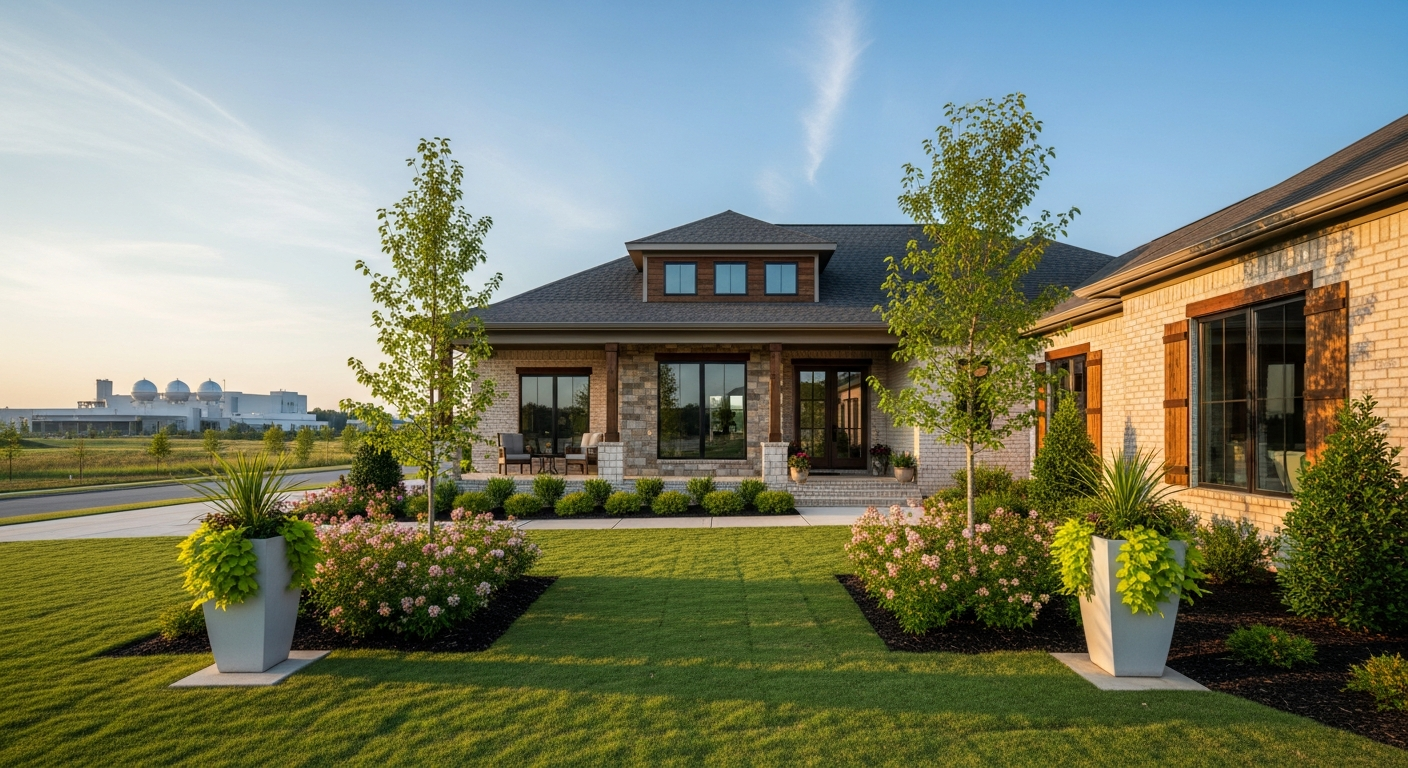
Alabama does not get enough credit in conversations about homeownership. The state has some of the lowest home prices in the southeastern United States, a growing economy anchored by aerospace, medicine, and advanced manufacturing, and a legal environment that is straightforward for buyers who want to structure a purchase with shared ownership. For people who want to buy a primary residence with a co-owner, Alabama checks a lot of boxes.
This guide walks through how co-ownership works in Alabama from a legal and practical standpoint, then goes market by market through Huntsville, Birmingham, and Mobile. It closes with the math on FHA co-buying across each city and a look at the programs the Alabama Housing Finance Authority offers.
Alabama Real Estate Law: What Co-Buyers Need to Know
Alabama is a common law property state, not a community property state. That distinction matters primarily for married couples, but it also shapes how courts treat co-ownership agreements between unrelated buyers.
When two or more people buy a home in Alabama without any additional structure, they hold title either as joint tenants or as tenants in common. Joint tenancy includes the right of survivorship, meaning a co-owner's share passes automatically to the surviving owner at death. Tenancy in common is more flexible: each owner holds a defined percentage, which can be inherited or sold independently.
For most co-buyers using the Rhome model, neither of those bare-title arrangements is the right answer. A shared ownership structure holds the property instead. Alabama law allows LLCs to hold real estate, and forming one is relatively inexpensive. Alabama charges a flat filing fee for new LLCs, and the state does not require a registered agent to be an Alabama resident, though using a local registered agent is common practice. The governance agreement is where the real work happens: it defines ownership percentages, decision-making authority, what happens if one owner wants to sell, and how major expenses get handled.
The governance agreement functions as a co-ownership agreement embedded in the legal entity. It is far more enforceable and customizable than a standard tenancy in common arrangement, and it gives each co-owner clear rights from day one.
One additional note for Alabama buyers: the state has a real estate transfer tax of $0.50 per $500 of the property's value, assessed at closing. This is standard and applies regardless of whether you are buying individually or through a shared ownership structure.
Huntsville: The Rocket City's Case for Co-Ownership
If you want to understand why Huntsville is Alabama's most compelling co-ownership market right now, start with Redstone Arsenal. The federal installation anchors an economy built around aerospace engineering, missile defense, and defense contracting. NASA's Marshall Space Flight Center is here. The U.S. Army Materiel Command is here. And over the past decade, the surrounding ecosystem has drawn dozens of defense tech contractors, aerospace companies, and federal agencies.
The result is a city that has added high-paying professional jobs faster than its housing stock has grown. That dynamic pushes prices upward, which is unusual for Alabama. Huntsville home prices have risen significantly over the past several years, making it the priciest major market in the state. Depending on the neighborhood, you can find condos and starter homes in the $200,000s, but desirable single-family homes near research corridors, top-rated schools, or the growing downtown scene regularly list above $350,000 and often above $450,000.
For two buyers earning good salaries in the aerospace or tech sector, co-ownership makes the math click in a way it otherwise might not. Two engineers who both work at Redstone or for a federal contractor can qualify jointly for a loan that neither could access individually, split the down payment, share the monthly costs, and each claim the home as their primary residence because they both live there.
Neighborhoods worth knowing: Madison is a fast-growing suburb with newer construction and strong schools. Jones Valley offers slightly older homes at lower prices. The downtown Huntsville corridor has seen significant investment and appeals to buyers who want walkability. The Research Park area near the University of Alabama in Huntsville is popular with the tech workforce.
Huntsville also has a genuine tech startup scene growing alongside the defense economy. Companies in cybersecurity, autonomy, and advanced manufacturing have chosen Huntsville for expansions. That brings a younger, professional population that thinks differently about homeownership, and co-buying fits naturally.
Birmingham: Affordability, History, and a Medical City on the Rise
Birmingham is one of the most affordable mid-sized cities in the United States, and that affordability is real, not a symptom of stagnation. The city has gone through a genuine economic change over the past fifteen years, centered on UAB (the University of Alabama at Birmingham) and its sprawling medical campus, which has become one of the largest employers in the state.
The medical economy supports physicians, nurses, researchers, administrators, and the entire ecosystem of services that a major academic medical center generates. Add in finance, insurance, and the legal sector along the 20/59 corridor, and you have a mid-sized city with meaningful professional employment and home prices that have not fully reflected that.
Median home values in Birmingham proper run significantly lower than in most comparable southeastern cities. You can find solid single-family homes in strong neighborhoods for well under $300,000. For co-buyers, this creates an exceptional opportunity: the total purchase price is low enough that the down payment and monthly costs become genuinely manageable even for buyers with moderate incomes.
The neighborhood story in Birmingham is important. Avondale has become one of the city's most talked-about areas, with a food and culture scene that draws younger residents. Homewood is a close-in suburb with excellent schools and a neighborhood feel that consistently attracts families and professionals. Forest Park, Crestwood, and the Highland Avenue corridor offer craftsman bungalows and mid-century homes that have appreciated meaningfully while remaining accessible. Southside, near UAB, is popular with medical residents and graduate students who may be approaching their first home purchase.
For two medical residents or two UAB staff members looking to stop renting and build equity, Birmingham co-ownership through Rhome is a practical path. The prices are low enough that even with a 3.5% FHA down payment split two ways, each co-owner's upfront cash contribution is well within reach.
Mobile: The Port City and an Emerging Co-Ownership Market
Mobile sits at the southwestern corner of Alabama where the Mobile River meets Mobile Bay, giving it a geography, culture, and economy distinct from the rest of the state. It is the oldest city in Alabama, with a French colonial heritage, a Mardi Gras tradition that predates New Orleans by years, and a port that is among the largest in the Gulf Coast.
The economic base here runs through the Port of Mobile, Airbus (which has its only U.S. manufacturing facility in Mobile), ThyssenKrupp, and a manufacturing and logistics sector that has grown with Gulf Coast trade. The healthcare sector, anchored by the University of South Alabama Medical Center, also employs a significant share of the workforce.
Home prices in Mobile are lower than in Huntsville or Birmingham, making it the most accessible Alabama market by purchase price. That accessibility, combined with a workforce that increasingly includes young professionals in aerospace manufacturing and healthcare, creates real demand for affordable primary homeownership. Co-buying here is less about reaching a pricy market and more about accelerating entry into ownership at all, allowing two buyers to commit to a primary residence earlier in their careers than they could individually.
Mobile's neighborhoods worth watching include Midtown, which has a historic residential stock and has attracted renovation interest, and Spring Hill, a long-established area near the university and medical center.
The Alabama Housing Finance Authority and What It Offers Co-Buyers
The Alabama Housing Finance Authority, commonly called AHFA, administers the state's primary homebuyer assistance programs. Understanding what AHFA offers helps co-buyers think about whether state programs can layer on top of an FHA loan.
AHFA's Step Up program is designed for moderate-income buyers and provides down payment assistance in the form of a second mortgage. The Step Up program has been used by thousands of Alabama buyers and is available through participating lenders statewide. There are income limits and purchase price limits that vary by county, and both apply to the household income of all borrowers on the loan.
For co-buyers, the key question is whether the combined income of all borrowers exceeds the program's income caps. In more affordable markets like Mobile or rural Alabama, co-buyers may still fall within limits. In Huntsville, where incomes are higher, co-buyers are more likely to find that AHFA programs have an income ceiling they exceed together.
AHFA also administers mortgage credit certificate programs in some circumstances, which provide a federal income tax credit for a portion of the mortgage interest paid each year. This is a separate benefit from the standard mortgage interest deduction.
The most important guidance here: work with a lender who knows both FHA co-buying and AHFA programs. They exist in layers, and a knowledgeable lender can tell you quickly whether your combined income disqualifies you from state assistance or whether there is a combination that works.
FHA Co-Buying Math Across Alabama Markets
FHA loans allow down payments as low as 3.5% for buyers with a credit score of 580 or above. When you buy through Rhome, all co-owners are on the loan. The down payment is 3.5% of the total purchase price, and that amount gets split according to each owner's contribution agreement.
Here is what the math looks like across Alabama's three main markets. These examples use round numbers to illustrate the structure clearly.
Huntsville example: A home priced at $420,000. The FHA down payment at 3.5% is $14,700. Split between two co-buyers, each contributes $7,350. At a 6.75% interest rate on a 30-year loan, the monthly principal and interest on the $405,300 loan is approximately $2,628. Split two ways, each co-owner carries about $1,314 per month before taxes and insurance. For two professionals earning $80,000 each, that is a comfortable ratio.
Birmingham example: A home priced at $260,000. The FHA down payment is $9,100. Each co-buyer contributes $4,550. The monthly principal and interest on the $250,900 loan at 6.75% is approximately $1,627. Split two ways, that is about $814 per month each. At this price point, even buyers with moderate incomes can make the numbers work.
Mobile example: A home priced at $190,000. The FHA down payment is $6,650. Each co-buyer contributes $3,325. The monthly principal and interest on the $183,350 loan at 6.75% is approximately $1,189. Split two ways, that is about $595 per month each. This is entry-level homeownership that becomes genuinely accessible.
Those per-person monthly figures do not include property taxes, homeowners insurance, or FHA mortgage insurance premium, which adds about 0.55% of the loan balance annually for most FHA loans. But even with those additions, Alabama's low price points make co-ownership through FHA structurally sound in all three markets.
One important note: FHA loans have loan limits that vary by county. Most Alabama counties sit at the standard FHA floor limit. Buyers in Huntsville, where prices have risen, should confirm the applicable FHA limit for Madison County with their lender before assuming FHA works for a specific property.
How Rhome Works in Alabama
Rhome handles the ownership structure setup, the co-ownership agreement, and the coordination with lenders and title companies who understand this arrangement. In Alabama, where the underlying entity formation is straightforward and the legal environment is buyer-friendly, the process moves efficiently.
The starting point is finding co-buyers. Rhome helps compatible buyers form groups, or you can come in with a co-buyer already in mind, whether that is a sibling, a colleague from Redstone Arsenal, a fellow medical resident, or a friend you trust. Every co-buyer must intend to occupy the home as their primary residence. Alabama co-ownership through Rhome is not an investment structure and is not designed for anyone who wants to rent out their share or use the home seasonally.
Once a group is formed, Rhome works with lenders who are familiar with the shared-ownership-plus-FHA structure, helps negotiate and draft the governance agreement, and coordinates with Alabama title companies at closing. After closing, the platform provides ongoing tools for managing shared expenses, tracking equity, and handling the situations that arise in any co-owned home.
Alabama's affordability, combined with growth in Huntsville and stability in Birmingham and Mobile, makes the state a strong candidate for buyers who are ready to move from renting to owning but are not quite ready to do it alone.
FAQ
See faqItems below.