There is a certain pull to older homes that newer construction simply cannot manufacture. The wide covered porch. The original wood floors that have absorbed a century of footsteps. The built-in bookshelves with their hand-fitted joints. The way afternoon light falls through single-pane windows onto plaster walls that no longer exist in modern building.
Victorian and craftsman homes, typically built before 1940, are the homes people fight over in desirable neighborhoods. They appreciate well. They hold their value. And they come with a list of maintenance realities that no amount of admiration fully prepares you for.
Co-buying one of these homes with two, three, or four people is a genuinely smart way to access this tier of property. Shared ownership through Rhome's structure means you can afford the purchase price and fund the repair reserve these homes require. But the group needs to go in clear-eyed. This article covers what Victorian and craftsman co-buyers must understand before they sign.
What Makes Victorian and Craftsman Homes Different
The architectural details that make these homes beautiful are also the source of their maintenance demands.
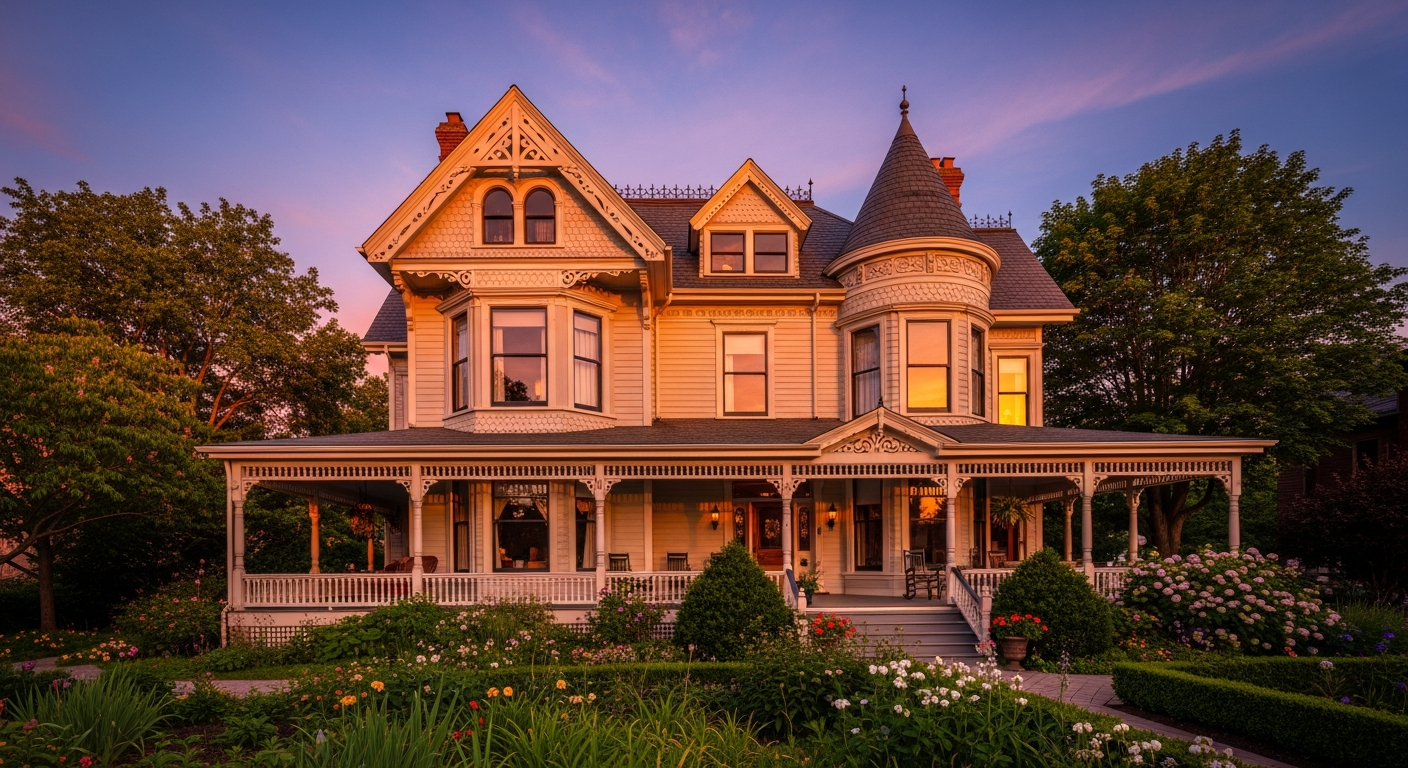
Victorian homes (roughly 1860 to 1910) are defined by their ornamentation. Decorative gingerbread trim, bay windows, steep gabled rooflines, wraparound porches, and intricate millwork on exterior fascias and interior moldings. Many have original clawfoot tubs, pocket doors, and narrow staircases. The craftsmanship was genuine, but it was also performed by hand in an era before power tools, and much of it is no longer reproducible at reasonable cost.
Craftsman bungalows (roughly 1905 to 1930) take the opposite approach aesthetically, favoring simplicity over ornament. Low-pitched roofs, wide eaves, exposed rafter tails, built-in cabinetry, tapered porch columns, and natural materials. The philosophy was honest construction, and most craftsman homes were exactly that. What they share with Victorians is age, and age is the central variable that drives maintenance planning.
Both styles typically feature wood-framed construction, wood siding or shingles, original or near-original mechanical systems, and materials that have been subject to decades of weather cycles, deferred maintenance, and prior owner decisions of varying quality.
The Maintenance Realities You Must Plan For
Wood Siding and Exterior Paint
Neither Victorian nor craftsman homes were built with vinyl siding. They have wood: clapboard, shingles, channel siding, or board-and-batten. Wood requires painting, and it requires it on a schedule.
The general rule for wood siding in most climates is a full repaint every five to seven years. On a Victorian with its complex trim, bay windows, and multiple exterior surfaces, that cycle costs significantly more than on a simple box house. Professional painters charge by the linear foot of complex detail, and Victorian homes have a great deal of it. Budget accordingly and expect to repeat the process on a reliable schedule.
Deferred painting on wood siding leads to rot, and rot leads to much larger bills. A group of co-owners with a funded repair reserve can stay on schedule. A single owner who hits a lean year may defer, and deferred maintenance on wood compounds fast.
Detailed Woodwork: Beautiful and Expensive to Repair
The millwork on older homes, the crown moldings, built-in cabinetry, window casings, porch brackets, and decorative fascias, was produced in an era of abundant skilled labor. Replacing damaged sections today often requires a finish carpenter who can match the profile, or a millwork shop that can run custom molding. Neither is inexpensive.
This does not mean these homes are money pits. It means damage needs to be caught early. A co-ownership group with multiple owners doing routine walkthroughs is actually better positioned to catch a failing porch bracket or a water-stained window casing before it becomes structural. The problem arises when no one is paying attention, which is less likely when four people share ownership.
Electrical: Knob-and-Tube Wiring
Homes built before roughly 1940 frequently have knob-and-tube wiring, an early electrical system that uses ceramic knobs to hold wire away from framing and ceramic tubes to thread wire through joists. It was not inherently dangerous when installed, but it has a few serious problems in modern use.
Knob-and-tube was designed for much lower electrical loads than modern households draw. It has no ground wire, which means it is incompatible with three-prong outlets and cannot safely run appliances that require grounding. Insulation was often blown over it by later owners, which can cause overheating. And many lenders will require a full electrical inspection and may condition financing on upgrades before closing.
Full rewiring of a Victorian or craftsman home is a significant project that can run into the tens of thousands of dollars depending on size, access, and local labor costs. This is often necessary, and co-buyers should investigate the electrical status early in due diligence. A home still on original knob-and-tube is not disqualifying, but it is a known cost that affects how you size your purchase offer and your repair reserve.
Galvanized Plumbing
Galvanized steel pipes were the standard in homes built through the mid-twentieth century. They corrode from the inside over time, gradually restricting water pressure and eventually failing. By the time a galvanized pipe shows obvious problems at a fixture, the interior of the pipe may be heavily scaled throughout the run.
A plumber can inspect water pressure and use a camera to assess pipe condition. Homes where galvanized runs have already been replaced with copper or PEX are in better shape. Homes where the original galvanized is still in place throughout should factor in replacement costs as a near-term capital item for the repair reserve.
Lead Paint and Asbestos
Homes built before 1978 may contain lead-based paint. Homes built before roughly 1980 may contain asbestos in insulation, floor tiles, pipe wrap, or textured ceiling finishes. Neither is necessarily an emergency in a home that is being maintained and not disturbed, but both require attention when repairs or renovations create dust or disturb materials.
Federal law requires sellers to disclose known lead paint. Your purchase agreement will include an EPA lead paint disclosure. Get the home tested, and understand what remediation or encapsulation may be needed before moving in, particularly if children will be residents.
Asbestos abatement, when needed, is specialized work performed by licensed contractors. Co-buyers should get asbestos testing as part of their inspection phase, particularly on homes with visible textured ceilings, old floor tiles, or pipe insulation that has not been previously replaced.
FHA Financing and Older Homes
FHA loans are a common tool for buyers who want to limit down payment size, but FHA appraisal standards create complications with older homes. FHA requires the appraiser to note conditions that affect the health, safety, or livability of the home. Peeling paint in homes built before 1978, compromised roofing, exposed wiring, or structural concerns will trigger required repairs that must be completed before the loan can close.
This does not mean FHA financing is unavailable for Victorian or craftsman homes. Many pass FHA appraisal without issue. But it does mean your inspection needs to be thorough, and your purchase offer should be structured with clear understanding of what conditions exist. If the FHA appraiser flags a required repair, someone has to pay for it before closing. Negotiate accordingly.
Conventional financing through a Rhome ownership structure, which is how Rhome structures co-ownership, avoids FHA constraints and gives the group more flexibility in how they address pre-existing conditions on their own timeline. Your repair reserve becomes the mechanism for funding those corrections methodically.
Sizing the Repair Reserve for an Older Home
Every co-ownership group operating through Rhome establishes a repair reserve, a shared fund that covers maintenance and unexpected repairs without requiring emergency contributions from co-owners. For newer homes, a standard reserve of one percent of home value per year is a reasonable starting point.
For Victorian and craftsman homes, that baseline is not enough.
These homes carry known cost centers: siding that needs painting on a cycle, mechanical systems that are older, potential remediation of lead or asbestos, electrical upgrades if not already complete, and detailed woodwork that requires skilled labor to maintain. A group co-buying a pre-1940 home should plan on a reserve contribution rate closer to 1.5 to 2 percent of home value per year, and should front-load the reserve during the first two years of ownership before major maintenance events arrive.
The shared structure of co-ownership is precisely what makes this manageable. Four co-owners each contributing a modest monthly amount into a shared reserve accumulates meaningful capital over time. That fund, properly maintained, means no single owner faces a crisis when the roof needs replacement or the exterior repaint comes due. It is one of the clearest structural advantages co-buying offers for this property type.
The Character Premium: Why These Neighborhoods Hold Value
The maintenance demands of Victorian and craftsman homes are real. So is something else: these neighborhoods tend to perform well over time.
Older residential areas with architectural cohesion, walkable streets, mature tree canopy, and proximity to urban cores have consistently attracted buyers willing to pay a premium. The neighborhoods where craftsman bungalows and Victorians cluster are often the same neighborhoods people specifically seek out. Historic districts carry legal protections that prevent the teardowns and out-of-character infill that erode value elsewhere.
Co-buying into one of these neighborhoods at a purchase price that requires shared ownership to be feasible is not a compromise. It is a strategy. You are accessing a property type that a single buyer at your income level may not be able to reach, in a location with characteristics that tend to support long-term value.
The shared costs do not just make the purchase affordable. They make the ongoing ownership sustainable. A well-maintained older home in a desirable neighborhood, held by co-owners who actually fund their repair reserve and stay on top of maintenance, is positioned very differently than a similar home that has been deferred into decline.
Questions to Ask During Your Inspection
Your inspection on a Victorian or craftsman home should go deeper than a standard inspection on newer construction. Here are the questions your inspection team needs to answer:
- Electrical: Is the home on original knob-and-tube wiring? Has any rewiring been done, and if so, how much of the system was updated? Is the panel adequate for modern loads?
- Plumbing: Are the supply lines galvanized, copper, or PEX? What is the water pressure throughout the home? Has there been any pipe replacement, and where?
- Roof: When was the roof last replaced? What are the current conditions of flashings, gutters, and any flat sections over bay windows or additions?
- Foundation: Are there signs of settling, cracking, or moisture intrusion in the basement or crawlspace? Have any prior foundation repairs been made?
- Exterior wood: What is the current condition of the siding, trim, and porch structure? Is there any active rot? When was the home last painted?
- Lead and asbestos: Has the home been tested? Are there known areas of concern? What is the condition of any materials that may contain either?
- Windows: Are the original windows still in place? Are they operable, weatherstripped, and in acceptable condition, or will they require replacement or restoration?
- Permits: What work has been done to the home, and was it permitted? Unpermitted work on older homes is common and can create insurance and resale complications.
Hire a specialist if your general inspector flags anything in the electrical, plumbing, or structural categories. A specialist inspection on a home this age is money well spent.
For more on how Rhome structures co-ownership and repair reserves, visit how it works.