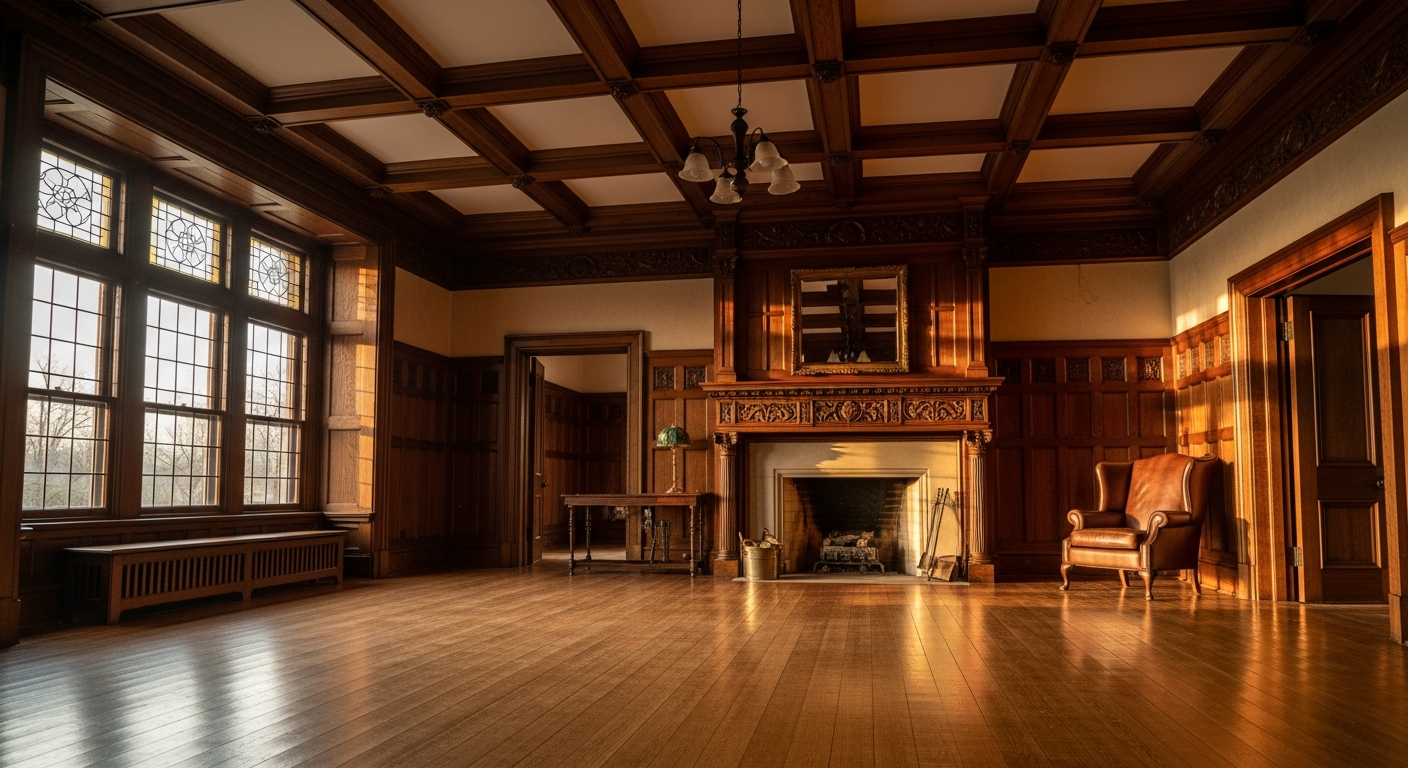
Historic homes offer something newer construction simply cannot replicate: original millwork, old-growth hardwood floors, masonry built to last centuries, and a sense of place that takes generations to earn. For co-buyers, they also carry a real financial case. Established neighborhoods with active historic districts tend to have constrained housing supply, lower vacancy, and long track records of appreciation.
But buying a historic home with two, three, or four people requires a clear-eyed understanding of what preservation rules actually govern, what they do not, and how they shape the kind of decisions co-owners will make together for as long as they live there. Getting this wrong does not just create friction between co-buyers. It can mean fines, required reversals of completed work, or a failed permit process that delays a critical repair for months.
This guide covers what you need to know before you make an offer.
Types of Historic Designation
Most buyers conflate the National Register of Historic Places with local historic district designation. They are entirely different programs with very different legal consequences.
National Register of Historic Places
The National Register of Historic Places is the federal government's official list of buildings, sites, structures, and objects considered significant to American history, architecture, or culture. It is administered by the National Park Service under the Department of the Interior.
Here is the part that surprises most buyers: listing on the National Register carries no regulatory restrictions for private property owners. If you buy a National Register property as your primary residence, you can renovate it as you see fit. You are not required to preserve the original windows, maintain the historic facade, or seek approval from any government body before making changes.
The National Register is, in effect, an honorary designation. It signals that a property has been evaluated and deemed historically significant. That evaluation does not come with a rulebook for how you use or modify the home.
The primary practical benefits of National Register listing for owner-occupants are reputational. The designation can support property value, attract buyers who care about provenance, and in some cases make a property eligible for state-level financial incentives. More on those below.
Local Historic District Designation
Local historic districts are where the regulatory action actually happens. These districts are established by city or county governments, often with support from a State Historic Preservation Office, and they carry real legal authority over what you can and cannot change on the exterior of your home.
If your prospective home sits within a locally designated historic district, any exterior alteration that is visible from a public way typically requires a Certificate of Appropriateness (COA) from the local Historic Preservation Commission (HPC). Depending on the jurisdiction, the HPC may also be called the Architectural Review Board, the Landmarks Commission, or a similar body.
Common exterior changes that require a COA in most local historic districts include:
- Replacing windows or doors
- Changing roofing materials
- Adding or removing a porch, fence, or outbuilding
- Altering the siding material
- Installing solar panels, HVAC equipment, or satellite dishes in visible locations
- Repainting, in some jurisdictions with strict paint palette rules
- Any addition to the structure
Routine maintenance that does not change the character of the materials, such as painting with the same color, replacing a broken window pane in kind, or repairing existing siding, generally does not require a COA.
Interior changes are almost universally outside the scope of local historic district regulations. You can reconfigure floor plans, update kitchens and baths, and install modern systems inside your home without HPC review in virtually every jurisdiction in the country.
What Historic Rules Actually Restrict
The practical upshot for co-buyers is that a locally designated property will require commission approval before most visible exterior work can begin. The review process evaluates proposed changes against the Secretary of the Interior's Standards for the Treatment of Historic Properties, or against locally adopted guidelines, which generally favor preservation and repair over replacement and favor replacement in kind over substitution with modern materials.
This matters for co-buyers in two ways. First, the materials and methods required under preservation review tend to cost more than the cheapest modern alternatives. Repairing original wood windows using period-appropriate techniques is more expensive than installing standard vinyl replacements. Reroofing with slate or period-correct wood shingles is more expensive than asphalt. These cost premiums are real and should be factored into your repair reserve from day one.
Second, some proposed changes will be denied. If your co-buyers want to add a rear deck, replace the original front door with a fiberglass unit, or clad the exterior in fiber cement siding, a local HPC may deny those applications. Understanding which changes are and are not likely to receive approval, based on local precedent and guidelines, is something a preservation-experienced real estate attorney or architect can help you assess before you buy.
How Historic Rules Affect Co-Owner Capital Improvement Decisions
For co-buyers using a shared ownership structure, co-owners govern the home through a written co-ownership agreement that covers how decisions about major improvements are made, how costs are shared, and what happens when co-owners disagree. When the home sits in a local historic district, that framework needs to account for a longer and less predictable process for exterior improvements.
Longer Timelines
HPC review processes vary significantly by city. In smaller cities, a COA for a straightforward window replacement might be approved in a few weeks. In larger cities with dense calendars and contested applications, the process can take two to four months. Appeals extend timelines further.
For co-buyers, this means that a decision to replace deteriorating windows, repair a damaged porch, or add an exterior door should begin months before the work needs to happen, not when the problem becomes urgent. Your co-ownership agreement should acknowledge this reality and build adequate lead time into any capital improvement planning.
Required Approvals
Beyond the timeline, co-owners need to decide who is responsible for initiating and managing the COA process. Preparing an application, sourcing supporting documentation, and responding to commission questions takes time and requires someone to take ownership. That responsibility should be defined in your governance agreement, along with a process for deciding which projects to pursue.
When co-owners disagree about a proposed exterior change, the HPC review process does not resolve that disagreement. It only governs what the commission permits, not what co-owners want. Your agreement should specify vote thresholds for capital improvement proposals and what happens when a proposal falls short of the required support.
The Appeals Process
When an HPC denies a COA application, the homeowner has options. Most jurisdictions allow an administrative appeal within a set window, typically 30 to 60 days. Some allow escalation to a city council or board of zoning appeals. In rare cases, a denial can be challenged in court on the grounds that it constitutes an unconstitutional taking, though this is a high bar to clear.
For co-buyers, the relevant questions are: who has authority to pursue an appeal, and who pays for it? Legal representation during an HPC appeal can be meaningful in cost. Your co-ownership agreement should specify how these decisions are made and how legal costs are allocated among co-owners.
Repair Reserve Sizing for Historic Homes
Older homes require more maintenance than newer ones. A Victorian built in 1895 may have original knob-and-tube wiring that needs to be replaced before any renovation work can proceed. It may have lead paint, aging plaster, a roof that has reached the end of its useful life, or a foundation that needs repointing. These are not surprises. They are predictable consequences of age.
For co-buyers of historic homes, a well-funded repair reserve is not optional. It is the financial mechanism that allows the home to be maintained properly without creating conflict or financial strain when something goes wrong. The Rhome model treats the repair reserve as a core part of co-ownership structure, not an afterthought. Historic homes, with their higher maintenance demands and the potential cost premiums of preservation-compliant repairs, make this even more critical.
A reasonable starting point for older historic homes is 1.5 to 2 percent of the home's purchase price per year, set aside in a dedicated reserve account that all co-owners contribute to proportionally. Building in the preservation cost premium, rather than assuming you will use the cheapest available materials, means the reserve reflects the real cost of owning the home you actually bought.
Historic Tax Credits: What Applies to Owner-Occupants
This is an area where a great deal of well-meaning information gets distorted, so it is worth being precise.
Federal Historic Tax Credit
The federal Historic Tax Credit (HTC) provides a 20 percent income tax credit for qualified rehabilitation expenditures on certified historic structures. It is a significant incentive.
It does not apply to owner-occupied primary residences. The federal HTC is specifically designed for income-producing properties, such as commercial buildings, rental housing, and mixed-use developments. A home you live in as your primary residence is categorically ineligible, regardless of its National Register status or the extent of your rehabilitation work.
This distinction matters because many buyers read about the federal HTC online and assume it applies to their purchase. No co-ownership structure changes this rule.
State Historic Tax Credits
State-level programs vary significantly and are worth researching carefully for your specific state. Some states have their own historic rehabilitation tax credits that are explicitly extended to owner-occupied residences. Missouri, Virginia, Maryland, and several other states have at various times offered state-level credits or grant programs that cover some rehabilitation costs for owner-occupants.
These programs change. Appropriations run out. New programs are created. The best source for current information is your State Historic Preservation Office, which maintains a list of active incentive programs and current eligibility requirements. If your state has an owner-occupied historic rehabilitation program and your home qualifies, the credit can represent real money worth understanding before you finalize your purchase.
Local Property Tax Abatements
Many cities and counties offer property tax abatements or freezes for owners of locally designated historic properties who undertake approved rehabilitation work. These programs typically freeze your assessed value for a set period, often 5 to 15 years, at the pre-rehabilitation level. The result is that your taxes do not increase immediately as a result of improvements that raise the home's market value.
For co-buyers who anticipate significant rehabilitation work in the first few years of ownership, a local abatement can represent meaningful savings spread across all co-owners. Check with your city's historic preservation office or planning department to find out what programs are available in the specific district where you are buying.
FHA Appraisal in Historic Homes
If your co-buying group is considering FHA financing, historic homes introduce a few additional considerations at the appraisal stage.
FHA appraisers are required to identify health and safety conditions that affect habitability. Older homes commonly trigger appraisal conditions related to:
Lead paint: Homes built before 1978 must be evaluated for deteriorating lead paint. Chipping, peeling, or flaking paint on any surface, interior or exterior, must be remediated before FHA financing can close. Encapsulation is a common approach that is generally both FHA-compliant and preservation-friendly.
Knob-and-tube wiring: Knob-and-tube wiring is common in homes built before the 1940s and often requires a licensed electrician's inspection. Many lenders require documentation that it is in acceptable condition or require it to be updated before closing.
Roof condition, plumbing, and other systems: FHA appraisers evaluate overall habitability. A roof at the end of its useful life, failing plumbing, or other systems in poor condition can create closing conditions that require resolution before the loan can fund.
Conventional financing is often more flexible on these conditions, though individual lenders vary. If FHA is part of your financing plan, budget for the possibility of pre-closing repairs and build that into your negotiation with the seller. Working with a lender experienced in historic properties helps, as they will have seen these conditions before and can advise on what is and is not likely to create a problem.
Why Historic Homes Can Be Excellent Co-Buys
With all of the above understood, historic homes have real structural advantages for co-buyers.
Supply is genuinely constrained. You cannot build more Victorians. You cannot manufacture more 1920s brick rowhouses or pre-war Colonials in established urban neighborhoods. Historic district designation actively protects the character of those neighborhoods from incompatible development. That supply constraint supports value over time in ways that new construction subdivisions do not.
The neighborhoods are established. Locally designated historic districts exist because the neighborhood already had enough architectural and cultural significance to warrant protection. That typically means walkable streets, mature tree canopy, proximity to civic and cultural institutions, and a sense of community that newer areas spend decades trying to build.
Character is irreplaceable. Original millwork, plaster walls, old-growth wood floors, and period tile work are not things you can buy from a catalog. Co-buyers who share an appreciation for craftsmanship and place tend to find that a historic home gives them something to be genuinely proud of, not just an asset to manage.
Co-ownership is well-suited to higher-maintenance homes. A shared repair reserve spread across two, three, or four co-buyers means the home is better capitalized than if a single buyer were stretching to afford it alone. That financial cushion matters more in a 120-year-old house than in a home built last decade. The costs of thoughtful historic stewardship become manageable when shared.
Preservation constraints create shared standards. For co-owners, one of the important questions is how the group will maintain standards for the property over time. Historic designation, in a sense, answers part of that question externally. The preservation guidelines establish a framework for how exterior changes are made and at what standard. Co-owners in a historic home have an external reference point for decisions that might otherwise be contested internally.
Questions to Ask Before Buying a Historic Home with Co-Buyers
Before you make an offer, get clear answers to these questions.
- Is the home listed on the National Register, in a local historic district, or both? Which governs?
- If it is in a local historic district, what is the COA application process and how long does review typically take?
- What exterior changes have previous owners made, and were they properly permitted? Unpermitted work in a historic district can create liability that transfers to you as the buyer.
- Are there any open HPC violations or complaints against the property?
- What deferred maintenance exists that will require attention in the first five years? Get a thorough inspection from an inspector experienced with older homes.
- Does your state or city offer owner-occupied historic rehabilitation incentives?
- Has the home been tested for lead paint or asbestos? If not, budget for testing before closing.
- If you are using FHA financing, has your lender worked with historic properties before?
- How will your co-ownership agreement handle longer timelines and the cost premiums that come with historically compliant repairs?
A real estate attorney with experience in historic properties, a preservation-savvy home inspector, and a lender who has closed historic home purchases are the three professional relationships most worth building before you get to contract on a historic home. For co-buyers, the added layer of collective decision-making makes those relationships even more valuable.

