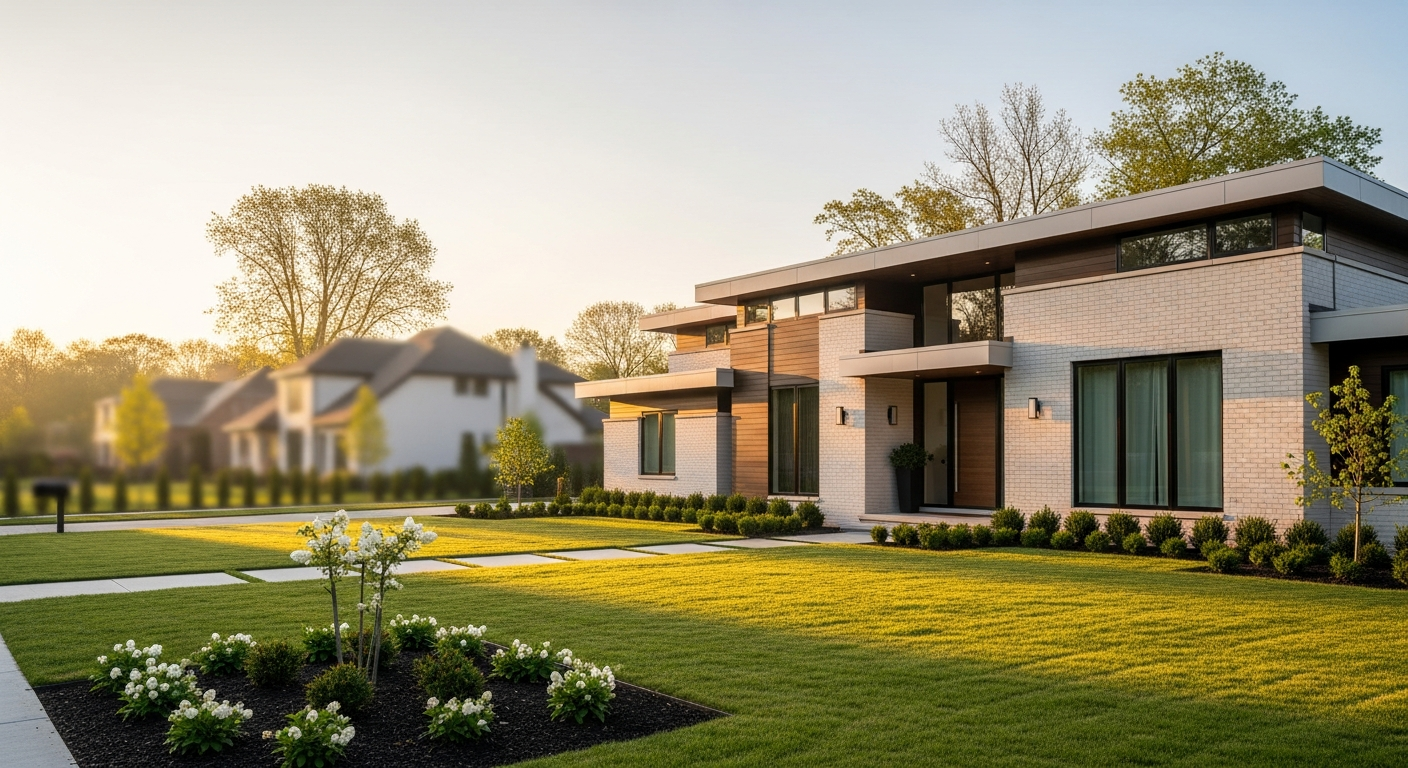
It used to be a hallmark of American life: you finish school, start a career, get married, and buy a house with a yard, all before your thirtieth birthday. For generations, this wasn't a fantasy but a feasible timeline. Today, that sequence of events feels like a story from a distant economic past.
A now-famous infographic lays out a stark reality: the median age of a first-time homebuyer in the United States has been climbing steadily for 40 years. In the 1980s, the typical first-time buyer was around 30 years old. Today, that figure is pushing 36, and even higher in many parts of the country. This shift isn't a minor demographic tweak-it’s a fundamental change in who can access homeownership and when.
This delay isn't a matter of choice for most people. It's the unavoidable outcome of economic and social forces that have completely reshaped the path to owning a home. From crushing student debt and stagnant wages to a chronic lack of housing supply, the hurdles are higher than ever. Understanding these barriers is the first step toward finding a new way forward.
- The Numbers Don't Lie: A 40-Year Trend
- What's Pushing Homeownership Further Down the Road?
- A Widening Gap: The Reality of Racial Disparities
- Rethinking the Path to the Front Door
The Numbers Don't Lie: A 40-Year Trend
The data paints a clear picture of a dream deferred. The National Association of Realtors (NAR) confirms this trend in its annual reports. Their 2023 Profile of Home Buyers and Sellers found the typical first-time buyer was 35 years old, a near-record high and a jump from 33 just two years prior. Let's look at the generational shift more closely.
| Decade | Median Age (White) | Median Age (Asian) | Median Age (Hispanic) | Median Age (Black) |
|---|---|---|---|---|
| 1980s | 29 | 31 | 31 | 33 |
| 1990s | 29 | 30 | 31 | 34 |
| 2000s | 30 | 31 | 30 | 33 |
| 2010s | 31 | 32 | 33 | 36 |
| 2020s | 37 | 36 | 37 | 40 |
What's alarming is the acceleration in the last decade. Between the 2010s and 2020s, the median age for a white first-time buyer jumped by six years. For Black buyers, the age rose from 36 to 40. This isn't a gradual creep; it's a massive leap, showing how the economic environment of the last ten years has been uniquely hostile to aspiring homeowners.
And while the dream is delayed for everyone, it is not delayed equally. The data consistently shows Black Americans facing the longest wait to buy their first home, a gap that persists across every decade. This points to deeper, structural issues that go beyond broad market trends.
What's Pushing Homeownership Further Down the Road?
This multi-decade shift isn’t the result of a single factor. It’s a complex mix of economic pressures that have systematically made it harder to save for and afford a home, especially early in one's career.
The Student Debt Dilemma
For millions of Millennials and Gen Z, the starting line for building wealth is positioned deep in the negative. Total student loan debt in the U.S. now exceeds $1.7 trillion, a burden that was practically nonexistent for their parents' generation. The consequences for homeownership are devastating.
First, a hefty monthly student loan payment wrecks a buyer's debt-to-income (DTI) ratio-a key metric lenders use to approve mortgages. A high DTI can shrink your borrowing power or get your application denied outright. Second, every dollar sent to a loan servicer is a dollar that can't be saved for a down payment. A 2021 NAR study revealed that over half of non-homeowners cited student loan debt as the primary reason for their delay, pushing their purchase timeline back by a median of five years.
When Incomes Can't Keep Pace with Prices
The most significant barrier is the simple, brutal math of home prices versus wages. Since the 1980s, and especially since 2000, home prices have skyrocketed while median household income has barely budged. Data from the S&P CoreLogic Case-Shiller Home Price Index shows home prices have increased several times faster than wages in most major metropolitan areas.
This creates a constantly moving target for savers. The 20 percent down payment that was once the standard is now an astronomical figure in many cities. A $700,000 home requires a $140,000 down payment-a sum that is nearly impossible to save in a few years for someone also paying rent and student loans. Even with lower down payment options like FHA loans, the barrier to entry remains incredibly high.
The situation became a full-blown crisis in the last few years. The pandemic-era housing boom sent prices into orbit, and the Federal Reserve's subsequent interest rate hikes pushed monthly payments to record highs. A home that might have been a stretch in 2019 became completely unattainable by 2023 for the same buyer with the same income.
The Chronic Housing Shortage
Underpinning the affordability crisis is a critical lack of supply. For decades, the United States has not built enough homes, particularly the smaller, entry-level houses that first-time buyers have historically purchased. Following the 2008 financial crisis, home construction fell off a cliff and has never fully recovered to meet population growth.
Restrictive local zoning laws, high land costs, and labor shortages have all contributed to this under-building. The result is a classic supply-and-demand problem: too many buyers are competing for too few homes, which inevitably drives prices up. This scarcity hits first-time buyers the hardest, as they are often competing with all-cash offers from investors or repeat buyers armed with equity from a previous home sale.
A Widening Gap: The Reality of Racial Disparities
The data clearly shows that Black homebuyers consistently enter the market later than their peers. This is a direct outcome of the persistent racial wealth gap in America. According to the Federal Reserve, the median white household has about eight times the wealth of the median Black household. This chasm is the result of generations of systemic inequality, including racist housing policies like redlining, which prevented non-white families from getting mortgages and building generational wealth through real estate for much of the 20th century.
The consequences are concrete. With less family wealth to draw upon for a down payment, Black buyers must rely more heavily on their own savings, which are harder to accumulate due to ongoing wage disparities. This financial disadvantage means a longer, harder road to homeownership.
Furthermore, the problem extends to credit and appraisals. Credit scoring models can inadvertently penalize individuals who lack a long history with traditional credit products, a situation more common among minority groups. Research has also uncovered significant appraisal bias, where homes in Black or Hispanic neighborhoods are valued lower than comparable homes in white neighborhoods, stripping homeowners of equity from the start.
The homeownership rate itself tells the full story. According to the U.S. Census Bureau, the homeownership rate for non-Hispanic white households was 74% at the end of 2023. For Black households, it was just 44.1%. This 30-point gap is larger today than it was in 1968 when the Fair Housing Act was passed. The rising median age for Black first-time buyers is a symptom of these much deeper inequities.
Rethinking the Path to the Front Door
Faced with these realities, aspiring homeowners are not giving up. They are rewriting the rules and finding new strategies to make ownership possible. The traditional, single-family-on-a-single-income model is being replaced by more creative and collaborative approaches.
Some of the most effective strategies include:
- Relocating: Buyers are leaving high-cost coastal cities for more affordable markets in the Sun Belt and Midwest. The rise of remote work has supercharged this trend, creating so-called 'Zoom towns' where quality of life is high and housing is more attainable.
- House Hacking: This strategy involves buying a multi-unit property (like a duplex or triplex), living in one unit, and renting out the others. The rental income helps cover the mortgage payment, sometimes eliminating the owner's housing cost entirely. This approach turns a personal residence into an income-producing asset.
- Co-buying: Perhaps the most direct response to the affordability crisis is pooling resources. More people are buying homes with friends, siblings, or partners to whom they are not married. This allows two or more incomes and savings pools to be combined, making it possible to qualify for a larger mortgage and afford a down payment much sooner. This approach requires a high degree of trust and careful planning, structured through detailed legal agreements that outline ownership percentages, responsibilities, and an exit strategy.
A new ecosystem of companies and legal tech platforms has emerged to simplify this process, providing the legal framework and operating agreements that turn an informal handshake deal into a secure, well-structured investment. This approach formalizes co-ownership, giving buyers the confidence and clarity needed to purchase a home together.
The world has changed, and the path to owning a home has changed with it. The data shows us that waiting until your late 30s is the new normal. But it also reveals a growing movement toward new models of ownership. For a generation that feels the market has left them behind, these creative strategies are not just workarounds-they are the new blueprint for building equity and owning a piece of the future.