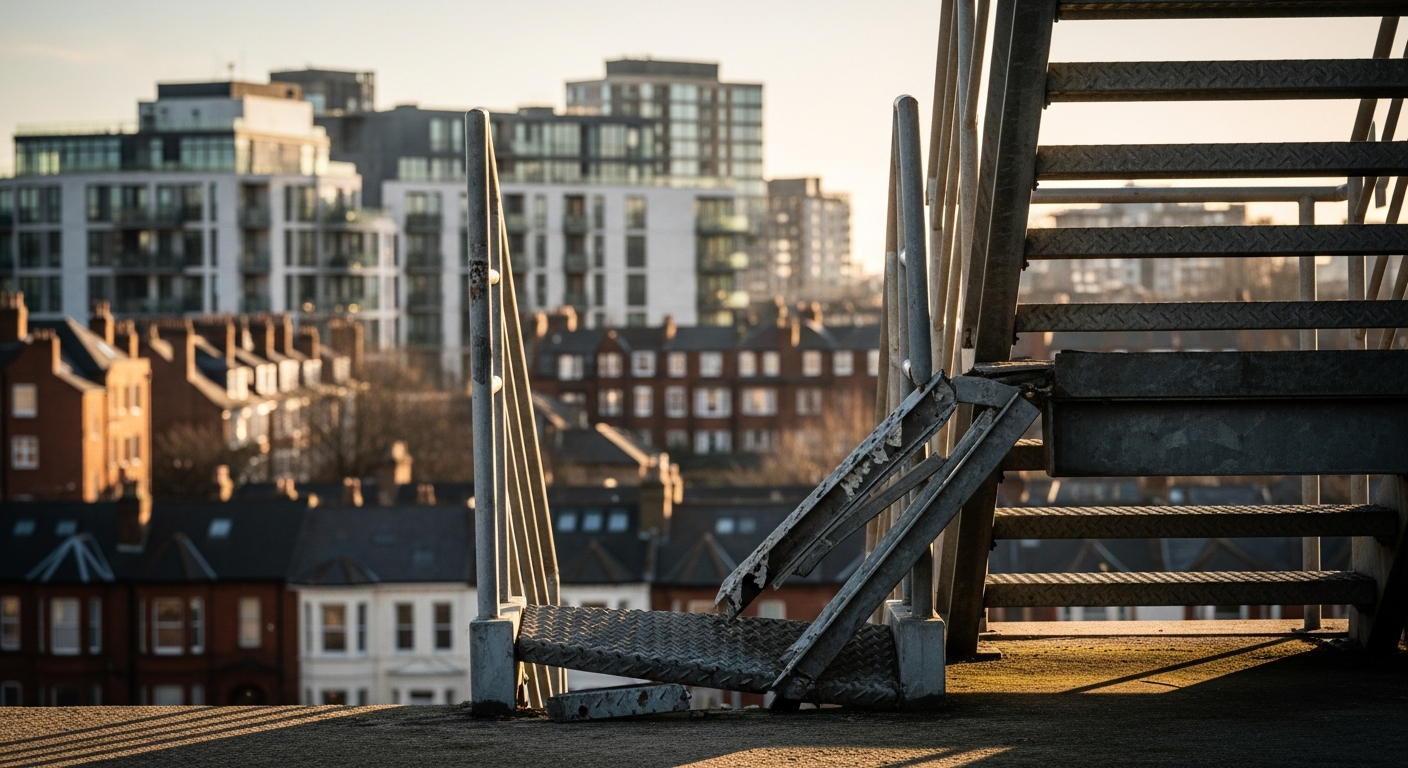
For generations, the path to building wealth in the United Kingdom was straightforward: get a job, save a deposit, buy a small starter home, and then trade up the property ladder as your career and family grew. Each rung represented a step towards greater stability and prosperity. For many millennials today, that ladder feels less like a pathway and more like an illusion. The first rung is perilously high, and the one after that seems to be missing entirely.
The story is no longer just about the struggle of the first-time buyer. A new, more complex challenge has emerged for the so-called “second steppers”: those who managed to get on the market with a small flat or terraced house, only to find themselves trapped. Stagnant wages, soaring house prices, volatile interest rates, and the hidden costs of modern homeownership have conspired to make the next move financially impossible. The dream is stalling, leaving a generation of middle-class professionals wondering if the home they bought is the only one they will ever own.
***
- The Myth of the Modern Starter Home
- A Perfect Storm of Economic Pressure
- Stuck on the First Rung: The 'Second Stepper' Crisis
- Forging New Paths to Ownership
***
The Myth of the Modern Starter Home
The very idea of a “starter home” has changed. What was once a modest two-bedroom house in a decent suburb is now, for most young buyers in major cities, a one-bedroom apartment. Often, that apartment comes with a catch that can turn an asset into a liability: a leasehold.
In England and Wales, buying a flat almost always means buying a leasehold property. You own the right to live in the home for a fixed period, but you don’t own the land it stands on. A freeholder owns that, and you are contractually obligated to pay them ground rent and service charges for the building's upkeep. For millions of people, this system has become a source of immense financial pain.
The Leasehold Trap
For many would-be second steppers, service charges have become an unpredictable and crippling expense. Initially quoted as a reasonable few hundred pounds a year, these fees can balloon without warning to cover major works, soaring building insurance premiums, or cladding remediation costs in the wake of the Grenfell tragedy. Some leaseholders have found themselves facing annual bills of over £10,000, effectively trapping them in homes they can no longer afford and certainly cannot sell.
While recent legislation like the Leasehold and Freehold Reform Act aims to fix some of these problems for the future, it offers little immediate relief for those already caught. Even without headline-grabbing safety costs, the steady inflation of standard service charges eats directly into the funds a household might otherwise save for their next deposit. The money that should be building future equity is instead diverted to maintaining a building you don’t even own. This turns the first rung of the ladder into a financial treadmill.
When Your First Home Becomes Your Only Home
The result is a growing number of homeowners who are asset-rich on paper but cash-poor in reality. Their flat may have increased in value, but its appeal to new buyers is tarnished by high service charges or a short remaining lease. Selling becomes a nightmare, and the dream of a garden for the kids or a dedicated home office remains just that: a dream.
A Perfect Storm of Economic Pressure
The challenges for millennial homeowners go far beyond the quirks of leasehold law. They are grappling with a harsh economic climate that has completely upended the property market.
House Prices vs. Reality
The gap between earnings and property values is at the heart of the crisis. According to the Office for National Statistics (ONS), the median house price in England was 7.8 times the median gross annual household income in 2023. A generation ago, in the late 1990s, that ratio was below four. Wages simply have not kept pace with the stunning growth in property values, which were fuelled for years by low interest rates and a chronic undersupply of new homes.
This makes it incredibly difficult to move up. If your small flat has appreciated, that’s great. But the three-bedroom house you want to move to has appreciated by an even greater absolute amount, widening the financial gap you need to bridge.
| Metric | Late 1990s | 2023 | Implication for Homeowners |
|---|---|---|---|
| House Price-to-Income Ratio (England) | ~3.5-4.0x | 7.8x | A buyer needs double the income relative to price compared to their parents' generation. |
| Bank of England Base Rate | ~5-6% | 5.25% (after being near 0%) | The era of cheap money is over. Mortgage affordability tests are much harder to pass. |
| Gap: First-Time vs. Second-Stepper Home | Smaller, more manageable | ~£130,000 (Rightmove, 2024) | The jump to a family home requires a massive increase in borrowing and deposit. |
The Squeeze on Savings and Borrowing Power
Compounding the price problem is the dramatic shift in interest rates. After more than a decade of near-zero rates, the Bank of England began an aggressive hiking cycle in late 2021 to combat inflation. The market shock following the 'mini-budget' of autumn 2022 sent mortgage rates soaring almost overnight. For homeowners looking to move, this had a dual effect. First, it made their existing mortgage more expensive if they were on a variable rate or their fixed term ended. Second, and more importantly, it drastically reduced the amount they could borrow for their next purchase.
Mortgage lenders apply strict affordability stress tests based on current rates. A couple who could borrow £400,000 in 2020 might only qualify for £300,000 today on the same income. When combined with the wider price gap, this often means that moving up isn’t just difficult; it’s mathematically impossible.
Stuck on the First Rung: The 'Second Stepper' Crisis
The people caught in this bind are often in their 30s and early 40s, a time when careers are advancing and families are growing. Being stuck in an unsuitable property isn't just a financial problem; it’s a life problem. The lack of space can strain relationships, hamper careers by ruling out a home office, and force difficult compromises on starting a family. It creates a persistent, low-level stress that wears people down.
The Equity Gap
Let’s run the numbers for a typical second stepper. Imagine a couple bought a flat in London for £400,000 five years ago. It’s now worth £450,000. They have £50,000 in equity, plus whatever they’ve paid off their mortgage, maybe another £50,000. So they have £100,000 to put towards their next home.
The three-bedroom house they need in a nearby commuter town costs £650,000. They need a deposit of at least 10%, or £65,000, which they have. But that leaves them needing a mortgage of £585,000. On a combined income of £100,000, they are unlikely to be approved for a loan that large, which is nearly six times their salary. The equity they’ve built is simply not enough to bridge the gap.
Transaction Costs and Market Stagnation
Even if the numbers work, the costs of moving are substantial. Stamp Duty Land Tax (SDLT) can add tens of thousands of pounds to the purchase price. Estate agent fees, legal costs, and moving expenses can easily total over £20,000. This is dead money; it doesn’t add a penny of equity to your new home. For many, the sheer cost of moving is a prohibitive barrier, encouraging them to stay put even in a home that no longer fits their needs.
Forging New Paths to Ownership
The breakdown of the traditional property ladder is forcing people to get creative. If the old model no longer works, it's time to find new ways to build a life and a home.
Government Schemes: A Helping Hand or a Hindrance?
Government programs like Shared Ownership have tried to bridge the affordability gap. They allow a buyer to purchase a share of a property while a housing association owns the rest, to which the buyer pays rent. While this lowers the initial barrier to entry, it can create its own set of problems. Owners often face the same punishing service charges as other leaseholders, and the process of selling or “staircasing” (buying more shares) can be complicated and expensive. These schemes help some get a foot in the door, but they are not a cure-all.
The Rise of Co-Ownership
A more direct approach gaining traction is co-ownership, where several people pool their resources to buy a property together. Friends and siblings have been doing this informally for years, but new platforms and legal services are making the process more secure and transparent.
By formalizing the arrangement, co-ownership allows individuals to combine their deposits and borrowing power to buy a better home, sooner. Instead of being stuck in a one-bedroom flat, two friends or a small group could purchase a three-bedroom house, instantly leaping over the second-stepper trap. The key is a robust legal framework, typically a Deed of Trust, established at the outset. This document clearly defines ownership shares, outlines responsibilities for bills and maintenance, and sets clear rules for how one person can sell their share in the future. This provides security that informal arrangements often lack.
This isn't about giving up on the dream of ownership. It's about adapting it to reality. It turns ownership into a team effort, providing not just financial leverage but also shared responsibility. The property ladder may be broken, but that doesn't mean people have to stop climbing. They just have to find a new way up, together.