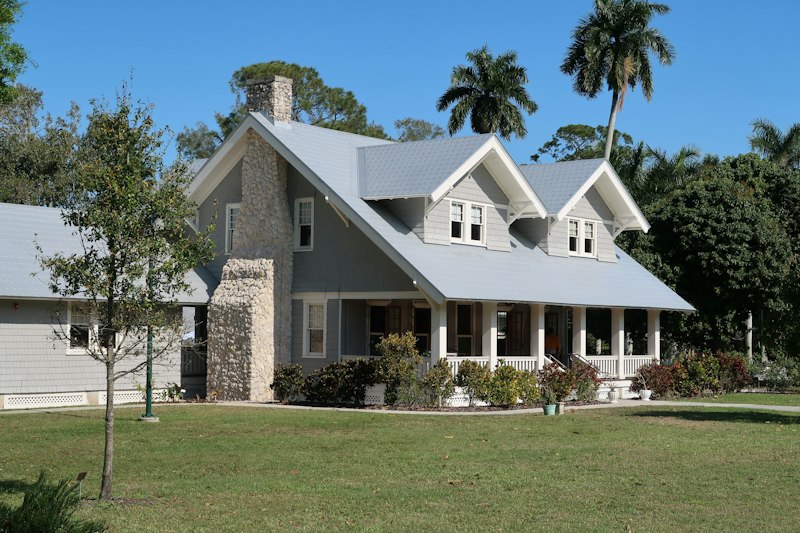
Buying a home on a single income in most U.S. cities requires saving for years, carrying a mortgage close to 40 percent of your gross pay, or settling for a neighborhood or home size you did not actually want. That is the honest version of the affordability problem. The good news is that there is not one path to homeownership. There are several, each with a real set of tradeoffs. This guide lays all of them out in plain language.
We will cover every major affordable homeownership option: government-backed loans, down payment assistance programs, shared equity arrangements, co-ownership through Rhome, and a few less conventional approaches. By the end, you will know exactly what each option requires, who it works for, and where it breaks down.
The Affordability Crisis: What the Numbers Actually Say
The housing affordability problem is not a feeling. It is measurable, and the numbers have gotten significantly worse over the past decade.
The National Association of Realtors tracks a Housing Affordability Index that measures whether a median-income household can qualify for a mortgage on a median-priced home. In mid-2024, that index hit its lowest level in over 35 years. A household earning the median U.S. income needed to spend roughly 43 percent of gross income on a mortgage payment to buy the median-priced home, assuming a 20 percent down payment. The traditional affordability threshold is 28 to 30 percent.
Median home prices nationally exceeded $400,000 in 2024, up from around $235,000 a decade earlier. Meanwhile, median household income grew significantly more slowly. The gap between what homes cost and what households earn has widened every year for most of the past decade.
Down payment remains its own obstacle. A 20 percent down payment on a $400,000 home is $80,000, before closing costs. The typical first-time buyer puts down significantly less, which is why low-down-payment loan programs exist. But even a 3.5 percent FHA down payment on that same home is $14,000, plus closing costs that routinely run another $8,000 to $12,000. For households earning $70,000 to $100,000 and carrying student loans, saving that amount takes years.
Then there is the interest rate factor. Mortgage rates climbed sharply beginning in 2022 and remained elevated through 2024 and into 2025. A $350,000 mortgage at 7 percent costs about $2,328 per month in principal and interest alone. That same mortgage at 3.5 percent cost $1,572. The rate environment alone added hundreds of dollars per month to the cost of buying.
The result: a growing segment of qualified, creditworthy, income-earning Americans who cannot access homeownership as a solo endeavor. That is not a personal failure. It is a structural problem. And it is exactly why the range of options in this guide matters.
Every Major Affordable Homeownership Option
FHA Loans: The Most Common Low-Down-Payment Path
What it is: A mortgage insured by the Federal Housing Administration, available through approved lenders. FHA does not lend directly. It insures the lender against default, which allows lenders to offer loans to borrowers with lower credit scores and smaller down payments.
Minimum down payment: 3.5 percent for borrowers with a 580 or higher credit score. Borrowers with scores between 500 and 579 can qualify with 10 percent down.
Minimum credit score: 580 for 3.5 percent down. 500 to 579 for 10 percent down.
Income requirements: No specific income cap, but your debt-to-income ratio (DTI) must generally stay at or below 43 percent. Some lenders allow up to 50 percent with compensating factors.
Mortgage insurance: FHA loans require both an upfront mortgage insurance premium (1.75 percent of the loan amount, typically rolled into the loan) and an annual mortgage insurance premium (around 0.55 to 0.85 percent of the loan balance, paid monthly). Unlike conventional PMI, FHA mortgage insurance on loans made after June 2013 with less than 10 percent down typically stays for the life of the loan.
Best for: First-time buyers with moderate credit, limited savings, and a reliable income. FHA is the most accessible government-backed loan for urban buyers in standard housing markets.
Real tradeoffs: The lifetime mortgage insurance is a meaningful ongoing cost. A borrower who puts down 3.5 percent on a $350,000 home might pay $150 to $200 per month in mortgage insurance indefinitely, unless they refinance into a conventional loan once they have 20 percent equity. FHA also has loan limits by county, which in high-cost markets may fall below what you actually need to borrow.
Conventional Loans: Flexible But Demanding
What it is: A mortgage not backed by any government agency, conforming to Fannie Mae or Freddie Mac standards. These are the most common mortgage type overall.
Minimum down payment: As low as 3 percent through programs like Fannie Mae's HomeReady and Freddie Mac's Home Possible, which are designed for lower-to-moderate income borrowers.
Minimum credit score: Generally 620 to 640 at most lenders, though you will get meaningfully better terms with 700 or higher.
Income requirements: HomeReady and Home Possible cap income eligibility at 80 percent of area median income (AMI), making them specifically targeted at moderate-income buyers. Standard conventional loans have no income cap.
Mortgage insurance: Required when you put down less than 20 percent, but PMI on a conventional loan can be canceled once you reach 20 percent equity, unlike most FHA mortgage insurance.
Best for: Borrowers with solid credit (680 or above) and at least 3 percent to put down, who want to avoid lifetime mortgage insurance and eventually cancel PMI.
Real tradeoffs: The credit score requirement is less forgiving than FHA. Borrowers with scores below 680 will pay significantly higher rates on conventional loans. And while 3 percent down is technically possible, putting down less than 10 to 20 percent still means carrying PMI until equity builds.
VA Loans: Zero Down for Veterans and Service Members
What it is: A mortgage benefit guaranteed by the Department of Veterans Affairs, available to eligible veterans, active-duty service members, and surviving spouses.
Minimum down payment: Zero. VA loans offer 100 percent financing with no down payment required.
Minimum credit score: The VA does not set a minimum, but most VA-approved lenders require at least 620.
Income requirements: The VA uses a residual income test in addition to DTI, which evaluates how much money is left over each month after paying major expenses. This test is designed to ensure borrowers can actually sustain homeownership.
Funding fee: VA loans charge a one-time funding fee (typically 1.25 to 3.3 percent of the loan amount depending on down payment and service history), which can be rolled into the loan. Some borrowers are exempt, including those with service-connected disabilities.
Best for: Veterans, active-duty service members, and eligible surviving spouses who want to buy with zero down and avoid mortgage insurance entirely. VA loans are one of the most powerful homeownership benefits available to anyone who qualifies.
Real tradeoffs: Eligibility is not universal. You have to have served. And while the funding fee is manageable, it adds to the total loan cost. Sellers occasionally have misconceptions about VA appraisals, though this is less common than it used to be.
USDA Loans: Zero Down in Eligible Rural and Suburban Areas
What it is: A mortgage guaranteed by the U.S. Department of Agriculture for buyers in eligible rural and some suburban areas. Despite the name, USDA loans are not limited to farmland. Many suburbs and small cities qualify.
Minimum down payment: Zero. Like VA loans, USDA offers 100 percent financing.
Minimum credit score: 640 is the threshold most lenders use for streamlined processing, though some manual underwriting is possible below that.
Income requirements: USDA has income caps based on area median income and household size. Generally, households cannot earn more than 115 percent of the area median income for their county and household size. This makes USDA specifically a moderate-income program.
Fees: USDA charges a 1 percent upfront guarantee fee and a 0.35 percent annual fee, both lower than FHA mortgage insurance.
Best for: Buyers targeting areas outside major urban cores who meet the income thresholds. USDA can be an excellent option for buyers in smaller cities, suburbs, and towns who qualify on income.
Real tradeoffs: Geographic restriction is real. If you want to buy in a major city, USDA will not apply. Income limits also phase you out if you earn above the threshold for your area. Check the USDA's eligibility map and income tool before counting on this option.
Down Payment Assistance Programs: Free Money With Conditions
What it is: Grants, forgivable loans, or deferred loans provided by state housing finance agencies, local governments, nonprofits, and employers to help buyers cover the down payment and sometimes closing costs.
Structure: Programs vary significantly by state and even by county. Some offer outright grants that never have to be repaid. Others offer forgivable loans that disappear after a certain number of years of continued residency. Others are deferred loans repayable only when you sell or refinance.
Common requirements: Most DPA programs require you to be a first-time homebuyer (often defined as not having owned in the past three years), complete a homebuyer education course, meet income limits, and purchase in specific geographic areas or price ranges.
Amount available: Ranges from a few thousand dollars to 10 to 20 percent of the purchase price, depending on the program. Some states have extremely generous programs. California's Dream For All program (when funded) has offered up to 20 percent of the purchase price as a shared appreciation loan.
Best for: Buyers who meet income requirements, plan to stay in the home for the required period, and are buying in areas or at price points covered by available programs.
Real tradeoffs: DPA programs are frequently oversubscribed, underfunded, or paused. Eligibility windows open and close. The amount available may not be sufficient in high-cost markets. And many programs limit you to a specific set of lenders or loan products, which may not always offer the most competitive rates. Navigating DPA also adds complexity to an already-complex transaction.
To find programs in your area, the Consumer Financial Protection Bureau and the National Council of State Housing Agencies both maintain directories. Your state's housing finance agency website is the most reliable source.
Shared Equity Programs: Help Now, Share the Upside Later
What it is: An arrangement in which a nonprofit, government entity, employer, or mission-driven investor helps a buyer get into a home by covering part of the purchase price. In exchange, the buyer agrees to share some portion of the appreciation when they eventually sell.
Major examples:
- Habitat for Humanity: Builds or rehabilitates homes and sells them to qualifying families at zero-interest mortgages, with a requirement to contribute sweat equity hours to the build. Income limits apply. There are waitlists.
- Community Land Trusts (CLTs): The trust owns the land permanently and sells only the structure, keeping costs lower. Buyers can build equity and sell, but the resale price is capped to maintain long-term affordability.
- Employer-Assisted Housing (EAH): Some large employers offer forgivable loans, matching grants, or housing allowances to help employees purchase near their workplace. Universities and hospitals are common examples.
- Shared appreciation mortgages: A relatively new format in which a company invests a lump sum toward your home purchase and takes a share of future appreciation in return (no monthly payments on their portion). Unison and Point are private examples, though this is more a financing instrument than a homeownership program.
Best for: Lower-income buyers who cannot qualify for conventional or even government-backed financing without additional help. Shared equity programs serve buyers who are below the threshold that FHA alone can reach.
Real tradeoffs: Waitlists can be years long for Habitat. CLT resale restrictions mean you are capped on how much equity you can build. Shared appreciation mortgages from private companies can be expensive in a strong appreciation environment. And employer-tied programs disappear if you change jobs, which may create complications.
Co-Ownership with Rhome: Buying Together as Primary Residents
What it is: Two to four qualified buyers jointly purchase a single home as their primary residence. Each buyer holds a proportional ownership interest through Rhome's ownership structure, with a governance agreement covering all ownership terms, maintenance responsibilities, financial obligations, and exit rights.
This is not house hacking (described below). Every co-owner lives in the home. No one is a landlord. No one is a passive investor. All residents hold equity.
Down payment: FHA financing with as little as 3.5 percent total, split proportionally among co-owners. On a $500,000 home, the total down payment at 3.5 percent is $17,500. Split equally among two buyers, that is $8,750 each, plus a proportional share of closing costs.
Qualification requirements:
- Each co-owner is individually underwritten. Everyone must meet lender requirements.
- Minimum credit score: 640
- Minimum income: approximately $80,000 per year per co-owner
- At least one co-owner must qualify as a first-time homebuyer under FHA definition (not having owned a primary residence in the past three years)
- All co-owners must occupy the home as their primary residence
What Rhome provides: Rhome coordinates the matching process, structures the ownership entity and governance agreement, manages the Repair Reserve Fund, and supports the swap process when a co-owner needs to exit.
Exit options: Three structured paths: sell your share to existing co-owners, sell to a new buyer sourced through Rhome, or convert to an investment position under certain conditions. These are defined in the governance agreement at the time of purchase.
Best for: Creditworthy, income-earning buyers who simply cannot afford a home on their own in their target market, and who are committed to living there as their primary residence. Co-ownership is not a workaround. It is a way to access real homeownership, build real equity, and live in a home you actually want, rather than waiting years to afford it solo.
For a deeper look at the structure and mechanics, read how Rhome works or the full co-ownership guide.
Real tradeoffs: Buying with one to three other people requires genuine alignment on lifestyle, finances, maintenance expectations, and exit timelines. The governance agreement establishes the rules, but the relationship still matters. Co-ownership works best when co-owners are thoughtful about who they are buying with and have had honest conversations before signing anything. It is not for everyone, and Rhome does not pretend it is.
Buying in Lower-Cost Markets: Geographic Arbitrage
What it is: Choosing to buy in a city, metro, or neighborhood where prices are lower relative to income, rather than pursuing a home in the most expensive market you have access to.
How much it matters: A $300,000 home in a mid-tier city requires dramatically less income and down payment savings than a $700,000 home in a coastal metro. Many buyers have more geographic flexibility than they realize, especially with remote work. The National Association of Realtors regularly publishes lists of the most affordable metros for first-time buyers. Markets like Pittsburgh, Cleveland, Indianapolis, Memphis, and Oklahoma City have median home prices under $250,000.
Best for: Buyers who have location flexibility, either through remote work or a willingness to relocate, and who are willing to prioritize ownership over staying in a specific city.
Real tradeoffs: Not everyone can relocate. Job markets, family ties, community, and personal priorities all factor in. Lower home prices in some markets also reflect lower wage growth and fewer economic opportunities, which matters if you rely on local income. And remote work arrangements are not always permanent.
House Hacking: Buying a Multi-Unit and Offsetting Costs
What it is: Purchasing a multi-unit property (typically a duplex, triplex, or fourplex) and living in one unit while renting out the others. FHA allows house hacking because the property qualifies as the buyer's primary residence when they occupy one unit.
Note: This is not the Rhome model. Rhome co-owners all live together in a single-family home. None of them are landlords. House hacking involves becoming a landlord to tenants, which is a fundamentally different arrangement.
Down payment: FHA allows 3.5 percent down on owner-occupied multi-unit properties (up to four units). The rental income from other units can sometimes be counted toward qualification.
Best for: Buyers who are comfortable being landlords, want to reduce their effective housing cost through rental income, and can find a suitable multi-unit property in their target market.
Real tradeoffs: Being a landlord is actual work. Tenant issues, vacancy periods, and maintenance for multiple units all fall on you. Multi-unit properties in desirable urban markets are expensive and competitive. The rental income that looked good on paper can evaporate with a bad tenant or a costly repair. And the lifestyle of sharing a building (not a home) with tenants is very different from owning a single-family home.
Side-by-Side Comparison
Here is a direct comparison of the core attributes of each option:
| Option | Min Down Payment | Min Credit Score | Income Cap | Primary Residence Required | Special Eligibility |
|---|---|---|---|---|---|
| FHA Loan | 3.5% | 580 | None | Yes | None |
| Conventional (HomeReady/Home Possible) | 3% | 620 | 80% AMI | Yes | None |
| VA Loan | 0% | ~620 (lender) | None | Yes | Military service |
| USDA Loan | 0% | 640 | 115% AMI | Yes | Eligible rural/suburban area |
| Down Payment Assistance | Varies | Varies | Usually income-capped | Usually yes | First-time buyer, area, price |
| Shared Equity / Habitat | Varies | Varies | Low income | Yes | Waitlists, eligibility |
| Rhome Co-Ownership | 3.5% FHA (split) | 640 per buyer | None | Yes (all co-owners) | At least one first-time buyer |
| Lower-Cost Market | 3.5%+ | Standard | None | Yes | Location flexibility |
| House Hacking | 3.5% (FHA, owner-occ) | 580 | None | Yes (one unit) | Comfort with landlord role |
Why Co-Ownership Stands Out for a Specific Buyer Profile
Most affordable homeownership options either require you to compromise on quality (buy somewhere you do not want to live), rely on assistance programs that have limited funding and long waitlists, or demand military service or strict income caps.
Co-ownership through Rhome addresses a specific and underserved profile: the buyer who is financially solid but priced out.
This buyer earns a real income, $80,000 or more. They have managed their credit responsibly, 640 or above. They have some savings but not enough to cover a down payment plus reserves on a home in the neighborhood they actually want. They have been renting for years and watching home values climb while their savings do not quite keep pace.
For this buyer, FHA alone often does not solve the problem. The issue is not the loan terms. It is the home price relative to what a solo buyer can actually afford to carry each month.
Co-ownership changes the math fundamentally. On a $500,000 home:
- Solo FHA buyer: $17,500 down, $3,100 per month mortgage payment (at 7%), plus insurance, taxes, and maintenance
- Two co-owners with Rhome: $8,750 down per person, $1,550 per person per month in mortgage, plus proportional share of other costs
The co-owner is paying less per month than they would for a two-bedroom apartment in most major cities, and they own real equity in a real home.
That is the core case. It is not about finding a loophole or a workaround. It is about structuring a legitimate joint purchase in a way that makes homeownership accessible without requiring anyone to compromise on where they live.
For a direct comparison of co-ownership versus renting, see co-ownership vs renting. For what the co-buying process looks like with another person, the co-buying guide covers the full picture.
How to Figure Out Which Path Fits You
No single option is right for everyone. The right path depends on four variables: your credit, your income, your savings, and your location flexibility.
Step 1: Start with eligibility
Some options eliminate themselves quickly. If you are not a veteran, VA is off the table. If you are buying in a major city, USDA likely will not apply. If your income is above 80 percent of area median income, HomeReady and Home Possible may not fit. Run these screens first.
Step 2: Check DPA programs for your area
Down payment assistance is often underutilized because buyers do not know it exists. Before assuming you need to save for years more, check what your state housing finance agency offers. Some programs are genuinely generous and do not require a long waitlist.
Step 3: Run the math on co-ownership
If you are a creditworthy renter with a real income who is stuck in the savings-versus-rising-prices loop, co-ownership deserves a serious look. The question is not just whether you can afford the down payment. It is whether you can carry the monthly costs on your income, and whether you have someone you trust enough to buy with.
Rhome's process starts with qualifying each co-owner individually, then matching them with compatible co-buyers if they do not already have a partner in mind. Browse available homes or read more about how Rhome works.
Step 4: Consider location honestly
If you have flexibility, the math on buying in a lower-cost market can be dramatic. A buyer who cannot afford a $650,000 home in Austin may be able to comfortably own a comparable home in San Antonio, Columbus, or Raleigh for significantly less. If your career and life genuinely allow for flexibility, run the comparison before ruling it out.
Step 5: Do not rule out combinations
These options are not mutually exclusive. A co-owner might use an FHA loan with a down payment assistance grant to cover their half of the down payment. A buyer in an eligible area might use a USDA loan for a home they are sharing with a co-buying partner. The best outcome sometimes involves stacking programs that are individually insufficient.
A Note on What These Options Are Not
Affordable homeownership tools are designed to help people access primary residences. Every option described in this guide, including Rhome co-ownership, is built around the assumption that you will actually live in the home.
FHA loans carry occupancy requirements. USDA loans require you to live in the property. VA loans are for primary residences. Rhome's entire model is built on primary-residence co-ownership. All co-owners must live in the home. No subleasing. No renting your interest to someone else.
This is not just a rule. It is the logic of the model. Homeownership builds wealth for the people who live in their homes, who have skin in the maintenance and in the neighborhood, who have a genuine reason to stay invested in the property and community. The programs and structures in this guide are built around that principle.
The Bigger Picture
The housing affordability problem is not going to resolve itself quickly. Supply constraints, zoning laws, elevated interest rates, and years of underbuilding have created a structural gap between home prices and incomes that will take years to close.
What that means practically is that waiting for the "right time" to buy is not a reliable strategy for most buyers. Prices may come down, or they may not. Rates may fall, or they may not. What you can control is which tools you use and whether you are approaching the problem creatively.
The options in this guide all have real tradeoffs. None of them are magic. But several of them can solve the problem for buyers who have been told, or who have told themselves, that homeownership is simply out of reach right now.
For a specific buyer profile, co-ownership changes what is possible without requiring a compromise on where you live or how much you invest. For a veteran, a VA loan offers zero-down access that few other options can match. For a buyer targeting eligible suburban areas, USDA is worth seriously investigating. For a buyer with credit and income who just needs help with the down payment, DPA programs are often the gap-bridging tool that makes FHA work.
The goal is ownership. The path depends on who you are and where you are starting from.
Frequently Asked Questions
See the FAQ section below.